

1 cruzado novo (Republic of Brazil) – Brazil
Add to wishlist
Circulating commemorative coins
Commemoration: 100th Anniversary of the Republic of Brazil
Brazil
Context
Year: 1989
Issuer: Brazil
Period:
(since 1967)
Currency:
(1989—1990)
Demonetization: 31 July 1993
Total mintage: 10,000,000
Material
Diameter: 31 mm
Weight: 9.95 g
Thickness: 1.7 mm
Shape: Round
Composition: Stainless steel
Technique: Milled
Alignment: Coin alignment
flip
References
KM: #
Numista: #14500
Value
Exchange value: 1 BRN
Inflation-adjusted value: 116668379.65 BRN
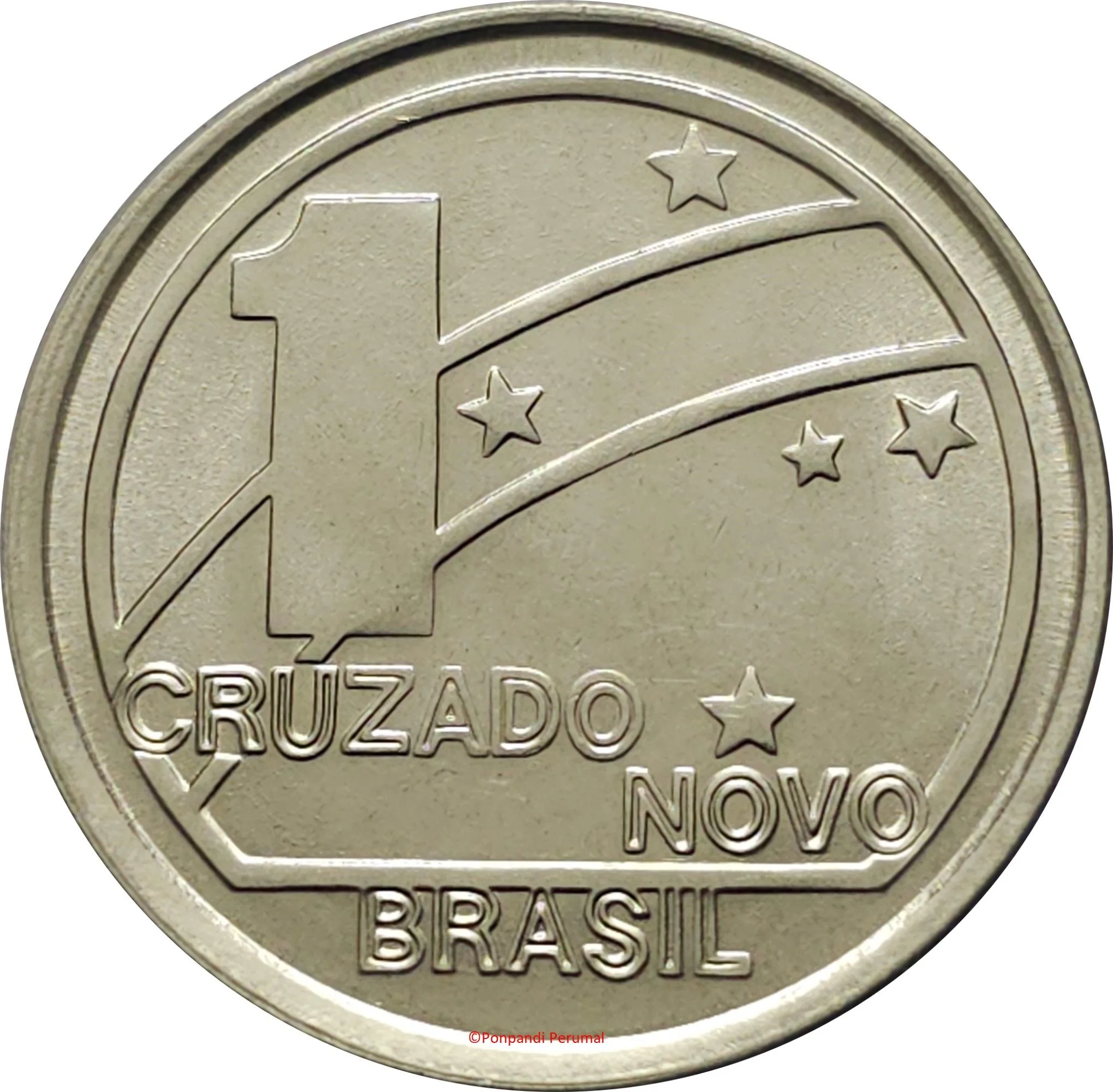
Obverse
Description:
Outlined typeface.
Inscription:
1
CRUZADO
NOVO
BRASIL
CRUZADO
NOVO
BRASIL
Translation:
CROSS
NEW
BRAZIL
NEW
BRAZIL
Script: Latin
Language: Portuguese
Engraver: Aldo Cascardo
Designer: Luciano Dias Araújo
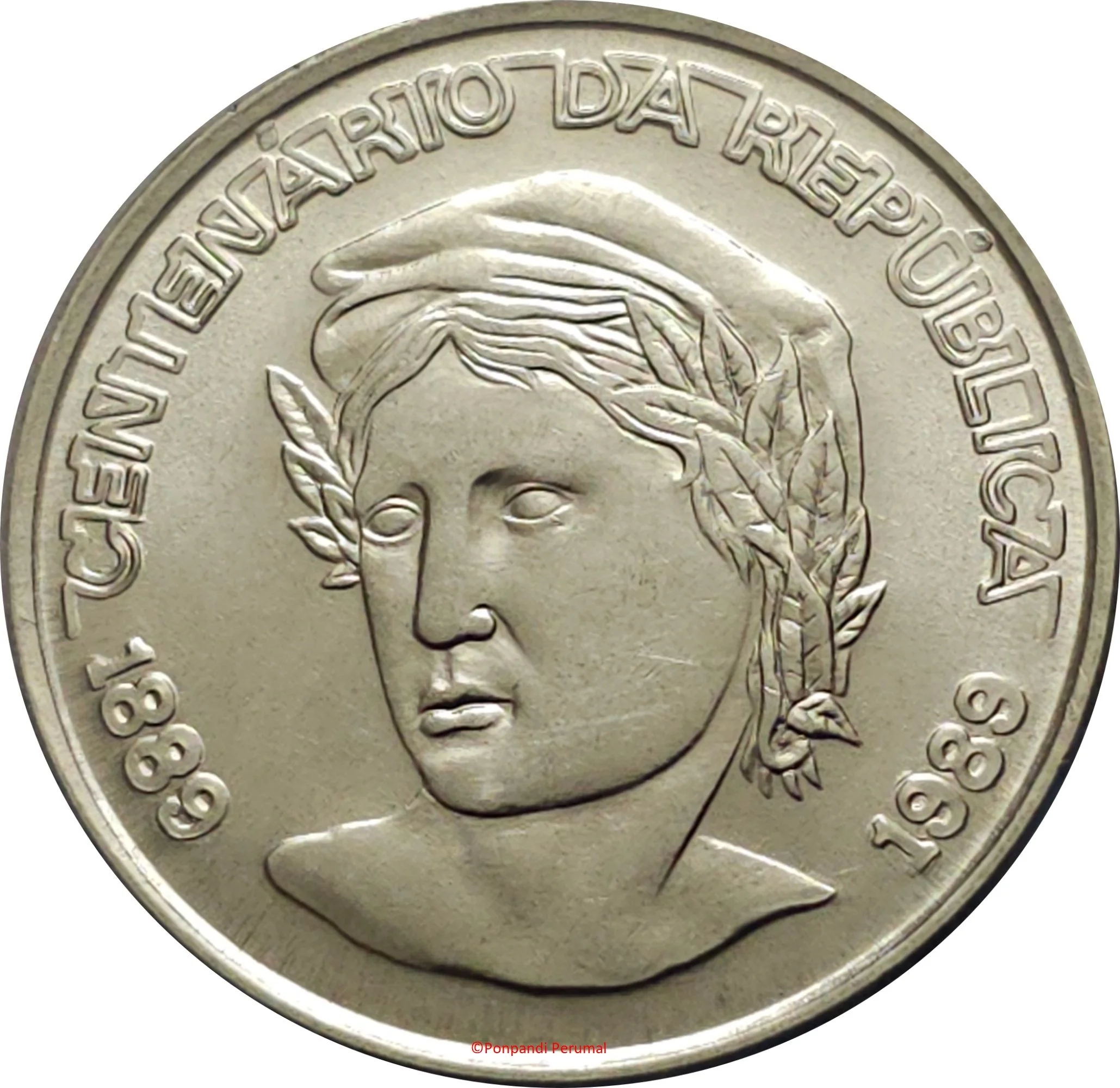
Reverse
Description:
Liberty bust left divides dates.
Inscription:
CENTENÁRIO DA REPÚBLICA
1889 1989
1889 1989
Translation:
Centenary of the Republic
1889 1989
1889 1989
Script: Latin
Language: Portuguese
Engraver: Kátia Dias
Designer: Luciano Dias Araújo
Edge
Plain
Mints
| Name | Mark |
|---|---|
| Casa da Moeda do Brasil | — |
Mintings
| Year | Mint Mark | Mintage | Quality | Collection |
|---|---|---|---|---|
| 1989 | — | 10,000,000 |
Historical background
In 1989, Brazil was in the final, chaotic phase of its decades-long struggle with hyperinflation, a period known as the "Lost Decade." The currency at the time was the Cruzado Novo, introduced just the previous year in 1988 as part of the failed "Summer Plan" (Plano Verão). This plan was the government's latest attempt to break the inflationary inertia through a currency conversion (1,000 old Cruzados became 1 Cruzado Novo), a temporary price freeze, and fiscal adjustments. However, like the Cruzado Plan before it, it lacked lasting structural reforms, particularly in addressing the massive public deficit and indexation of the economy.
The situation rapidly deteriorated throughout 1989. The price freezes were ultimately unsustainable and, once lifted, pent-up inflationary pressures exploded. Inflation soared to an annual rate of nearly 2,000%, effectively rendering the Cruzado Novo worthless as a stable store of value. Daily life was dominated by a frantic financial rhythm: wages were indexed and paid weekly or even daily, people rushed to spend money immediately, and a complex system of monetary correction (correção monetária) was embedded in every contract, further fueling the inflationary cycle.
This monetary chaos formed the turbulent backdrop for a pivotal political year—the first direct presidential election since 1960. The crisis framed the entire campaign, with candidates like Fernando Collor de Mello rallying against "marauding" public servants and promising shock therapy to stabilize the economy. The utter failure of the Cruzado Novo in 1989 set the stage for the radical measures that would follow, namely the Collor Plan in 1990, which would attempt to confiscate savings in a desperate bid to curb liquidity and finally conquer hyperinflation.
The situation rapidly deteriorated throughout 1989. The price freezes were ultimately unsustainable and, once lifted, pent-up inflationary pressures exploded. Inflation soared to an annual rate of nearly 2,000%, effectively rendering the Cruzado Novo worthless as a stable store of value. Daily life was dominated by a frantic financial rhythm: wages were indexed and paid weekly or even daily, people rushed to spend money immediately, and a complex system of monetary correction (correção monetária) was embedded in every contract, further fueling the inflationary cycle.
This monetary chaos formed the turbulent backdrop for a pivotal political year—the first direct presidential election since 1960. The crisis framed the entire campaign, with candidates like Fernando Collor de Mello rallying against "marauding" public servants and promising shock therapy to stabilize the economy. The utter failure of the Cruzado Novo in 1989 set the stage for the radical measures that would follow, namely the Collor Plan in 1990, which would attempt to confiscate savings in a desperate bid to curb liquidity and finally conquer hyperinflation.
🌱 Very Common