

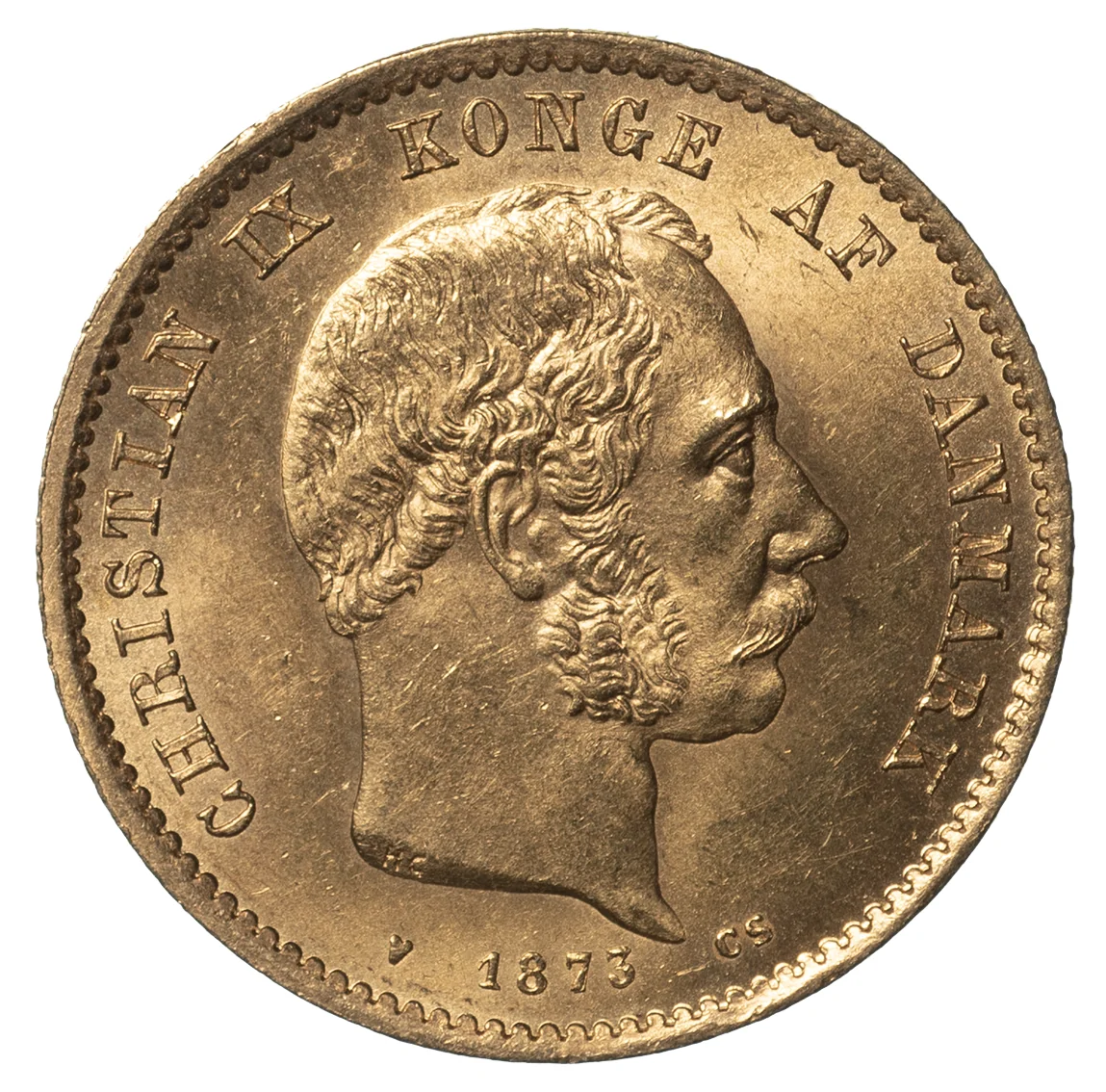
20 kroner – Denmark
Add to wishlist
Denmark
Context
Years: 1873–1900
Issuer: Denmark
Ruler: Christian IX
Currency:
(since 1873)
Total mintage: 1,706,000
Material
References
KM: #
Numista: #41928
Value
Exchange value: 20 DKK
Bullion value: $1243.89
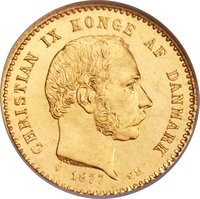
Obverse
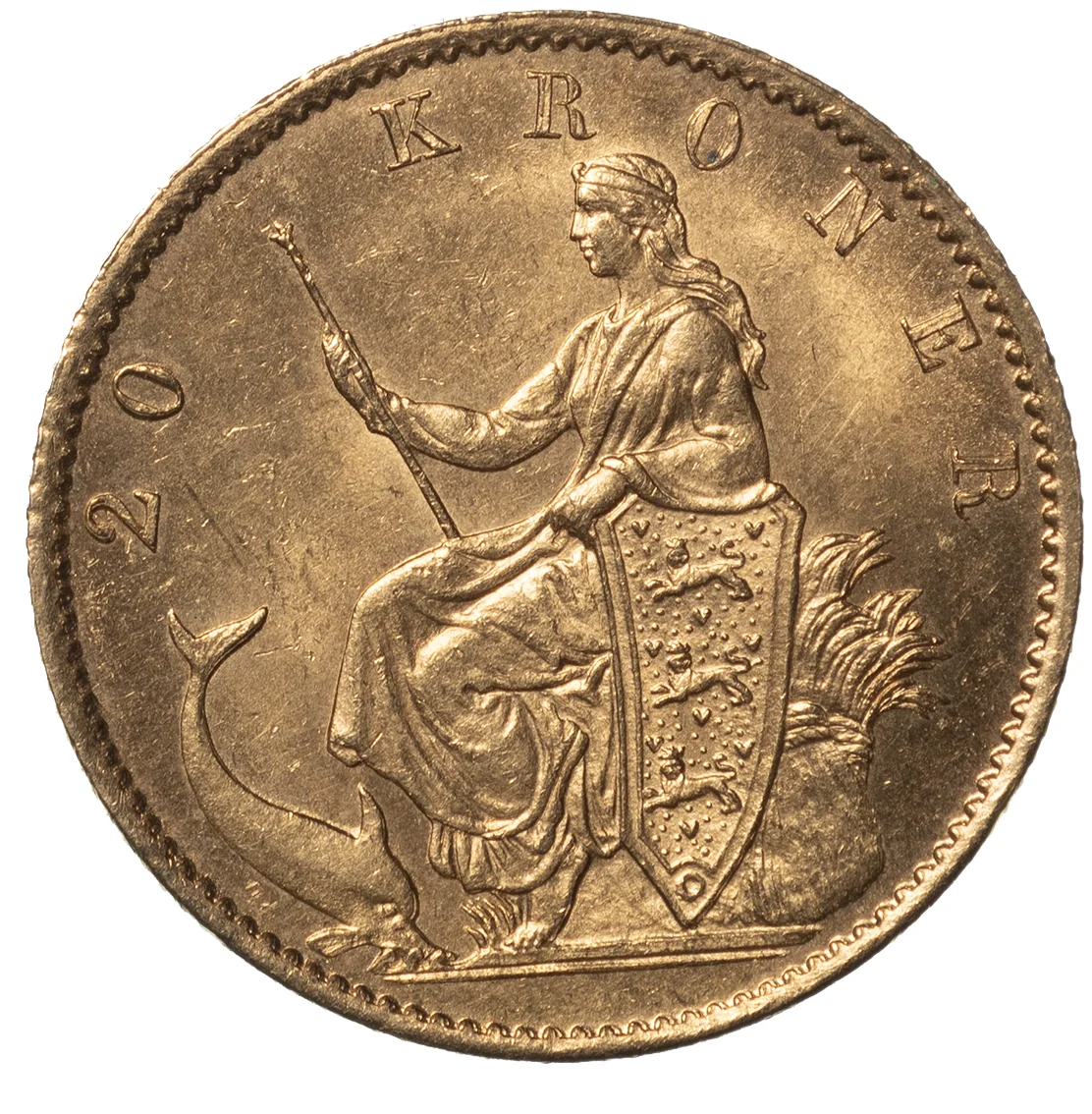
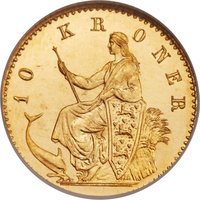
Reverse
Description:
Mother Denmark seated, holding shield and porpoise.
Inscription:
20 KRONER
Script: Latin
Edge
Mints
| Name | Mark |
|---|---|
| Royal Danish Mint | — |
Mintings
| Year | Mint Mark | Mintage | Quality | Collection |
|---|---|---|---|---|
| 1873 | — | 1,153,000 | ||
| 1874 | — | — | ||
| 1876 | — | 351,000 | ||
| 1877 | — | — | ||
| 1890 | — | 102,000 | ||
| 1900 | — | 100,000 |
Historical background
In 1873, Denmark stood at a monetary crossroads, compelled by both economic necessity and geopolitical alignment. The nation had long used the rigsdaler, a silver-based currency that was part of the wider Scandinavian Monetary Union of silver standards. However, the dramatic discovery of vast silver deposits globally in the 1860s had caused the metal's value to plummet, threatening the stability of silver-backed currencies. Simultaneously, the rise of the German Empire and its adoption of a new gold standard with the reichsmark in 1871 created a powerful economic bloc on Denmark's southern border, making the existing silver standard increasingly impractical for trade.
Consequently, Denmark, in a coordinated move with Sweden, decisively abandoned silver and adopted the gold standard on January 1, 1874 (with the law passed in 1873). The new currency was the Danish krone (plural: kroner), subdivided into 100 øre, replacing the rigsdaler at a rate of 2 kroner to 1 rigsdaler. This reform was not undertaken in isolation; it formed the foundation of the Scandinavian Monetary Union (SMU) with Sweden (and later Norway in 1875), which allowed the Danish krone, Swedish krona, and Norwegian krone to circulate freely and be accepted at par across the three kingdoms.
The shift was a strategic effort to stabilize the Danish economy, align with major trading partners, and attract foreign investment. By pegging the krone to gold, Denmark aimed to ensure monetary stability and foster closer economic integration, particularly with Germany and its new gold-based system. While the formal SMU lasted until the outbreak of World War I, the 1873 decision permanently established the "krone" as Denmark's currency, a name and a standard that provided a framework for the country's modern financial development.
Consequently, Denmark, in a coordinated move with Sweden, decisively abandoned silver and adopted the gold standard on January 1, 1874 (with the law passed in 1873). The new currency was the Danish krone (plural: kroner), subdivided into 100 øre, replacing the rigsdaler at a rate of 2 kroner to 1 rigsdaler. This reform was not undertaken in isolation; it formed the foundation of the Scandinavian Monetary Union (SMU) with Sweden (and later Norway in 1875), which allowed the Danish krone, Swedish krona, and Norwegian krone to circulate freely and be accepted at par across the three kingdoms.
The shift was a strategic effort to stabilize the Danish economy, align with major trading partners, and attract foreign investment. By pegging the krone to gold, Denmark aimed to ensure monetary stability and foster closer economic integration, particularly with Germany and its new gold-based system. While the formal SMU lasted until the outbreak of World War I, the 1873 decision permanently established the "krone" as Denmark's currency, a name and a standard that provided a framework for the country's modern financial development.
🌟 Limited