

1 Toman – Iran
Iran
Context

Material
Weight: 3.45 g
Gold weight: 3.45 g
Shape: Irregular round
Composition: Gold
Magnetic: No
Technique: Hammered
References
KM: #Click to copy to clipboard775
Numista: #418879
Value
Bullion value: $575.09
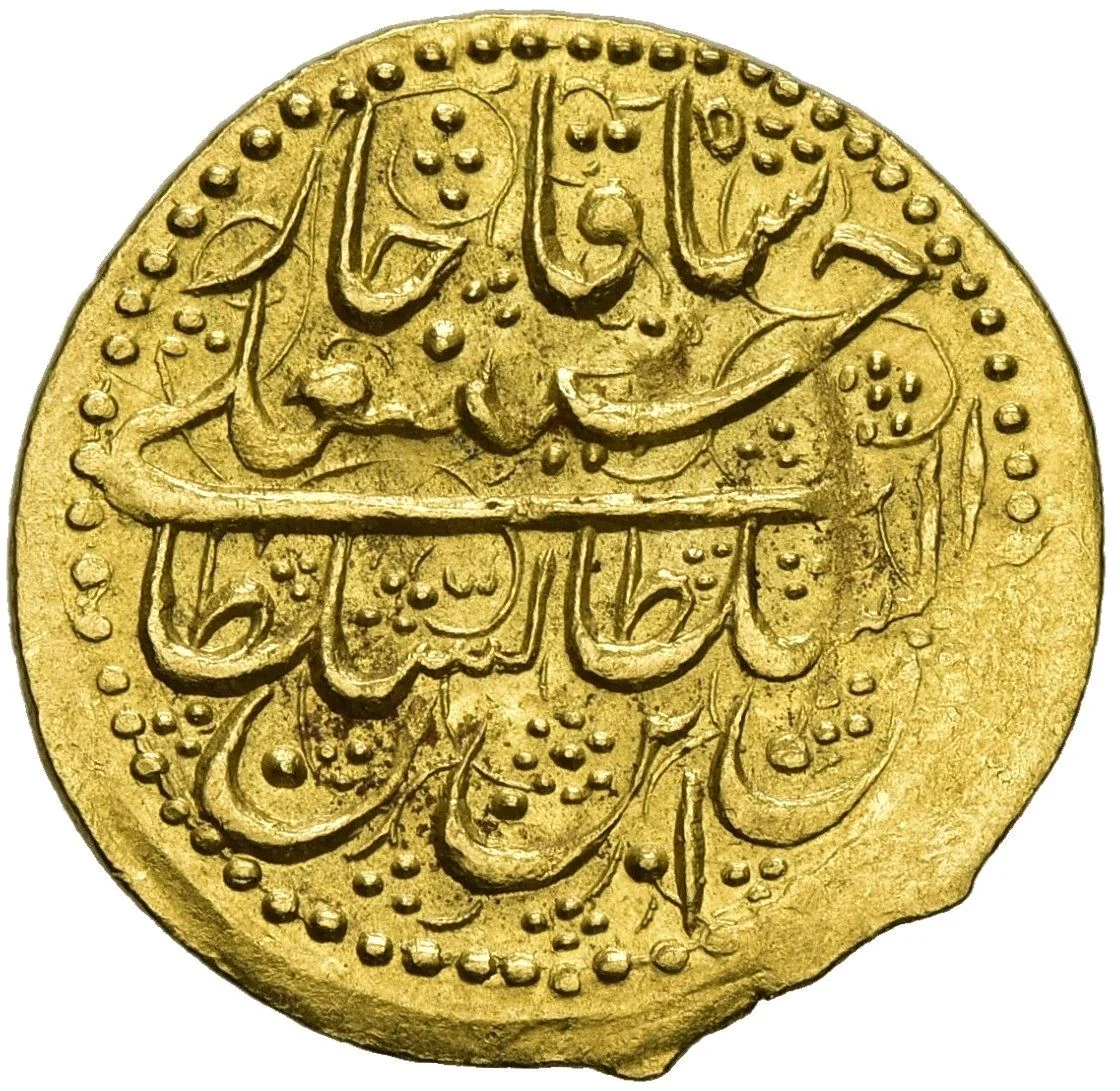
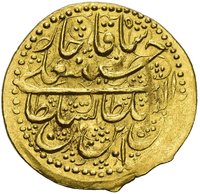
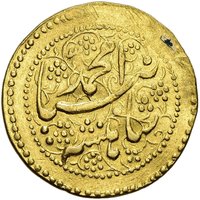
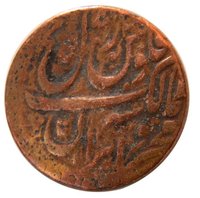
Obverse
Inscription:
السلطان ابن السلطان
حسینعلی شاه قاجار
حسینعلی شاه قاجار
Translation:
The Sultan, Son of the Sultan
Husayn Ali Shah Qajar
Husayn Ali Shah Qajar
Script: Persian (nastaliq)
Language: Arabic
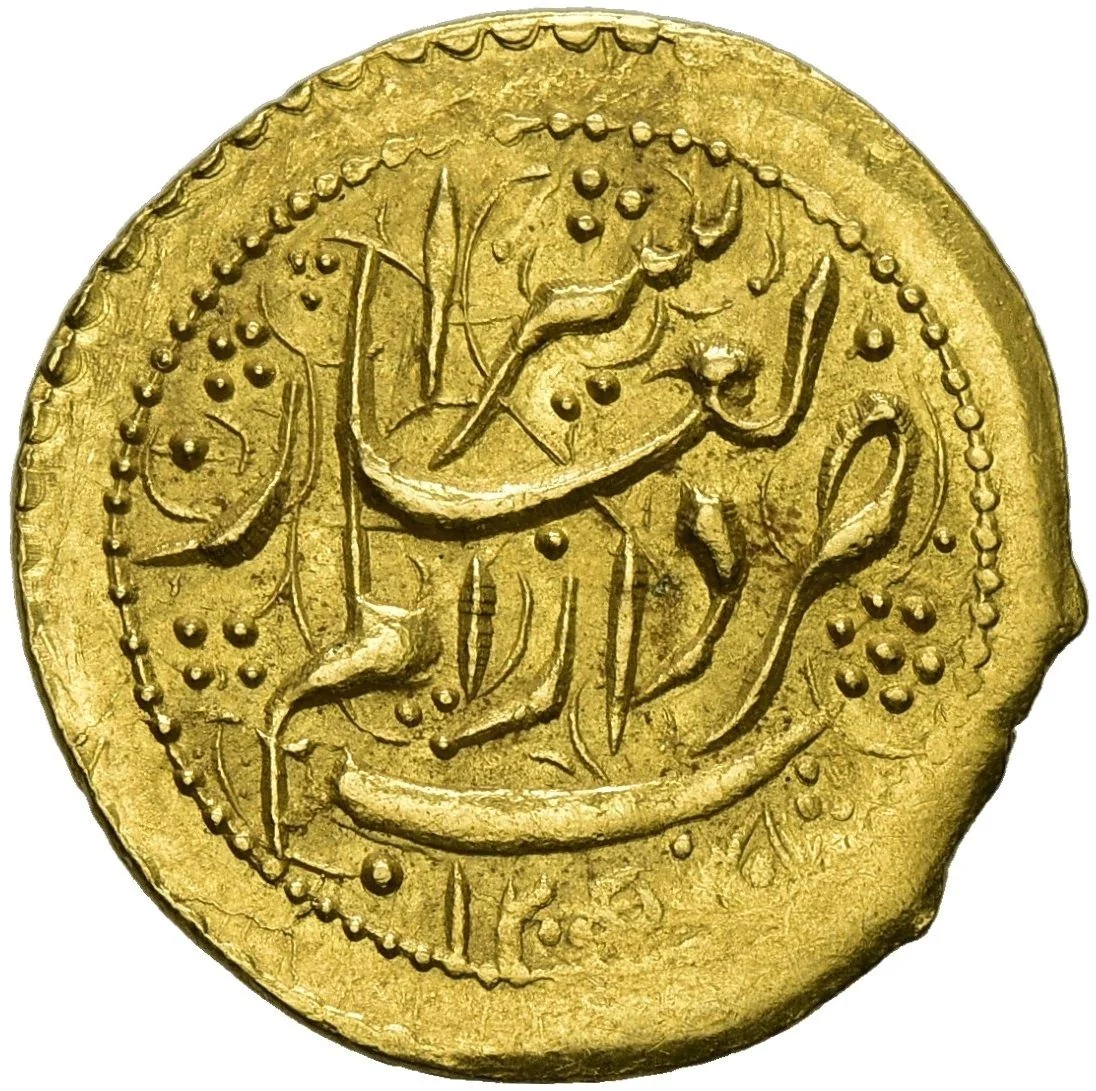
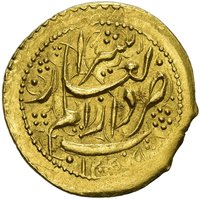
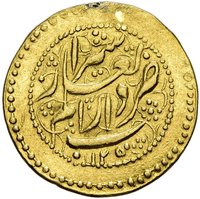
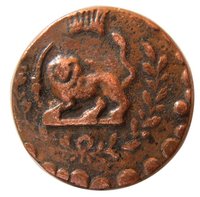
Reverse
Inscription:
ضرب دارالعلم شیراز
۱۲۵۰
۱۲۵۰
Translation:
Struck at Dar al-'Ilm Shiraz
1250
1250
Script: Persian (nastaliq)
Language: Persian
Edge
Mints
| Name | Mark |
|---|---|
| Shiraz | شیراز |
Mintings
| Year | Mint Mark | Mintage | Quality | Collection |
|---|---|---|---|---|
| 1834 | — | — |
Historical background
In 1834, Iran's currency system was in a state of profound disarray, a legacy of decades of weak central authority and external pressure. The country operated on a bimetallic system of silver qirāns and gold tomans, but the coinage was notoriously unreliable. Provincial khans and even foreign entities minted their own coins of varying weight and purity, leading to a chaotic marketplace where exchange rates fluctuated wildly by region and trust in the currency was low. This fragmentation was a direct reflection of the eroded power of the Qajar dynasty following the death of Fath-Ali Shah in 1834, which itself triggered a succession crisis and further instability.
The economic foundation was further weakened by a severe shortage of silver, the primary metal for the most common coins. This was caused by a chronic trade deficit, particularly with Britain, which drained bullion from Iran to pay for imported manufactured goods. To finance state expenditures and the lavish court, rulers had repeatedly debased the coinage—reducing the silver content while maintaining face value—a short-term fix that fueled inflation and destroyed public confidence. The result was a vicious cycle where the state's fiscal weakness corrupted the currency, and the corrupt currency further crippled the state's economy.
Consequently, daily economic life for merchants and the populace was fraught with difficulty. Transactions required meticulous weighing and assaying of coins, and extensive discounting of suspect currency was common, stifling commerce and integration into the global economy. The year 1834, therefore, represents a low point in Iranian monetary history, highlighting the urgent need for the centralizing reforms that would later be attempted by subsequent Qajar monarchs in the face of this deep-seated fiscal and monetary crisis.
The economic foundation was further weakened by a severe shortage of silver, the primary metal for the most common coins. This was caused by a chronic trade deficit, particularly with Britain, which drained bullion from Iran to pay for imported manufactured goods. To finance state expenditures and the lavish court, rulers had repeatedly debased the coinage—reducing the silver content while maintaining face value—a short-term fix that fueled inflation and destroyed public confidence. The result was a vicious cycle where the state's fiscal weakness corrupted the currency, and the corrupt currency further crippled the state's economy.
Consequently, daily economic life for merchants and the populace was fraught with difficulty. Transactions required meticulous weighing and assaying of coins, and extensive discounting of suspect currency was common, stifling commerce and integration into the global economy. The year 1834, therefore, represents a low point in Iranian monetary history, highlighting the urgent need for the centralizing reforms that would later be attempted by subsequent Qajar monarchs in the face of this deep-seated fiscal and monetary crisis.
Series: 1834 Iran circulation coins
✨ Legendary