

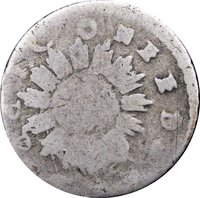
Obverse
Description:
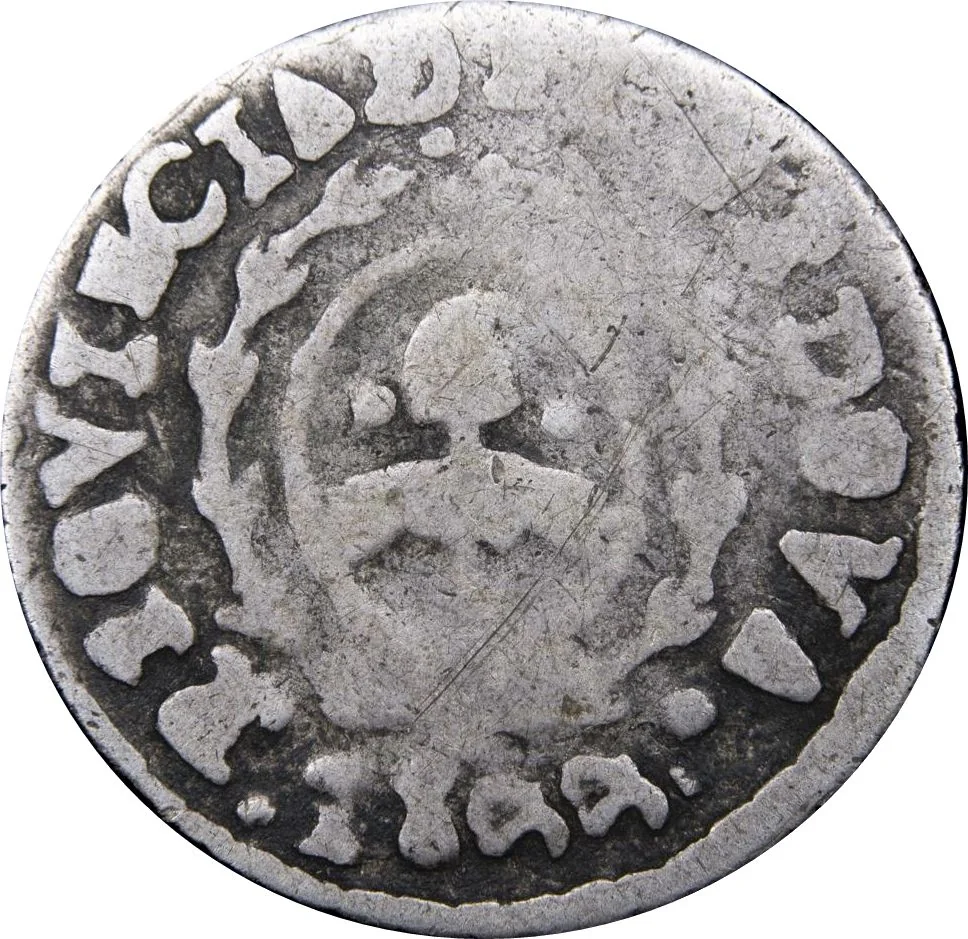
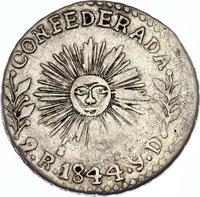
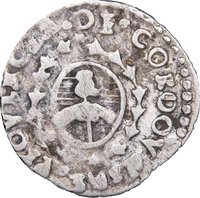
National Coat of Arms - Two-pointed, without blue, Phrygian cap flying right.
Inscription:
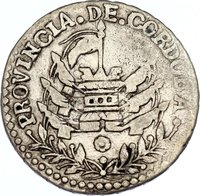
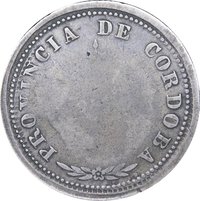
PROVINCIA DE CORDOVA
Script: Latin
Reverse
Edge
Reeded
Legend:
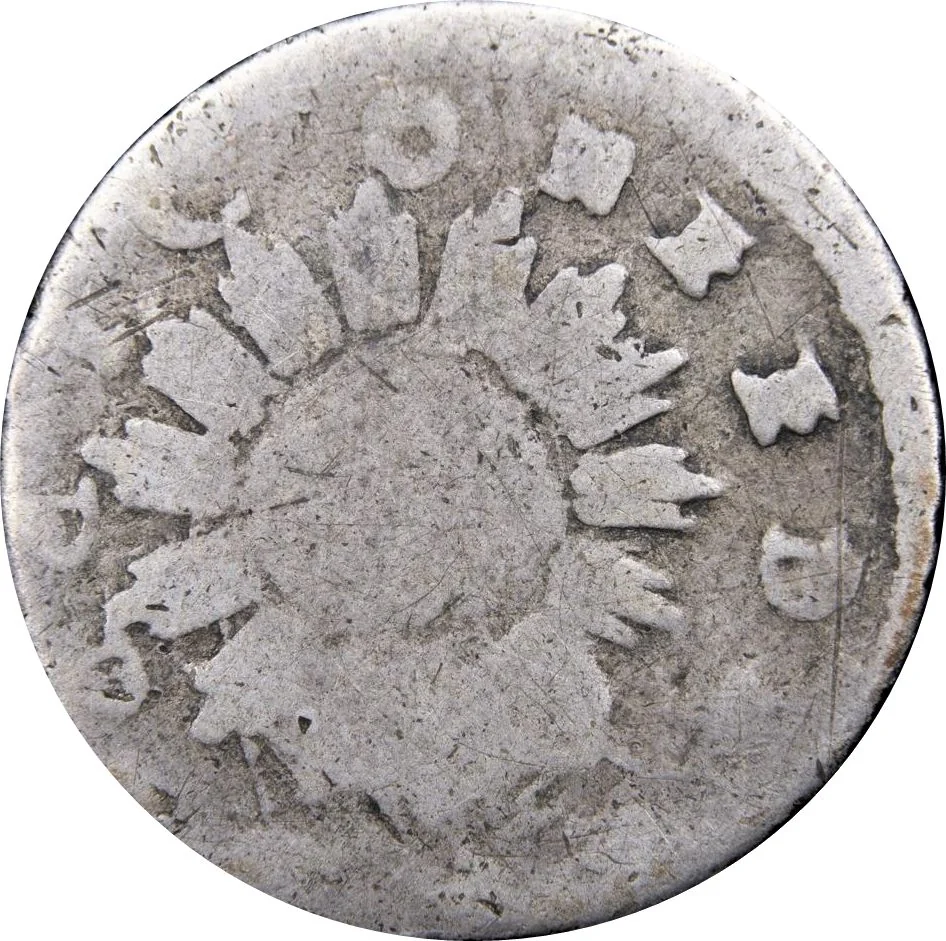
// o//o//o//o//
Categories
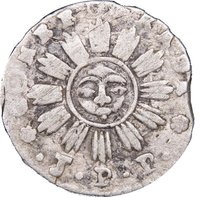
| Symbol> Sun |
| Symbol> Hand |
| Symbols> Coat of Arms |
| Symbol> Phrygian cap |
| Symbol> Wreath |
Mintings
| Year | Mint Mark | Mintage | Quality | Collection |
|---|---|---|---|---|
| 1844 | JPP | — |
Historical background
In 1844, Córdoba, like much of post-independence Argentina, was mired in a profound monetary crisis. The period following the dissolution of the national government in 1820 had led to the rise of powerful provincial caudillos, each of whom asserted economic sovereignty. Consequently, by the 1840s, a chaotic patchwork of provincial currencies, foreign coins, and credit notes circulated, all with wildly fluctuating and often depreciated values. Córdoba, under the rule of Governor Manuel López ("Quebracho"), issued its own paper money to finance provincial expenses, but this currency had little to no backing in specie (gold or silver) and was not trusted beyond its borders, if even within them.
The situation was exacerbated by the ongoing Argentine Civil Wars and the external pressure of Juan Manuel de Rosas’s Buenos Aires-led Confederation. Rosas enforced a economic policy that favored the Buenos Aires peso fuerte, a relatively stronger currency backed by the province's custom revenues. This created a coercive monetary duality where Córdoba's weak paper currency circulated locally for daily transactions, while harder currency was hoarded or required for inter-provincial and international trade. The result was severe inflation, a loss of purchasing power for citizens, and a strangled provincial economy unable to engage reliably in commerce with neighboring regions.
Ultimately, the currency disorder of 1844 was a direct manifestation of Argentina's political fragmentation. Córdoba's monetary instability reflected its limited fiscal capacity and the absence of a credible, unified national monetary authority. This environment fostered internal economic distress, hindered development, and reinforced provincial dependency on the economic and political machinations of Buenos Aires, a central tension that would persist until national unification decades later.
The situation was exacerbated by the ongoing Argentine Civil Wars and the external pressure of Juan Manuel de Rosas’s Buenos Aires-led Confederation. Rosas enforced a economic policy that favored the Buenos Aires peso fuerte, a relatively stronger currency backed by the province's custom revenues. This created a coercive monetary duality where Córdoba's weak paper currency circulated locally for daily transactions, while harder currency was hoarded or required for inter-provincial and international trade. The result was severe inflation, a loss of purchasing power for citizens, and a strangled provincial economy unable to engage reliably in commerce with neighboring regions.
Ultimately, the currency disorder of 1844 was a direct manifestation of Argentina's political fragmentation. Córdoba's monetary instability reflected its limited fiscal capacity and the absence of a credible, unified national monetary authority. This environment fostered internal economic distress, hindered development, and reinforced provincial dependency on the economic and political machinations of Buenos Aires, a central tension that would persist until national unification decades later.
✨ Legendary