

5 Cents – Canada
Canada
Context
Material
References
KM: #Click to copy to clipboard13
Numista: #418
Value
Exchange value: 0.05 CAD = $0.04
Bullion value: $3.05
Obverse
Description:
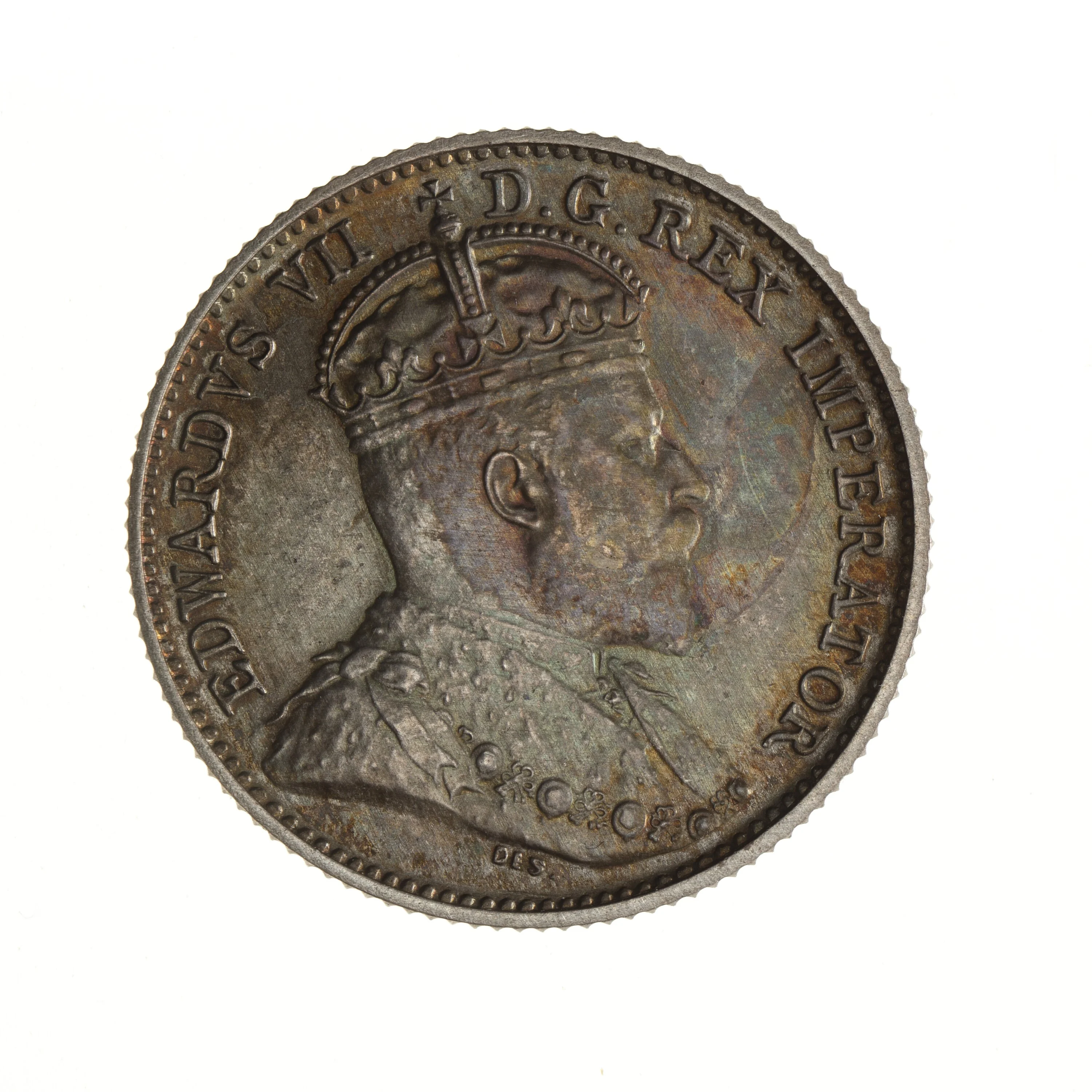
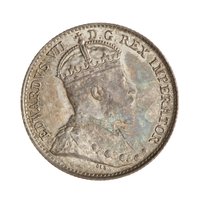
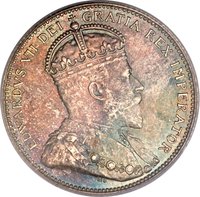
Bust of King Edward VII crowned, facing right.
Inscription:
EDWARDVS VII D.G.REX IMPERATOR
DES.
DES.
Translation:
Edward VII by the Grace of God King Emperor
Script: Latin
Language: Latin
Engraver: George William de Saulles
Reverse
Description:
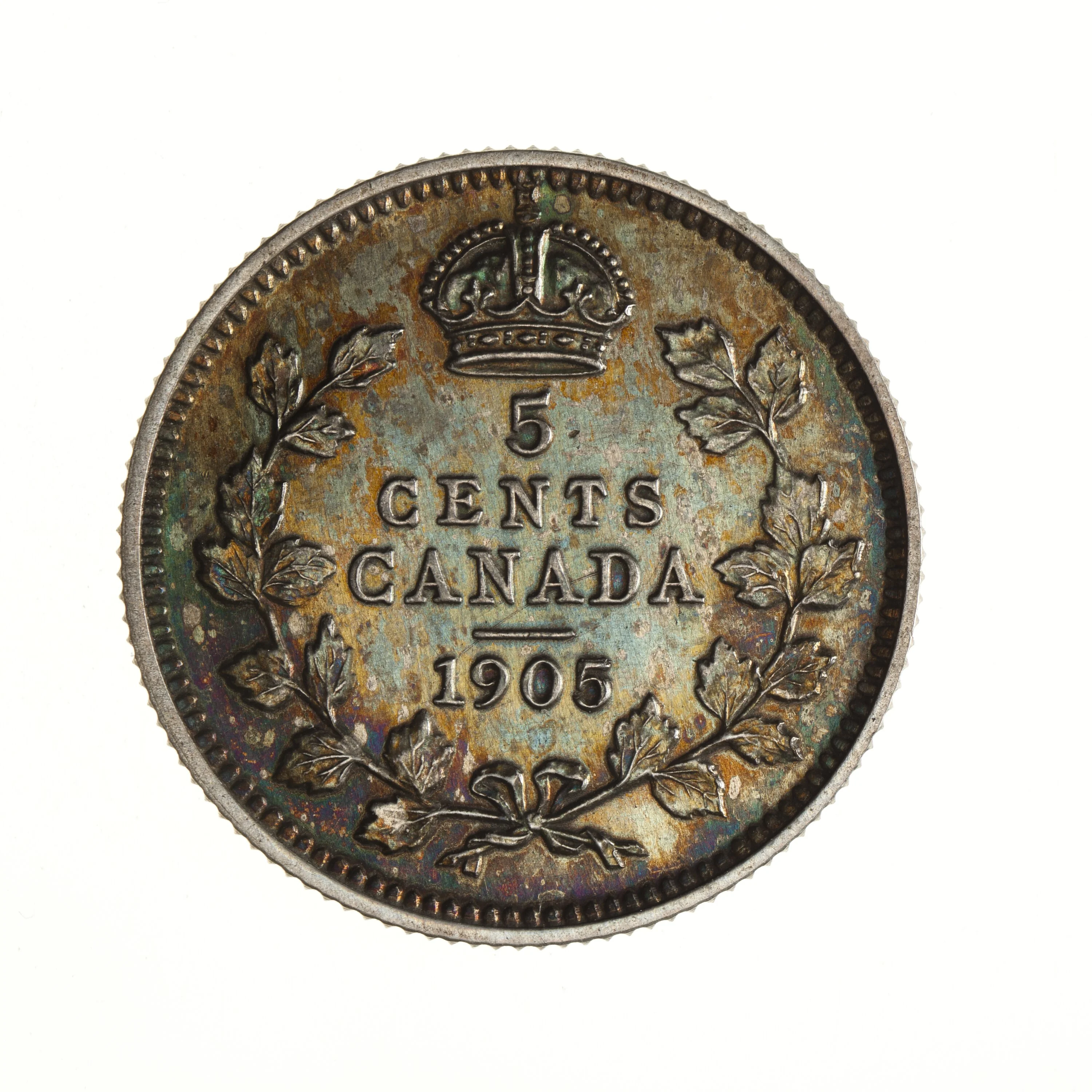
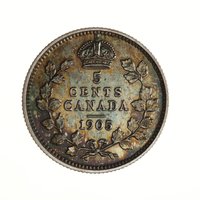
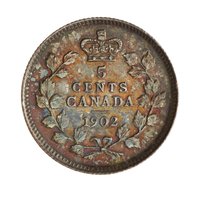
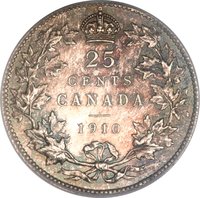
Face value with country name, framed by maple boughs and crowned by Edward VII.
Inscription:
5
CENTS
CANADA
1907
CENTS
CANADA
1907
Script: Latin
Engraver: William Henry James Blakemore
Edge
Reeded
Categories
| Symbols> Coat of Arms |
| Symbol> Wreath |
Mints
| Name | Mark |
|---|---|
| Royal Canadian Mint of Ottawa | — |
| Royal Mint (Tower Hill) | — |
| Heaton and Sons / The Mint Birmingham | H |
Mintings
| Year | Mint Mark | Mintage | Quality | Collection |
|---|---|---|---|---|
| 1903 | — | 1,000,000 | ||
| 1903 | H | 2,640,000 | ||
| 1904 | — | 2,400,000 | ||
| 1905 | — | 2,600,000 | ||
| 1906 | — | 3,100,000 | ||
| 1907 | — | 5,200,000 | ||
| 1908 | — | 1,220,524 | ||
| 1909 | — | — | ||
| 1910 | — | — |
Historical background
In 1903, Canada's currency system was a complex and transitional hybrid, reflecting its colonial past and emerging national identity. The country operated on a gold standard, with the Canadian dollar defined as equal in value to the U.S. gold dollar. However, a multitude of physical currencies circulated simultaneously. Alongside Dominion-issued notes and coins, British sovereigns, U.S. gold coins, and even private bank notes from chartered commercial banks were all legal tender. This created a practical environment where merchants and citizens routinely handled multiple forms of money, relying on published exchange bulletins to navigate daily transactions.
The system was underpinned by the Dominion Notes Act and the Bank Act, which governed issuance. The federal government issued "Dominion notes" in denominations of $500 and up, fully backed by gold reserves. Smaller denominations were the purview of chartered banks, which could issue their own private banknotes. These banknotes were theoretically redeemable in gold upon demand, but their value and public trust depended entirely on the solvency and reputation of the issuing bank. This period saw over thirty chartered banks issuing their own distinct notes, leading to a diverse but sometimes confusing paper money landscape.
This decentralized model was increasingly seen as problematic. Critics pointed to the risk of bank failures, which could render notes worthless, and the inefficiency of a non-uniform paper currency. Consequently, 1903 fell within a period of intense debate and reform that would culminate in the 1914 Finance Act and, ultimately, the Bank of Canada's creation in 1934. The push for a central authority to control currency issuance and act as a lender of last resort was gaining momentum, setting the stage for the end of Canada's era of private banknotes.
The system was underpinned by the Dominion Notes Act and the Bank Act, which governed issuance. The federal government issued "Dominion notes" in denominations of $500 and up, fully backed by gold reserves. Smaller denominations were the purview of chartered banks, which could issue their own private banknotes. These banknotes were theoretically redeemable in gold upon demand, but their value and public trust depended entirely on the solvency and reputation of the issuing bank. This period saw over thirty chartered banks issuing their own distinct notes, leading to a diverse but sometimes confusing paper money landscape.
This decentralized model was increasingly seen as problematic. Critics pointed to the risk of bank failures, which could render notes worthless, and the inefficiency of a non-uniform paper currency. Consequently, 1903 fell within a period of intense debate and reform that would culminate in the 1914 Finance Act and, ultimately, the Bank of Canada's creation in 1934. The push for a central authority to control currency issuance and act as a lender of last resort was gaining momentum, setting the stage for the end of Canada's era of private banknotes.
🌱 Very Common