


Obverse
Description:
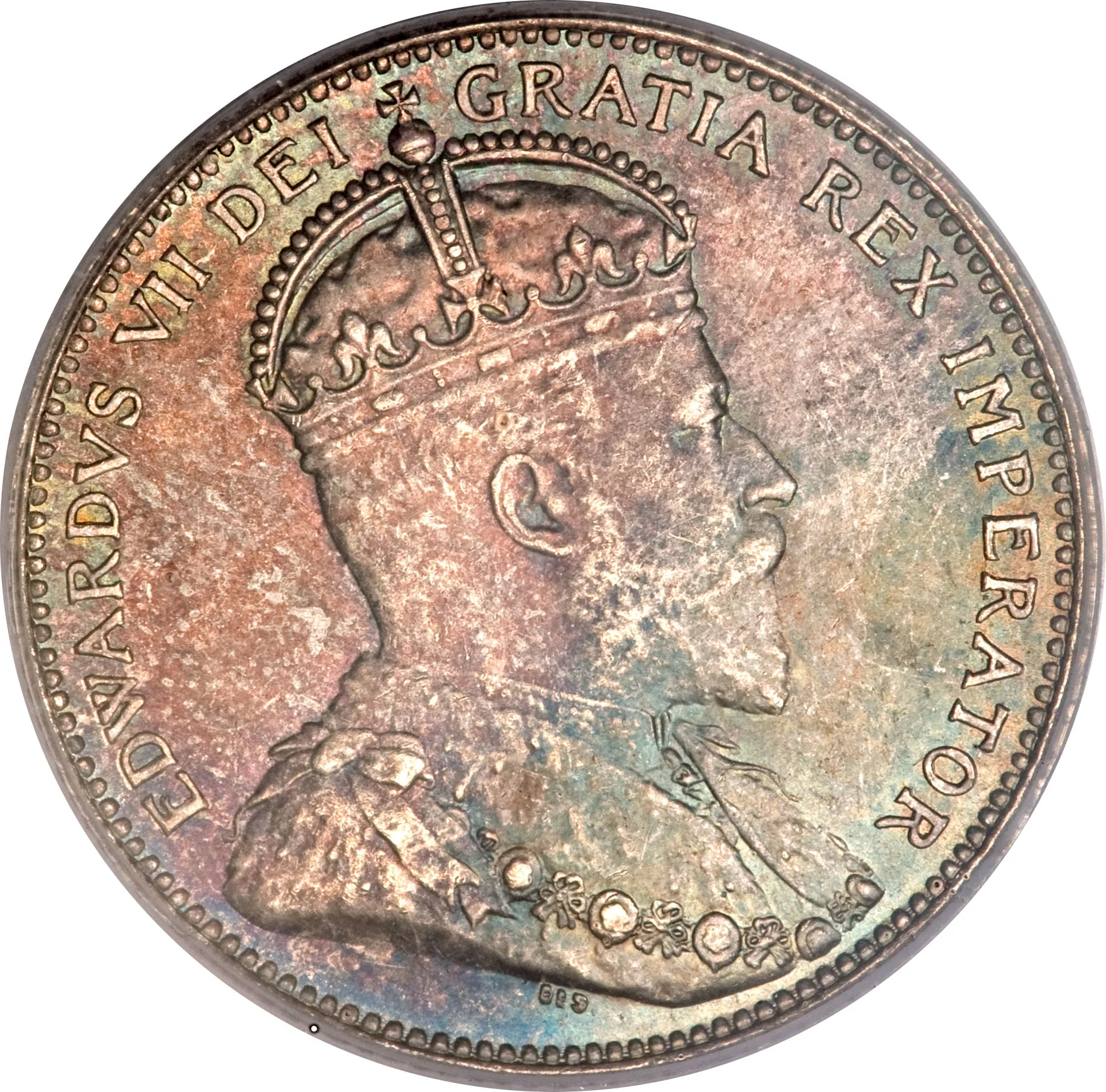
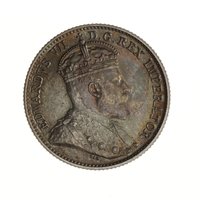
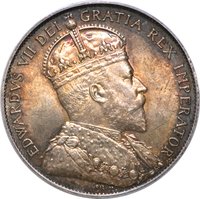
Bust of King Edward VII crowned, facing right.
Inscription:
EDWARDVS VII DEI GRATIA REX IMPERATOR
Translation:
Edward VII by the Grace of God King Emperor
Script: Latin
Language: Latin
Engraver: George William de Saulles
Reverse
Description:
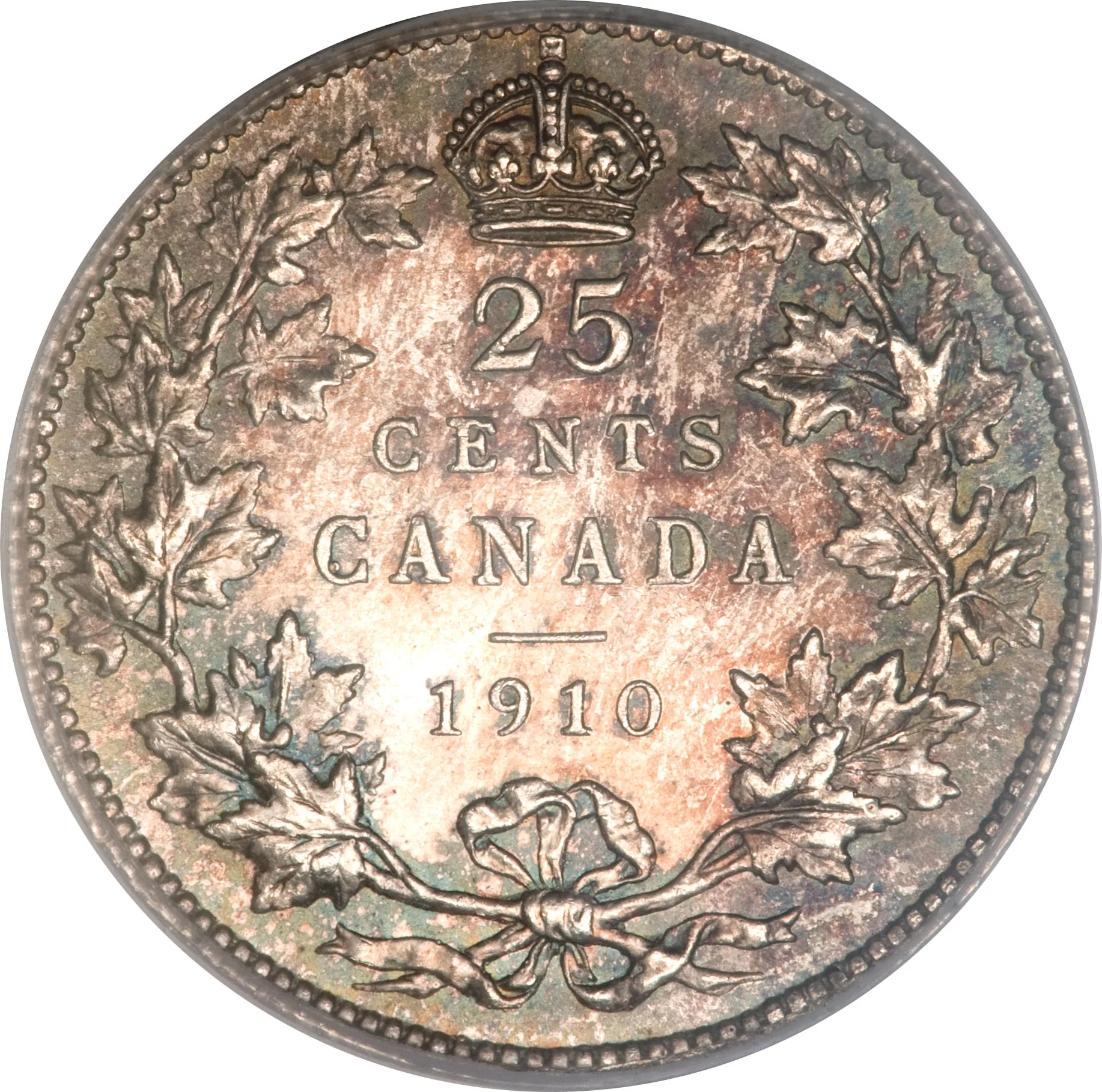
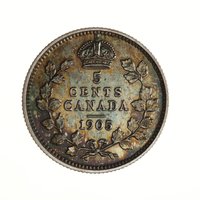
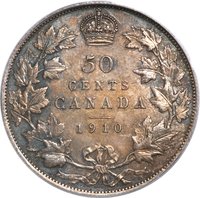
The face value, framed by "CANADA," is encircled by a crown and two maple boughs, which were wider in 1910.
Inscription:
25
CENTS
CANADA
1910
CENTS
CANADA
1910
Script: Latin
Engraver: William Henry James Blakemore
Edge
Reeded
Mints
| Name | Mark |
|---|---|
| Royal Canadian Mint of Ottawa | — |
Mintings
| Year | Mint Mark | Mintage | Quality | Collection |
|---|---|---|---|---|
| 1910 | — | 3,577,569 |
Historical background
In 1910, Canada's currency system was a complex and transitional hybrid, reflecting its colonial past and emerging national identity. The country operated on a gold standard, with the Canadian dollar defined as equal in value to the U.S. gold dollar. However, the physical money in public hands was a diverse mix: alongside limited government-issued Dominion notes, a substantial portion of the currency consisted of private bank notes issued by dozens of chartered banks. These commercial banknotes, which were legal tender and theoretically redeemable for gold, formed the backbone of everyday transactions, leading to a varied and sometimes confusing array of designs in circulation.
This decentralized system faced growing criticism. The proliferation of banknotes from potentially unstable institutions posed a risk, as the failure of a bank could render its notes worthless. Furthermore, the federal government sought greater control over monetary policy and seigniorage profits. The situation was also influenced by the cross-border flow of U.S. currency, which circulated freely in Canada, and a political desire to move toward a more uniform, state-controlled currency system akin to those being solidified in other modern nations.
Consequently, 1910 stood on the eve of significant reform. The political groundwork was being laid for what would become the Finance Act of 1914 and, ultimately, the Bank of Canada Act of 1934. The era's debates centered on centralizing note issue, ensuring greater financial stability, and reducing reliance on private bank money. Thus, the currency situation of 1910 represents the final chapter of Canada's experimental, bank-dominated monetary era, immediately preceding the crises of World War I that would accelerate the push toward a central banking system and a unified national currency.
This decentralized system faced growing criticism. The proliferation of banknotes from potentially unstable institutions posed a risk, as the failure of a bank could render its notes worthless. Furthermore, the federal government sought greater control over monetary policy and seigniorage profits. The situation was also influenced by the cross-border flow of U.S. currency, which circulated freely in Canada, and a political desire to move toward a more uniform, state-controlled currency system akin to those being solidified in other modern nations.
Consequently, 1910 stood on the eve of significant reform. The political groundwork was being laid for what would become the Finance Act of 1914 and, ultimately, the Bank of Canada Act of 1934. The era's debates centered on centralizing note issue, ensuring greater financial stability, and reducing reliance on private bank money. Thus, the currency situation of 1910 represents the final chapter of Canada's experimental, bank-dominated monetary era, immediately preceding the crises of World War I that would accelerate the push toward a central banking system and a unified national currency.
🌱 Common