

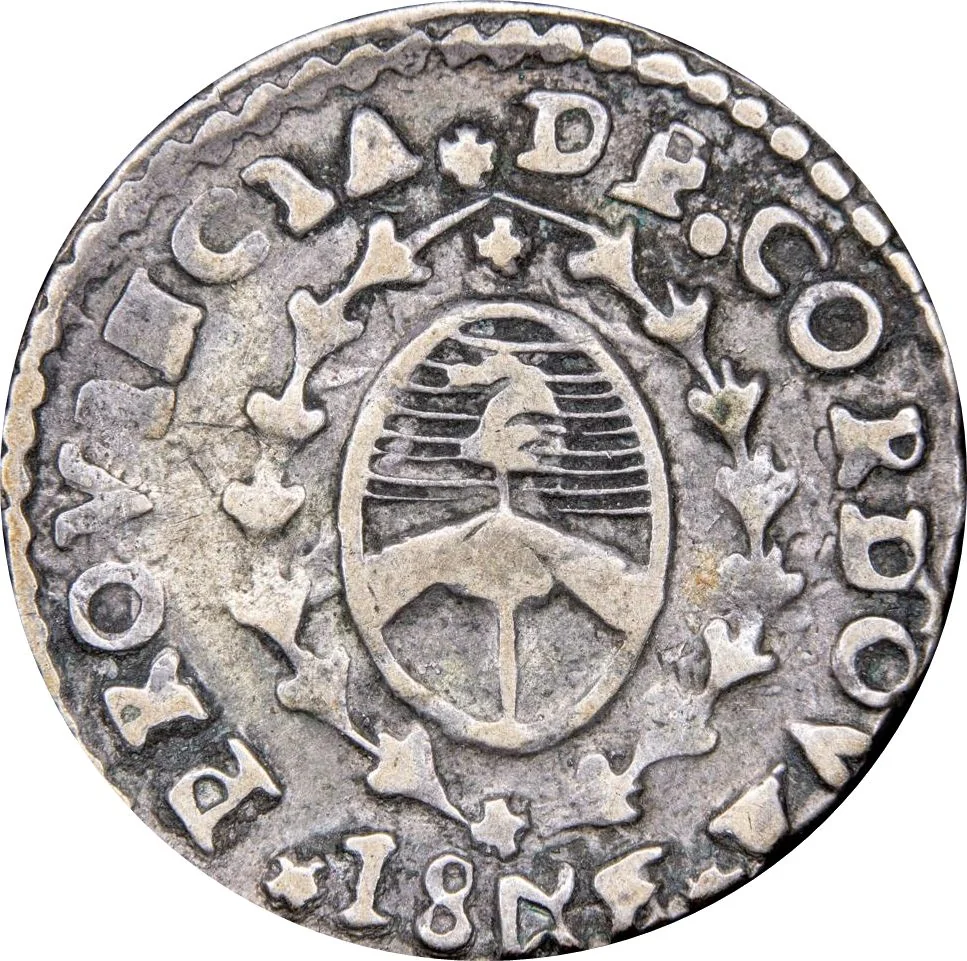
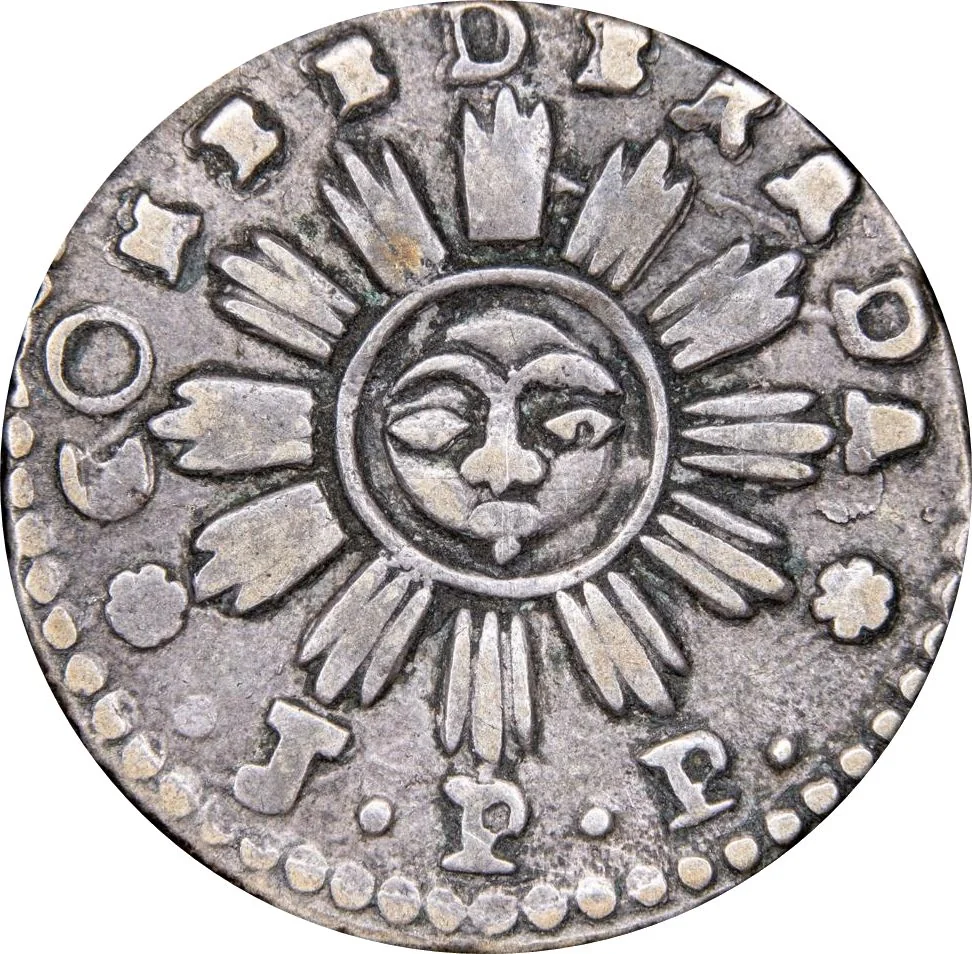
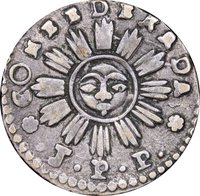
Obverse
Description:
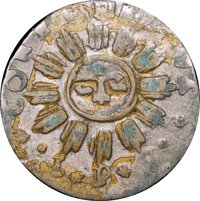
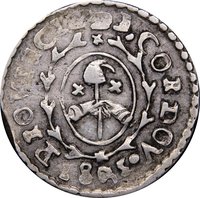
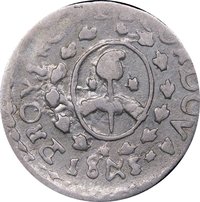
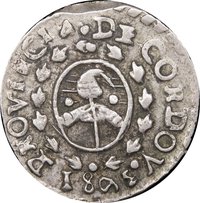
A blue striped Phrygian cap, facing left.
Inscription:
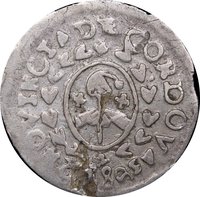
PROVINCIA DE CORDOVA
Script: Latin
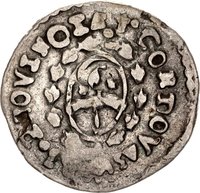
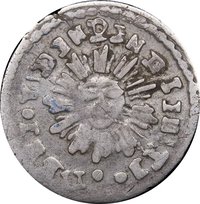
Reverse
Edge
Reeded
Legend:
o//o//o//o//
Categories
| Symbol> Hand |
| Symbols> Coat of Arms |
| Symbol> Phrygian cap |
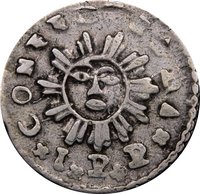
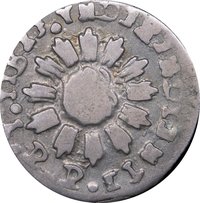
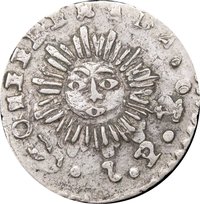
| Symbol> Sun |
| Symbol> Wreath |
Mintings
| Year | Mint Mark | Mintage | Quality | Collection |
|---|---|---|---|---|
| 1843 | JPP | — |
Historical background
In 1843, the province of Córdoba, Argentina, was immersed in the profound monetary chaos that characterized the post-independence "Age of Caudillos." Following the collapse of central authority after the dissolution of the national government in 1820, each province, including Córdoba under the rule of Governor Manuel López, assumed the right to issue its own currency. The provincial treasury, chronically depleted by the costs of maintaining militias and participating in intermittent civil wars, resorted to the printing of paper money—billetes de curso forzoso (forced circulation notes)—to finance its operations. This currency had no metallic backing and its value was decreed by law, not by market confidence.
The result was rampant inflation and a complex, fragmented monetary landscape. Córdoba's paper pesos circulated alongside a bewildering variety of other currencies: coins from the colonial era, coins minted by other provinces, and even cut or counterstamped foreign coins. The value of Córdoba's paper money fluctuated wildly based on the province's political and military fortunes, often trading at a steep discount to "hard" metallic money. This created a dual economy where daily transactions for common goods might use the devalued paper, while significant commerce, land purchases, and contracts were stipulated in silver or gold ounces to preserve value.
This unstable financial environment severely hampered economic development, discouraged trade with other provinces, and placed a heavy burden on the populace, particularly wage earners and those on fixed incomes. The currency crisis of 1843 was not an isolated event but a symptom of the broader political fragmentation of the Argentine Confederation, where monetary sovereignty became a tool of provincial power and a reflection of the ongoing struggle between federalist and unitarian forces, ultimately impeding national economic integration for decades.
The result was rampant inflation and a complex, fragmented monetary landscape. Córdoba's paper pesos circulated alongside a bewildering variety of other currencies: coins from the colonial era, coins minted by other provinces, and even cut or counterstamped foreign coins. The value of Córdoba's paper money fluctuated wildly based on the province's political and military fortunes, often trading at a steep discount to "hard" metallic money. This created a dual economy where daily transactions for common goods might use the devalued paper, while significant commerce, land purchases, and contracts were stipulated in silver or gold ounces to preserve value.
This unstable financial environment severely hampered economic development, discouraged trade with other provinces, and placed a heavy burden on the populace, particularly wage earners and those on fixed incomes. The currency crisis of 1843 was not an isolated event but a symptom of the broader political fragmentation of the Argentine Confederation, where monetary sovereignty became a tool of provincial power and a reflection of the ongoing struggle between federalist and unitarian forces, ultimately impeding national economic integration for decades.
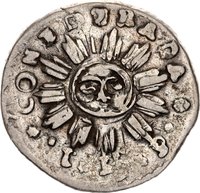
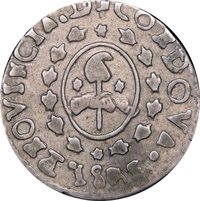
Series: 1843 Córdoba circulation coins

✨ Legendary