

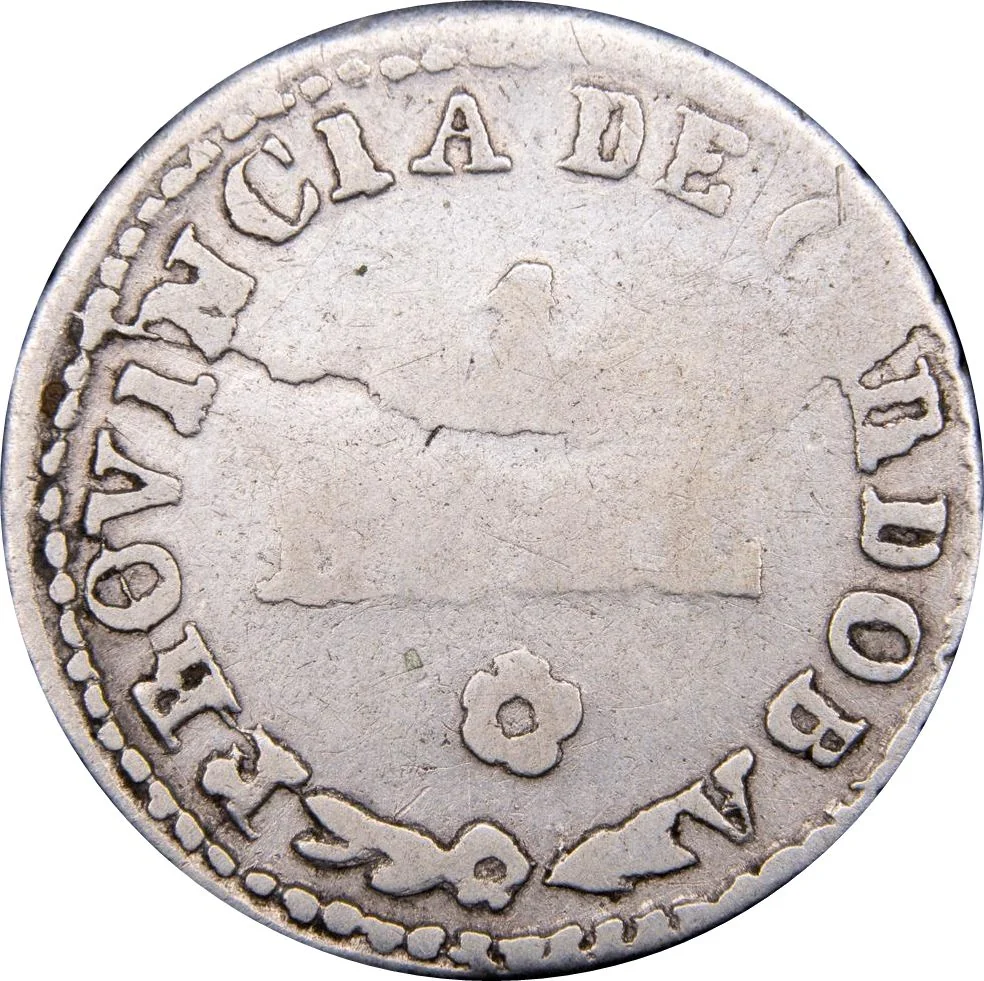
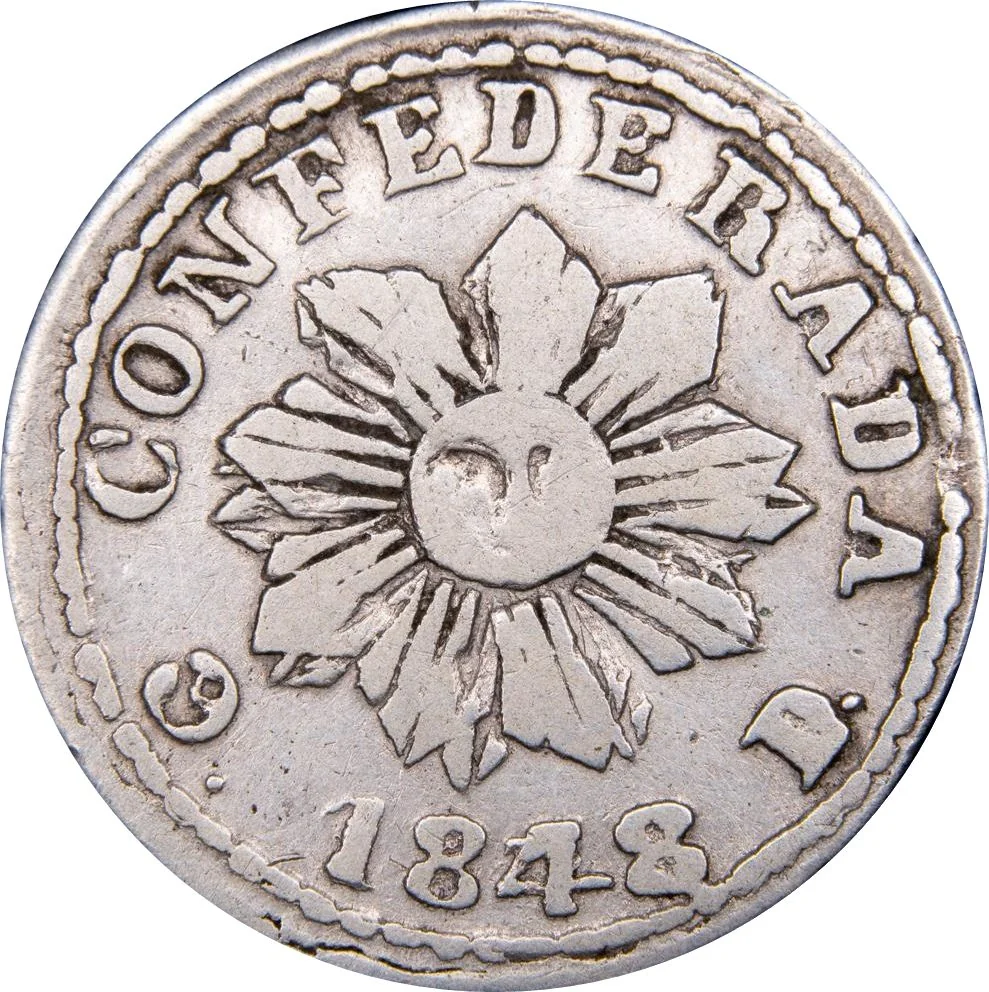
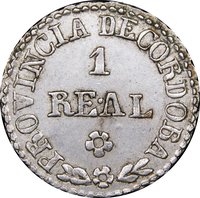
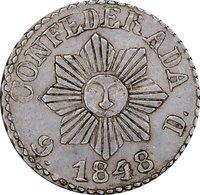
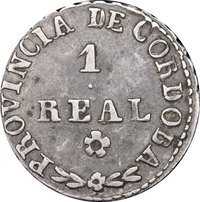
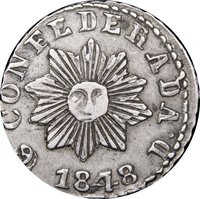
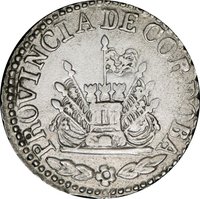
Obverse
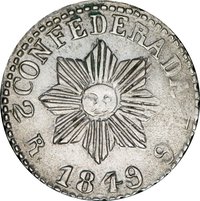
Reverse
Edge
Laureate
Mintings
| Year | Mint Mark | Mintage | Quality | Collection |
|---|---|---|---|---|
| 1848 | — | — |
Historical background
In 1848, the currency situation in the Province of Córdoba, Argentina, was one of profound disorder and fragmentation, mirroring the broader political and economic instability of the post-independence period. Following the collapse of Spanish colonial authority, there was no unified national monetary system. Instead, a chaotic mix of currencies circulated, including worn Spanish and Bolivian coinage, privately issued tokens from local merchants and estancieros, and notes from various provincial banks. This environment fostered widespread counterfeiting and severe depreciation, as the value of money was highly localized and based largely on fleeting trust.
The core of the problem lay in Córdoba's chronic fiscal deficits and its need to finance military operations during the ongoing Argentine Civil Wars. With limited access to hard currency (specie), the provincial government, under figures like Governor Manuel López, repeatedly resorted to issuing its own paper money, often without sufficient metallic backing. These billetes de corso (forced currency) were declared legal tender for all public and private transactions, but their value plummeted as emissions increased to cover budgetary shortfalls. This led to a classic vicious cycle of inflation, loss of public confidence, and a preference for any foreign or metallic coin over local paper.
Consequently, by 1848, Córdoba's economy suffered from a crippling dual problem: a severe shortage of reliable, high-value currency for major transactions and trade, alongside an oversupply of nearly worthless paper for daily use. This monetary anarchy stifled commerce, discouraged investment, and placed a heavy burden on the populace, particularly the poor. The situation would only begin to resolve after the national unification under the 1853 Constitution, which paved the way for a centralized national currency and banking system, ultimately displacing Córdoba's and other provinces' chaotic monetary experiments.
The core of the problem lay in Córdoba's chronic fiscal deficits and its need to finance military operations during the ongoing Argentine Civil Wars. With limited access to hard currency (specie), the provincial government, under figures like Governor Manuel López, repeatedly resorted to issuing its own paper money, often without sufficient metallic backing. These billetes de corso (forced currency) were declared legal tender for all public and private transactions, but their value plummeted as emissions increased to cover budgetary shortfalls. This led to a classic vicious cycle of inflation, loss of public confidence, and a preference for any foreign or metallic coin over local paper.
Consequently, by 1848, Córdoba's economy suffered from a crippling dual problem: a severe shortage of reliable, high-value currency for major transactions and trade, alongside an oversupply of nearly worthless paper for daily use. This monetary anarchy stifled commerce, discouraged investment, and placed a heavy burden on the populace, particularly the poor. The situation would only begin to resolve after the national unification under the 1853 Constitution, which paved the way for a centralized national currency and banking system, ultimately displacing Córdoba's and other provinces' chaotic monetary experiments.
💎 Extremely Rare