

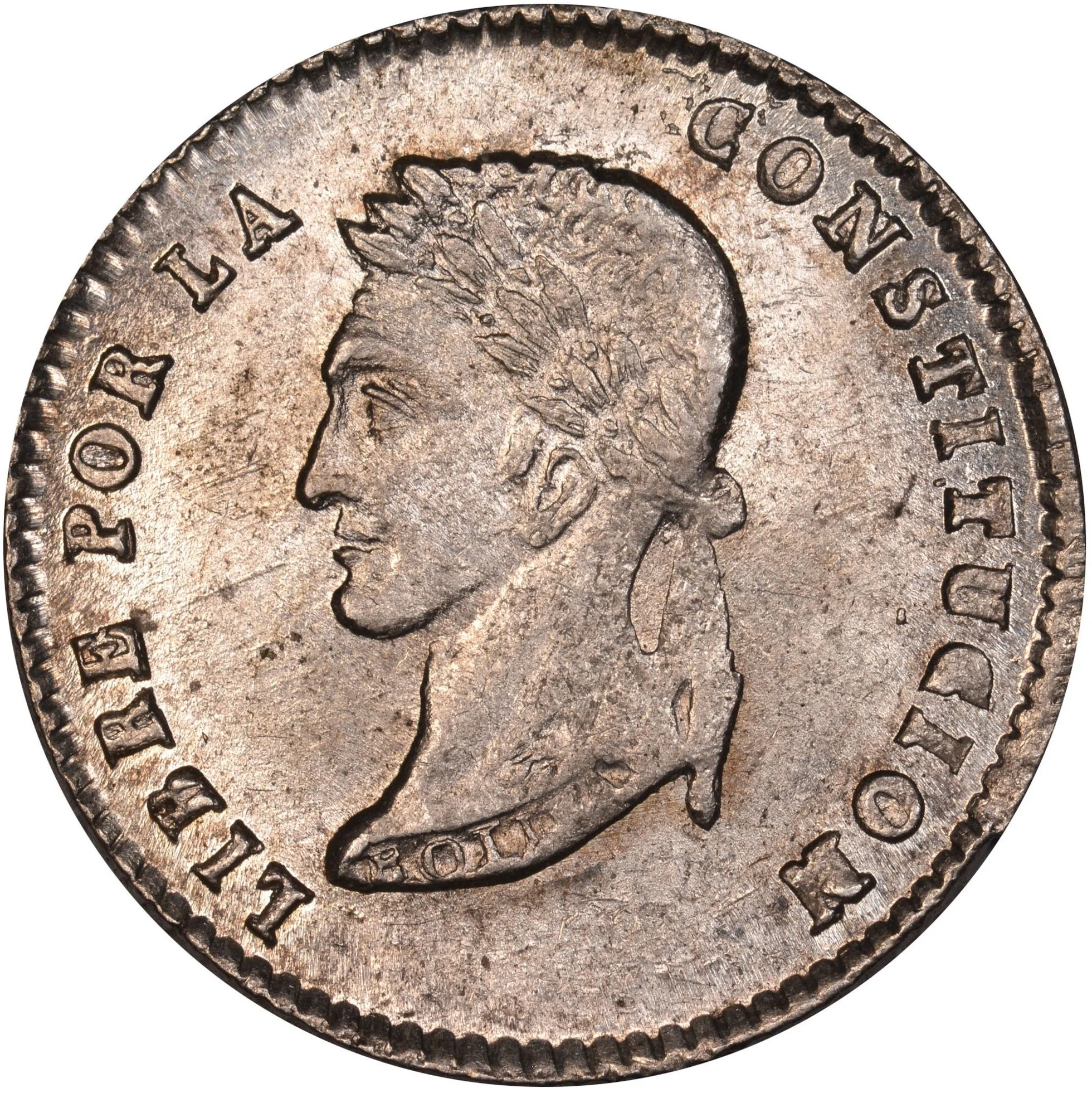

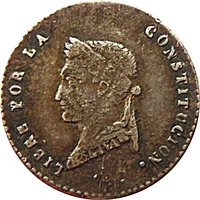
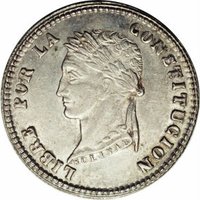
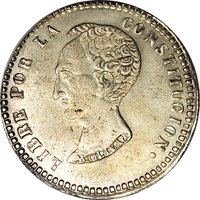
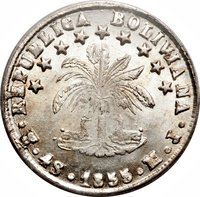
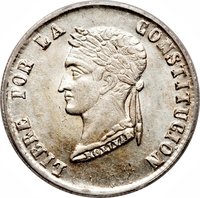
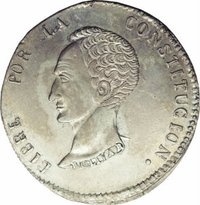
Obverse
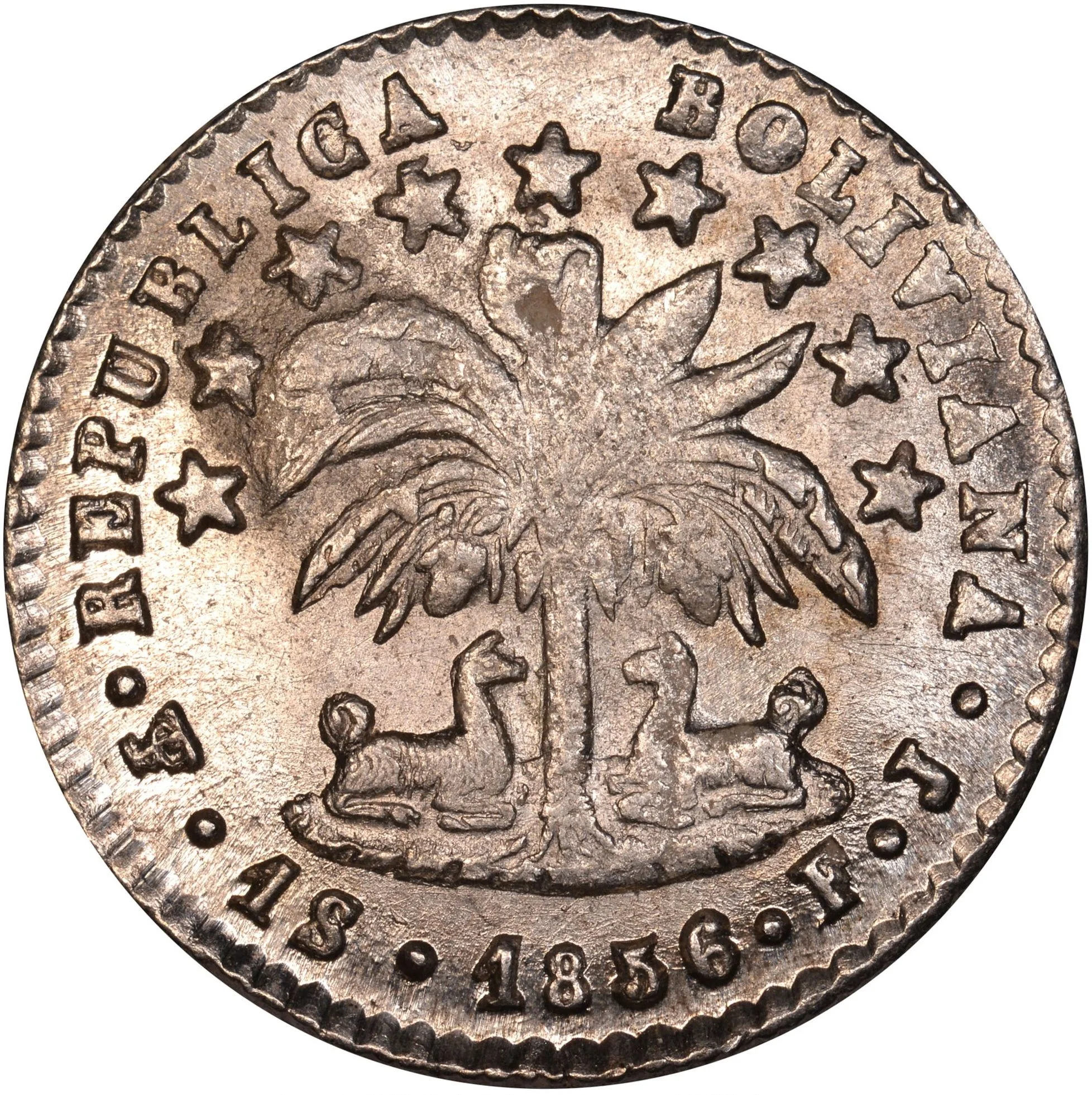
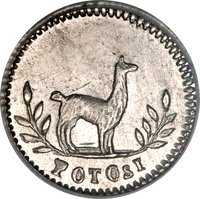
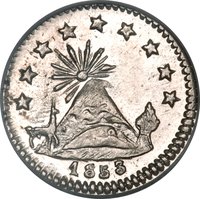
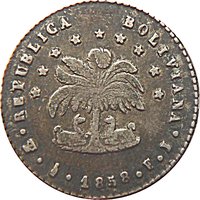
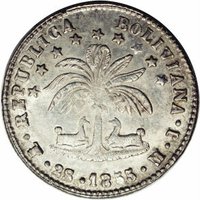
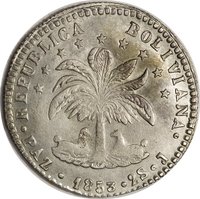
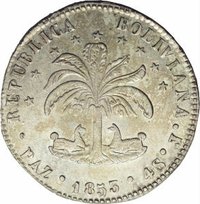
Reverse
Edge
Reeded
Categories
| Animal> Camel |
| Person> Military leader |
| Person> Politician |
| Plant> Tree |
| Symbol> Wreath |
Mints
| Name | Mark |
|---|---|
| Potosi | — |
Mintings
| Year | Mint Mark | Mintage | Quality | Collection |
|---|---|---|---|---|
| 1853 | PTS | — | ||
| 1854 | PTS | — | ||
| 1855 | PTS | — | ||
| 1856 | PTS | — | ||
| 1857 | PTS | — | ||
| 1858 | PTS | — | ||
| 1859 | PTS | — |
Historical background
In 1853, Bolivia's currency situation was characterized by profound instability and scarcity, a direct legacy of the economic devastation following the War of the Confederation (1836-39) and the ongoing political turbulence of the early republican period. The national mint in Potosí struggled with low production, and the country suffered from a severe shortage of circulating coinage. This vacuum was filled by a chaotic mix of foreign silver coins, primarily Peruvian pesos and Bolivian coins from earlier periods, leading to a complex and unreliable system of exchange that hampered both commerce and state finances.
The government of General Manuel Isidoro Belzu, facing fiscal crisis, resorted to the expedient of issuing moneda feble (weak money). These were debased silver coins, notably the peso feble, which had a lower silver content than their declared face value. While this practice provided immediate revenue for the state, it disastrously eroded public trust. Gresham's law took hold, as people hoarded older, full-value coins and passed the new debased currency, further distorting the economy and causing prices to fluctuate unpredictably.
Consequently, 1853 represents a point of severe monetary dysfunction. The coexistence of multiple coin types with varying intrinsic values, coupled with the state's reliance on debasement, created a climate of uncertainty that stifled economic growth. This period underscored the fundamental challenges of building a stable national currency in a politically fragmented and resource-dependent young nation, a problem that would persist for decades as Bolivia grappled with establishing both monetary sovereignty and fiscal discipline.
The government of General Manuel Isidoro Belzu, facing fiscal crisis, resorted to the expedient of issuing moneda feble (weak money). These were debased silver coins, notably the peso feble, which had a lower silver content than their declared face value. While this practice provided immediate revenue for the state, it disastrously eroded public trust. Gresham's law took hold, as people hoarded older, full-value coins and passed the new debased currency, further distorting the economy and causing prices to fluctuate unpredictably.
Consequently, 1853 represents a point of severe monetary dysfunction. The coexistence of multiple coin types with varying intrinsic values, coupled with the state's reliance on debasement, created a climate of uncertainty that stifled economic growth. This period underscored the fundamental challenges of building a stable national currency in a politically fragmented and resource-dependent young nation, a problem that would persist for decades as Bolivia grappled with establishing both monetary sovereignty and fiscal discipline.
Series: 1853 Bolivia circulation coins
⭐ Rare