

2 Cents – Cook Islands
Context
Years: 1972–1983
Issuer: Cook Islands
Ruler: Elizabeth II
Currency:
(since 1972)
Demonetization: 1 May 2016
Total mintage: 425,835
Material
References
KM: #Click to copy to clipboard2
Numista: #4155
Value
Exchange value: 0.02 NZD = $0.01
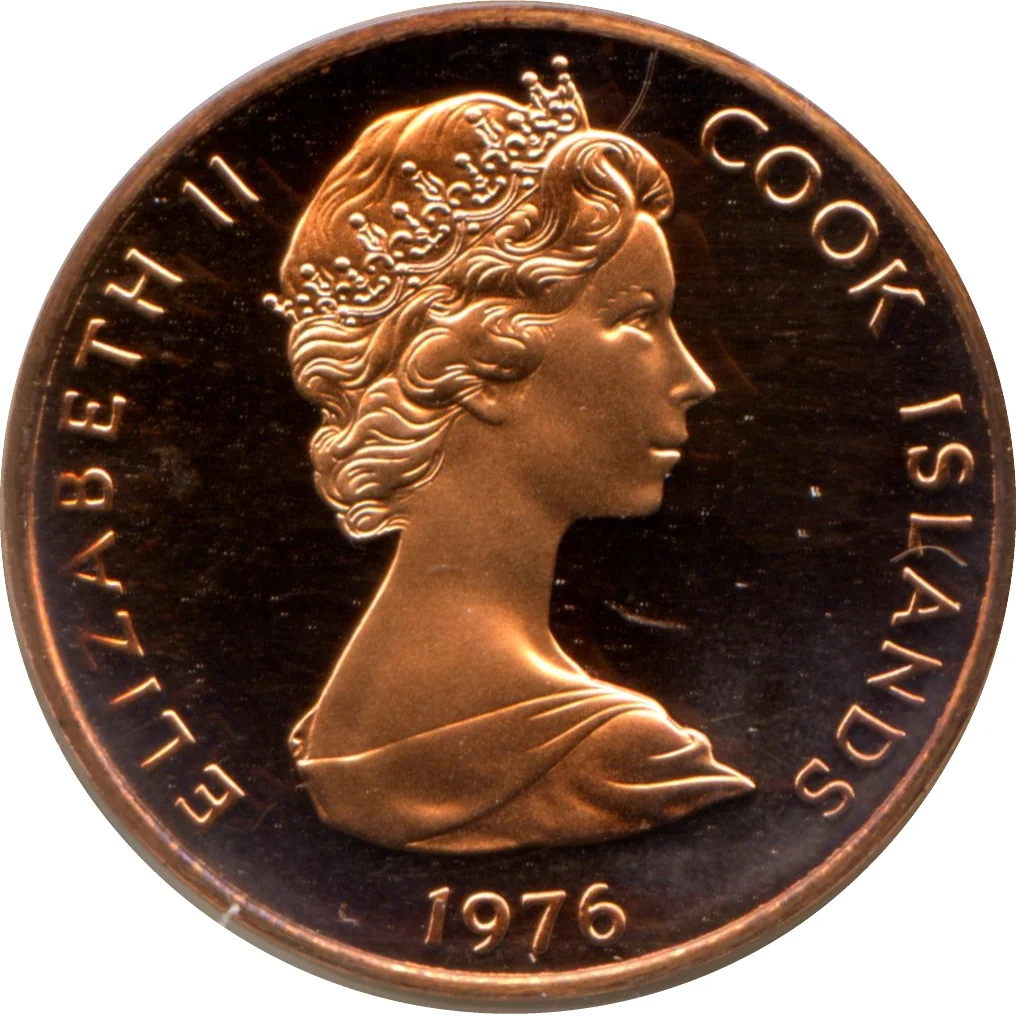
Obverse
Description:
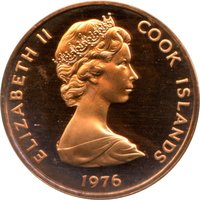
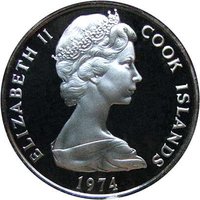
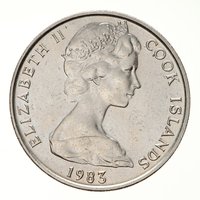
Young Elizabeth II facing right above date.
Inscription:
ELIZABETH II COOK ISLANDS
1976
1976
Translation:
ELIZABETH II COOK ISLANDS
1976
1976
Script: Latin
Language: English
Engraver: Arnold Machin
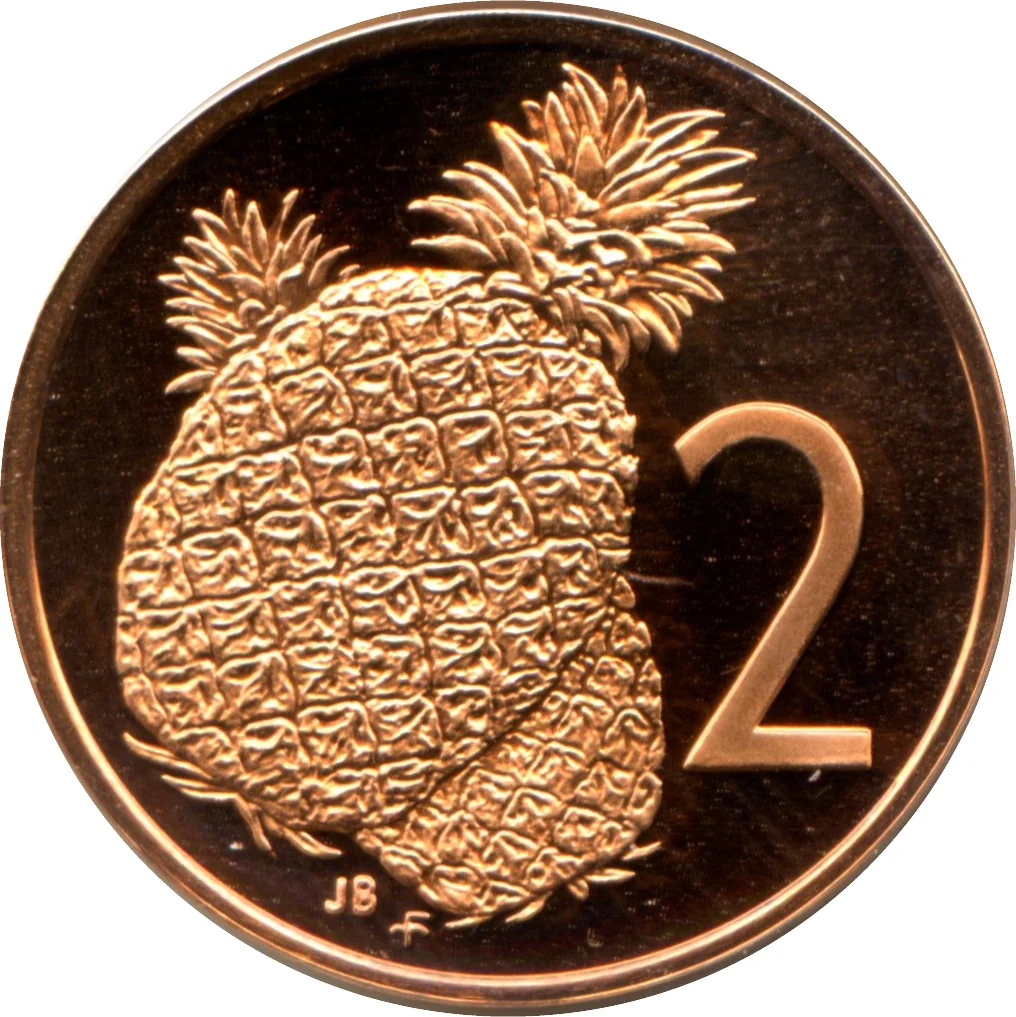
Reverse
Description:
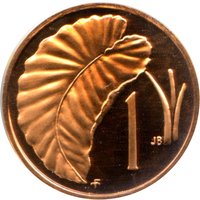
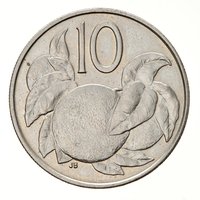
Pineapples, right denomination.
Inscription:
2
FM
JB
FM
JB
Script: Latin
Engraver: George James Berry
Edge
Plain
Mints
| Name | Mark |
|---|---|
| Royal Australian Mint | — |
| Franklin Mint | (FM) |
Mintings
| Year | Mint Mark | Mintage | Quality | Collection |
|---|---|---|---|---|
| 1972 | — | 63,000 | ||
| 1972 | — | 17,000 | Proof | |
| 1973 | — | 8,500 | ||
| 1973 | — | 13,000 | Proof | |
| 1974 | — | 7,300 | Proof | |
| 1974 | — | 120,000 | ||
| 1975 | — | 129,000 | ||
| 1975 | FM | 1,000 | Matte | |
| 1975 | FM | 21,000 | Proof | |
| 1975 | FM | 2,251 | Special Uncirculated | |
| 1976 | FM | 18,000 | Proof | |
| 1976 | FM | 1,066 | Special Uncirculated | |
| 1976 | FM | 1,001 | Matte | |
| 1977 | FM | 1,171 | Matte | |
| 1977 | FM | 5,986 | Proof | |
| 1977 | FM | 1,002 | Special Uncirculated | |
| 1979 | FM | 1,000 | Matte | |
| 1979 | FM | 4,058 | Proof | |
| 1979 | FM | 500 | Special Uncirculated | |
| 1983 | — | — | ||
| 1983 | — | — | BU | |
| 1983 | — | 10,000 | Proof |
Historical background
In 1972, the currency situation in the Cook Islands was one of transition and formalized dependency. Following its attainment of self-government in free association with New Zealand in 1965, the islands did not immediately issue a distinct currency. Instead, the New Zealand pound (and from July 1967, the New Zealand dollar) remained the sole legal tender and the backbone of the financial system. This arrangement reflected the close constitutional and economic ties between the two nations, with New Zealand also providing substantial budgetary support and managing the islands' external affairs and defense.
However, 1972 marked a pivotal step towards a visible national monetary identity. That year, the Cook Islands government, through the Cook Islands Amendment Act passed by the New Zealand Parliament, gained the authority to issue its own decimal currency. The Cook Islands dollar was established, pegged at par with the New Zealand dollar, creating a fixed one-to-one exchange rate. Crucially, this new currency was not intended to replace but to circulate alongside the New Zealand dollar, which retained its legal tender status within the islands.
Therefore, the background of 1972 is characterized by the establishment of a dual-currency system that persists today. The introduction of Cook Islands coins and later banknotes (with notes first issued in 1987) served primarily symbolic and practical purposes for domestic use and tourism, while the economy remained fundamentally integrated with and dependent on the monetary policy and stability of New Zealand. This framework ensured financial stability for the nascent self-governing state while allowing for the expression of its growing national consciousness through a sovereign currency.
However, 1972 marked a pivotal step towards a visible national monetary identity. That year, the Cook Islands government, through the Cook Islands Amendment Act passed by the New Zealand Parliament, gained the authority to issue its own decimal currency. The Cook Islands dollar was established, pegged at par with the New Zealand dollar, creating a fixed one-to-one exchange rate. Crucially, this new currency was not intended to replace but to circulate alongside the New Zealand dollar, which retained its legal tender status within the islands.
Therefore, the background of 1972 is characterized by the establishment of a dual-currency system that persists today. The introduction of Cook Islands coins and later banknotes (with notes first issued in 1987) served primarily symbolic and practical purposes for domestic use and tourism, while the economy remained fundamentally integrated with and dependent on the monetary policy and stability of New Zealand. This framework ensured financial stability for the nascent self-governing state while allowing for the expression of its growing national consciousness through a sovereign currency.
🌱 Common