

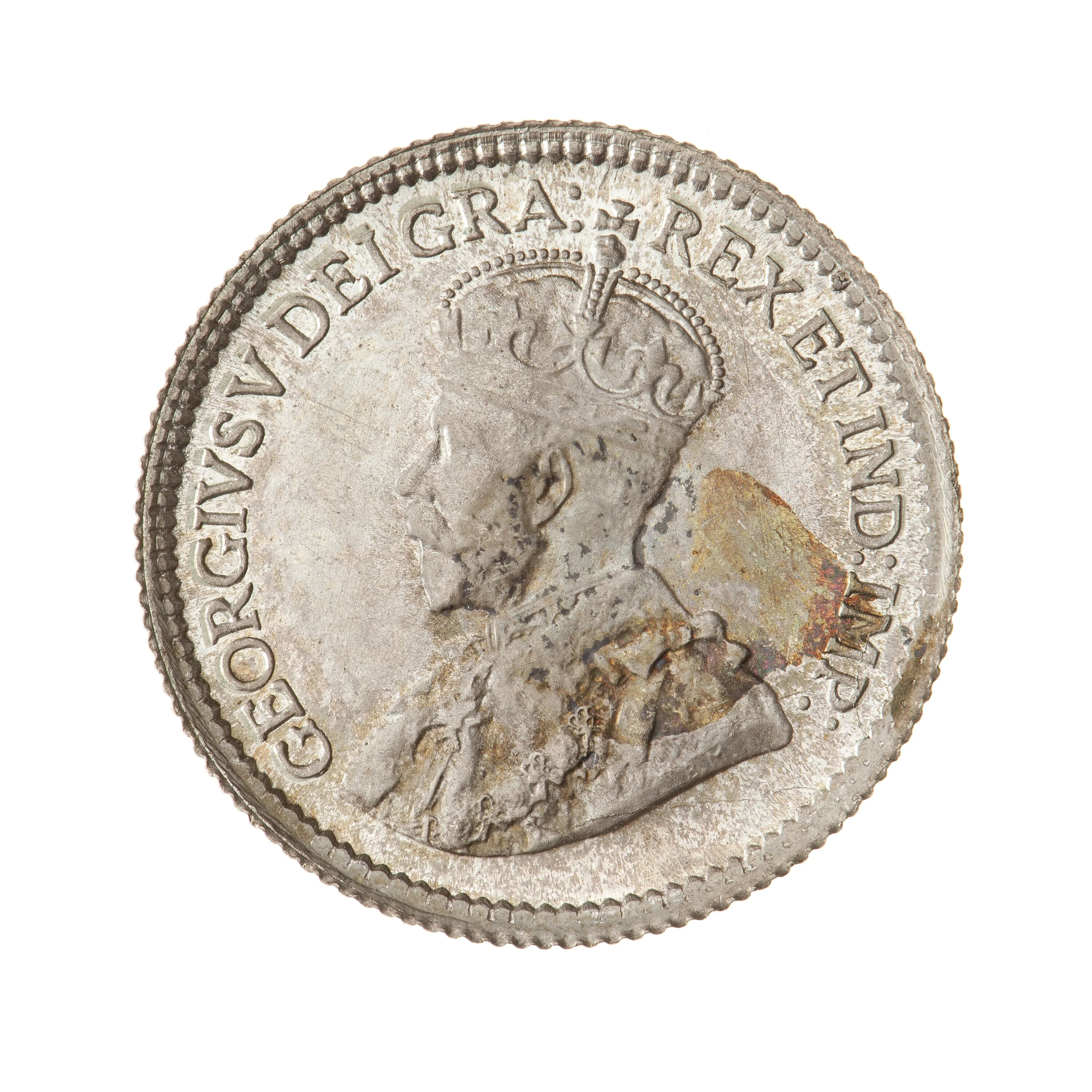
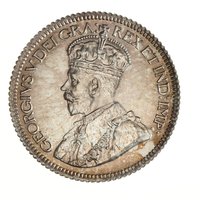
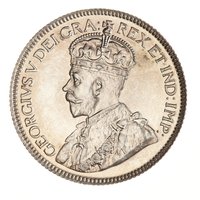
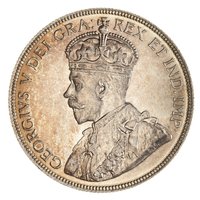
Obverse
Description:
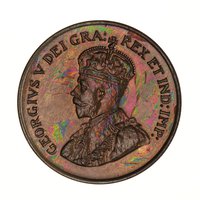
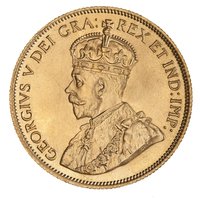
King George V crowned, left-facing bust.
Inscription:
GEORGIVS V DEI GRA: REX ET IND:IMP:
Translation:
George V by the Grace of God King and Emperor of India
Script: Latin
Language: Latin
Designer: Edgar Bertram MacKennal
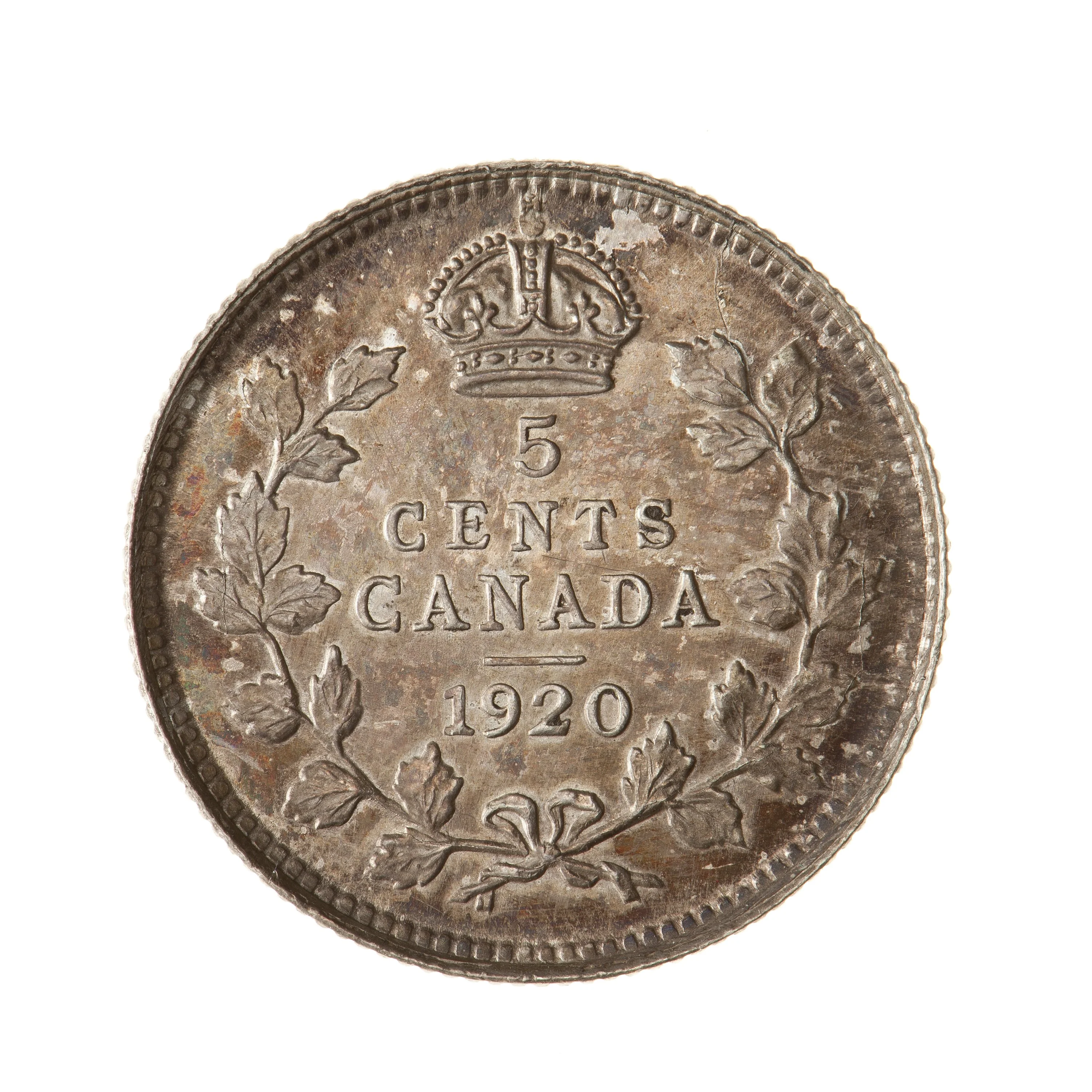
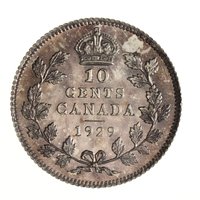
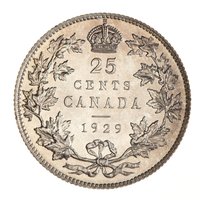
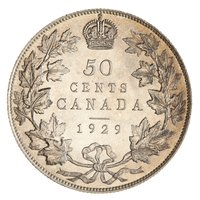
Reverse
Description:
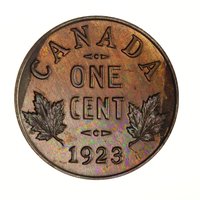
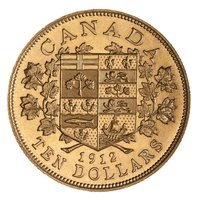
Face value with country name, encircled by maple boughs and a crown.
Inscription:
5
CENTS
CANADA
1921
CENTS
CANADA
1921
Script: Latin
Designer: William Henry James Blakemore
Edge
Milled
Mints
| Name | Mark |
|---|---|
| Royal Canadian Mint of Ottawa | — |
Mintings
| Year | Mint Mark | Mintage | Quality | Collection |
|---|---|---|---|---|
| 1920 | — | 10,649,851 | ||
| 1921 | — | 2,582,495 |
Historical background
In the aftermath of the First World War, Canada in 1920 faced a complex and transitional currency situation. The nation was still operating without a central bank, relying instead on a system where private chartered banks issued their own paper notes, backed by federal government gold reserves held in Ottawa. This system, governed by the Dominion Notes Act and the Bank Act, had functioned through the war but under significant strain. To finance the war effort, the federal government had suspended gold convertibility in 1914, moving Canada off the classical gold standard and onto a "gold exchange standard." This meant currency was no longer directly redeemable for gold coin by the public, but the government maintained a fixed gold price to settle international balances.
The immediate post-war period was marked by economic turbulence, including a sharp but short-lived inflationary boom followed by a severe deflationary recession beginning in late 1920. The money supply had expanded significantly during the war, and the persistence of high inflation into early 1920 prompted the government and the banking community to take corrective action. A key policy shift was the official resumption of gold convertibility for Dominion notes at the pre-war parity in mid-1920, a move intended to restore monetary discipline and international confidence. However, this return to a form of the gold standard coincided with the global downturn, exacerbating deflationary pressures as Canada sought to maintain its fixed exchange rate with gold and the U.S. dollar.
Consequently, the currency landscape of 1920 was one of contradiction and pressure. While the formal gold standard was reinstated, the practical reality was one of tight money, falling prices, and rising unemployment. The chartered banks' note-issuing privilege was becoming increasingly anachronistic, and the lack of a central monetary authority to manage the currency and act as a lender of last resort was seen as a growing weakness. Thus, 1920 stands as a pivotal year where the strains of the old system, combined with the harsh economic transition from war to peace, set the stage for the future debates that would eventually lead to the creation of the Bank of Canada in 1935.
The immediate post-war period was marked by economic turbulence, including a sharp but short-lived inflationary boom followed by a severe deflationary recession beginning in late 1920. The money supply had expanded significantly during the war, and the persistence of high inflation into early 1920 prompted the government and the banking community to take corrective action. A key policy shift was the official resumption of gold convertibility for Dominion notes at the pre-war parity in mid-1920, a move intended to restore monetary discipline and international confidence. However, this return to a form of the gold standard coincided with the global downturn, exacerbating deflationary pressures as Canada sought to maintain its fixed exchange rate with gold and the U.S. dollar.
Consequently, the currency landscape of 1920 was one of contradiction and pressure. While the formal gold standard was reinstated, the practical reality was one of tight money, falling prices, and rising unemployment. The chartered banks' note-issuing privilege was becoming increasingly anachronistic, and the lack of a central monetary authority to manage the currency and act as a lender of last resort was seen as a growing weakness. Thus, 1920 stands as a pivotal year where the strains of the old system, combined with the harsh economic transition from war to peace, set the stage for the future debates that would eventually lead to the creation of the Bank of Canada in 1935.
Series: 1920 Canada circulation coins
🌱 Common