

1 mun – Joseon
Add to wishlist
Context
Material
Diameter: 25 mm
Weight: 4 g
Thickness: 1.2 mm
Shape: Round with a square hole
Composition: Brass
Magnetic: No
Technique: Cast
Alignment: Medal alignment
flip
References
KM: #
Numista: #414055
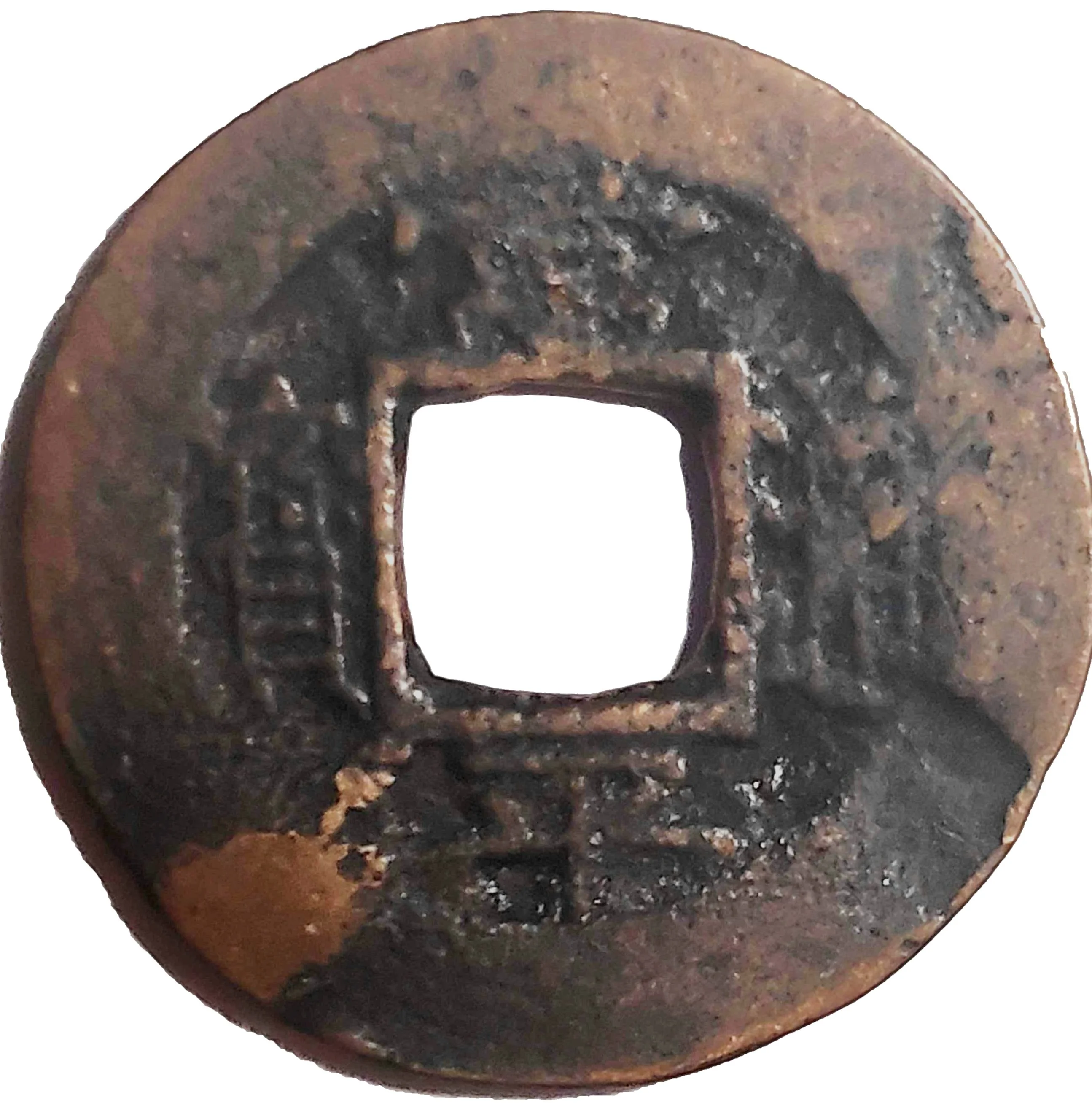
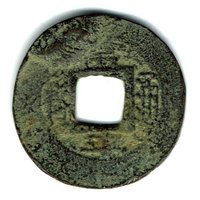
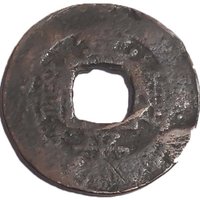
Obverse
Description:
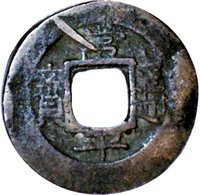
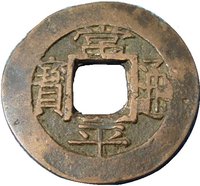
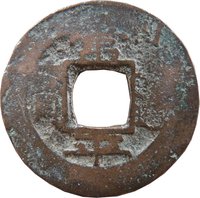
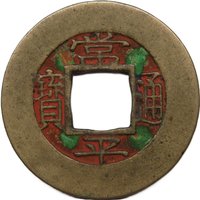
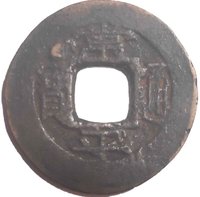
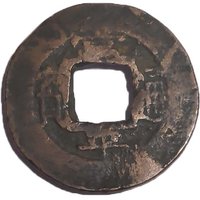
常平通寶 (Sang pyong Tong bo) - Yi Dynasty Korean currency.
Inscription:
常
寶 通
平
寶 通
平
Translation:
Eternal Treasure
Circulating Currency
Circulating Currency
Scripts: Chinese (traditional, regular script)
Language: Chinese
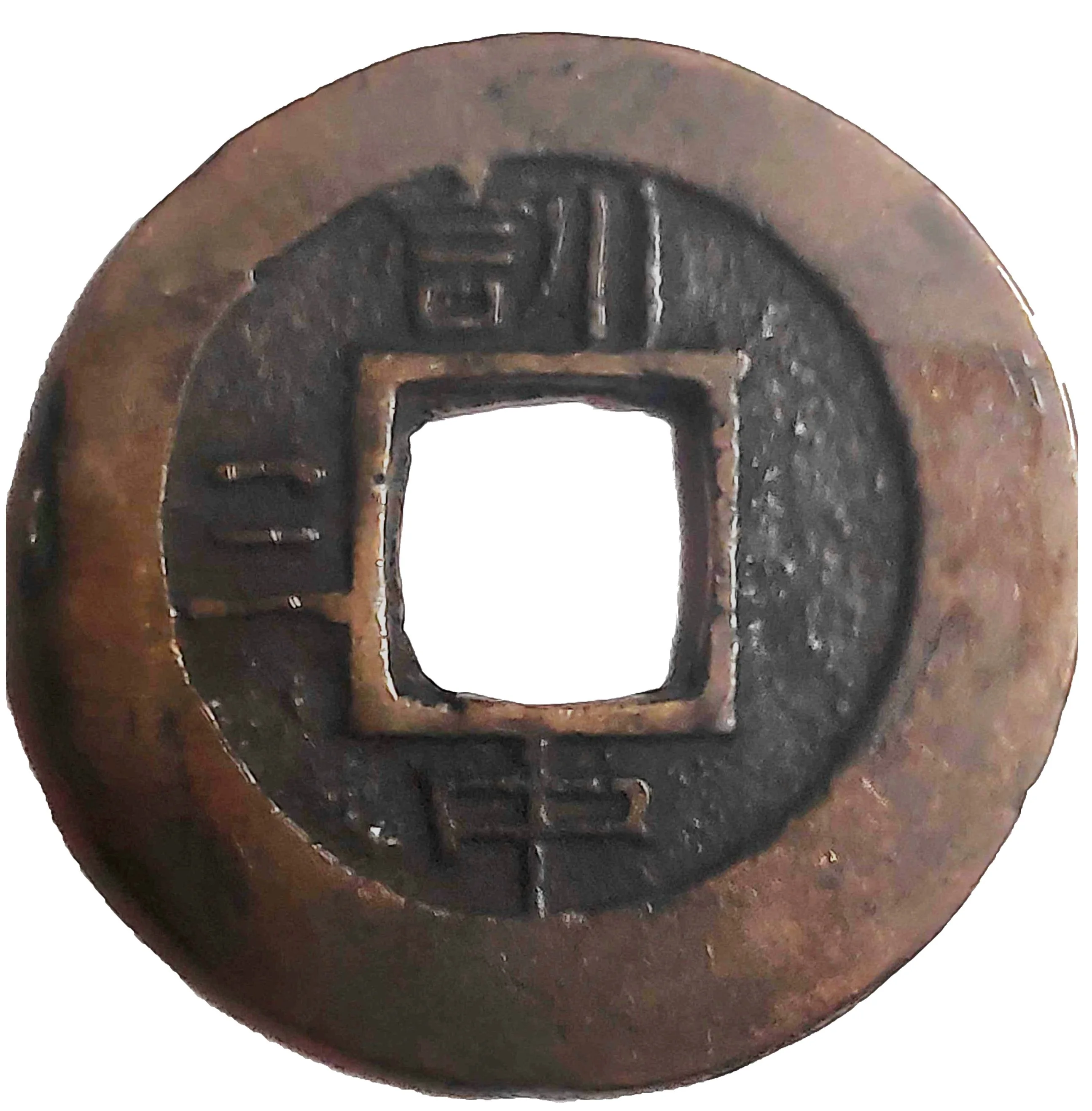
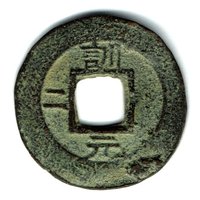
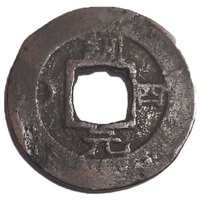
Reverse
Description:
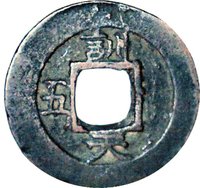
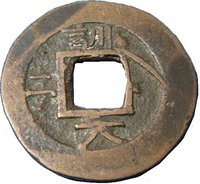
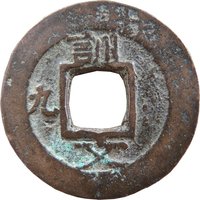
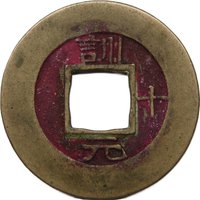
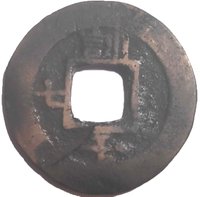
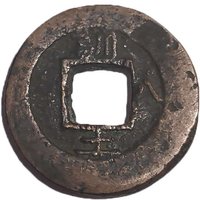
Mint mark top, series bottom, serial number left. *訓: Military Training Command.
Inscription:
訓
五
中
五
中
Translation:
Instruct the five punishments to achieve moderation.
Scripts: Chinese (traditional, regular script)
Language: Classical Chinese
Edge
Mints
| Name | Mark |
|---|---|
| Military Training Command | 訓 |
Mintings
| Year | Mint Mark | Mintage | Quality | Collection |
|---|---|---|---|---|
| 1857 | 訓 | — |
Historical background
In 1857, the Joseon Dynasty was grappling with a severe and multifaceted currency crisis rooted in decades of monetary instability. The primary circulating coin, the sangpyeong tongbo brass cash coin, had been drastically debased since the early 19th century, with its copper content reduced and adulterated with cheaper metals like lead and tin. This led to a classic case of Gresham's Law, where "bad money drives out good." High-quality coins, including older sangpyeong tongbo and imported Chinese copper coins, were hoarded or melted down, leaving the economy flooded with lightweight, easily counterfeited coins that the public deeply distrusted.
The crisis was exacerbated by rampant counterfeiting, which became a widespread and socially destabilizing activity. Both private criminal networks and even corrupt government officials operated clandestine mints, further saturating the market with illegitimate coins. This collapse of confidence in the official currency spurred a retreat to a barter economy in many regions, with rice and cloth becoming de facto mediums of exchange. The monetary disorder crippled taxation and state finances, as the nominal value of coin taxes collected bore little relation to their actual metallic worth, weakening the central government's fiscal authority.
This monetary chaos occurred within a broader context of agricultural hardship, institutional decay, and the growing pressure of Western imperialism in East Asia. While the dynasty attempted reforms, such as issuing new coinage or recalling old coins, these measures were largely ineffective without addressing the fundamental issues of quality control and enforcement. The currency crisis of 1857 thus reflected and accelerated the Joseon state's deepening internal vulnerabilities on the eve of a period of immense external upheaval.
The crisis was exacerbated by rampant counterfeiting, which became a widespread and socially destabilizing activity. Both private criminal networks and even corrupt government officials operated clandestine mints, further saturating the market with illegitimate coins. This collapse of confidence in the official currency spurred a retreat to a barter economy in many regions, with rice and cloth becoming de facto mediums of exchange. The monetary disorder crippled taxation and state finances, as the nominal value of coin taxes collected bore little relation to their actual metallic worth, weakening the central government's fiscal authority.
This monetary chaos occurred within a broader context of agricultural hardship, institutional decay, and the growing pressure of Western imperialism in East Asia. While the dynasty attempted reforms, such as issuing new coinage or recalling old coins, these measures were largely ineffective without addressing the fundamental issues of quality control and enforcement. The currency crisis of 1857 thus reflected and accelerated the Joseon state's deepening internal vulnerabilities on the eve of a period of immense external upheaval.
Series: 1857 Joseon circulation coins
💎 Extremely Rare