

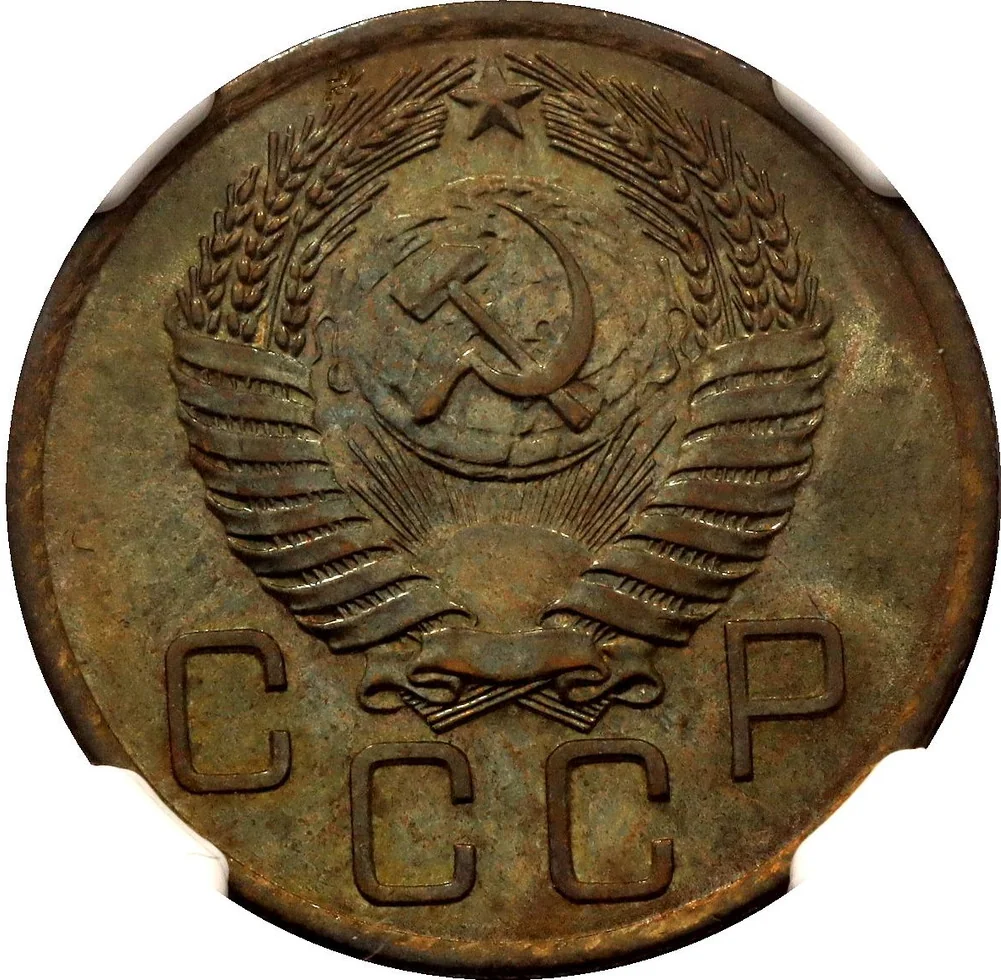
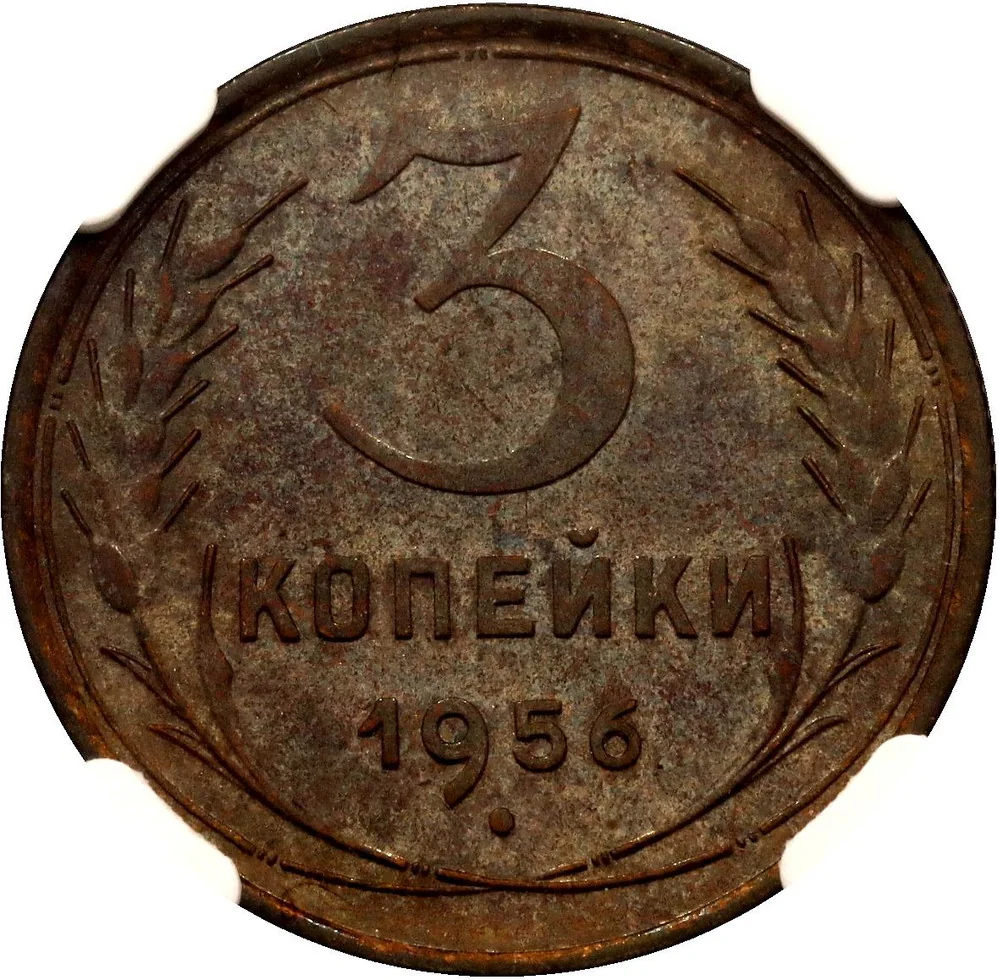
3 kopecks – Soviet Union
Add to wishlist
Russia
Context
Years: 1946–1957
Country: Russia
Issuer: Soviet Union
Period:
(1922—1991)
Currency:
(1947—1960)
Demonetized: Yes
Material
Diameter: 22 mm
Weight: 3 g
Thickness: 1 mm
Shape: Round
Composition: Aluminium bronze
Magnetic: No
Technique: Milled
Alignment: Medal alignment
flip
References
Y: #
Numista: #4138
Obverse
Reverse
Edge
Reeded
Mintings
| Year | Mint Mark | Mintage | Quality | Collection |
|---|---|---|---|---|
| 1946 | — | — | ||
| 1948 | — | — | ||
| 1949 | — | — | ||
| 1950 | — | — | ||
| 1951 | — | — | ||
| 1952 | — | — | ||
| 1953 | — | — | ||
| 1954 | — | — | ||
| 1955 | — | — | ||
| 1956 | — | — | ||
| 1957 | — | — |
Historical background
In the immediate aftermath of World War II, the Soviet Union faced a severe monetary crisis. The war effort had been financed largely by printing vast quantities of rubles, leading to rampant inflation and a bloated money supply. At the same time, goods were desperately scarce due to wartime destruction and the focus on heavy industry, creating a vast gap between the amount of currency in circulation and available consumer products. This resulted in a thriving black market where prices were many times higher than the official state rates, undermining the planned economy and the value of the ruble.
To address this, the Soviet government enacted a drastic currency reform on December 14, 1947, but the planning and decisive measures began in 1946. The core of the 1946 situation was the preparation for this reform, which was seen as a necessary shock therapy to restore financial stability and confiscate excess cash, particularly from speculators and black marketeers. The state also implemented a simultaneous end to the wartime rationing system, aiming to transition back to a unified commercial trade system with stable prices, though at a significantly higher level.
The reform, when implemented, was harsh and confiscatory. Old rubles were exchanged for new at a rate of 10:1 for cash holdings, with even more unfavorable rates for bank deposits. This effectively wiped out a large portion of personal savings overnight, disproportionately impacting ordinary citizens who held their wealth in cash. While the reform succeeded in technically reducing the money supply and halting hyperinflation, it came at a great social cost, further eroding public trust and exacerbating post-war hardships for a population already enduring severe deprivation.
To address this, the Soviet government enacted a drastic currency reform on December 14, 1947, but the planning and decisive measures began in 1946. The core of the 1946 situation was the preparation for this reform, which was seen as a necessary shock therapy to restore financial stability and confiscate excess cash, particularly from speculators and black marketeers. The state also implemented a simultaneous end to the wartime rationing system, aiming to transition back to a unified commercial trade system with stable prices, though at a significantly higher level.
The reform, when implemented, was harsh and confiscatory. Old rubles were exchanged for new at a rate of 10:1 for cash holdings, with even more unfavorable rates for bank deposits. This effectively wiped out a large portion of personal savings overnight, disproportionately impacting ordinary citizens who held their wealth in cash. While the reform succeeded in technically reducing the money supply and halting hyperinflation, it came at a great social cost, further eroding public trust and exacerbating post-war hardships for a population already enduring severe deprivation.
🌱 Very Common