

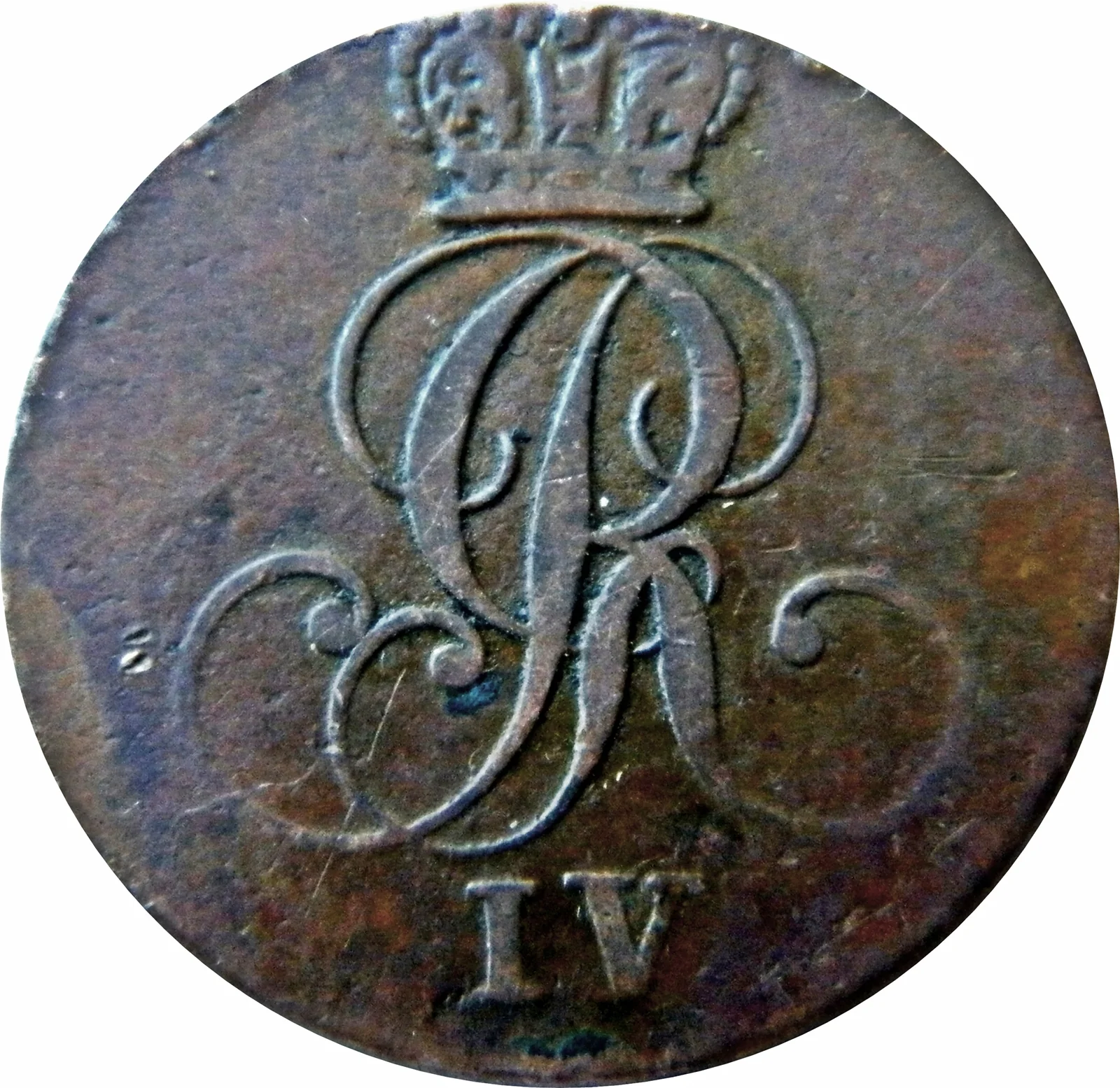
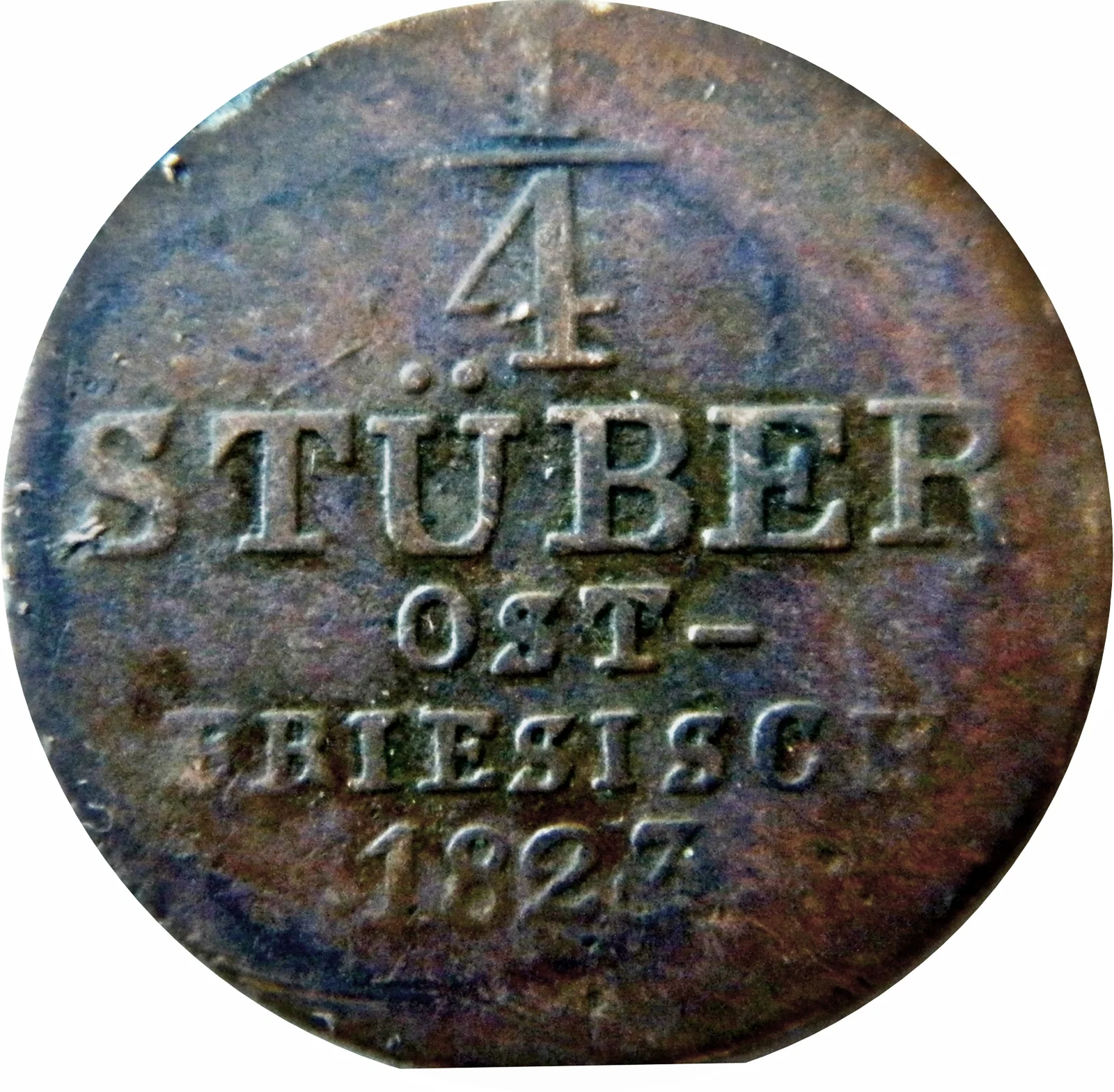
¼ stüber – East Frisia
Add to wishlist
Germany
Context
Years: 1823–1825
Country: Germany
Issuer: East Frisia
Ruler: George IV
Currency:
Demonetized: Yes
Total mintage: 2,130,000
Material
References
KM: #
Numista: #41255
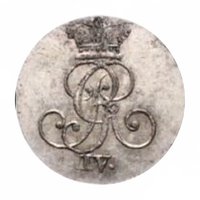
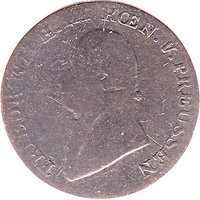
Obverse
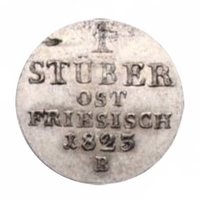
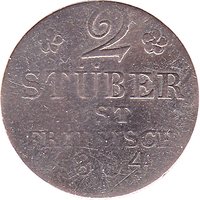
Reverse
Edge
Plain
Mintings
| Year | Mint Mark | Mintage | Quality | Collection |
|---|---|---|---|---|
| 1823 | — | 710,000 | ||
| 1824 | — | 710,000 | ||
| 1825 | — | 710,000 |
Historical background
In 1823, the currency situation in East Frisia was characterized by a complex and burdensome transition. The region, which had been annexed by the Kingdom of Hanover in 1815, was still grappling with the legacy of the French occupation (1810-1813) and the earlier circulation of numerous foreign coins. The most significant local currency was the East Frisian Thaler, but French Francs, Dutch Guilders, and various German state coins also circulated, creating a chaotic and inefficient monetary environment for daily trade and administration.
The Hanoverian government, seeking to impose order and integrate East Frisia fully into its kingdom, had officially introduced the Hanoverian Thaler as the sole legal tender. This reform, dictated from Hanover, aimed to standardize the currency and simplify fiscal governance. However, the practical implementation in 1823 was fraught with difficulty. The population had to exchange their old, familiar currencies at fixed rates, a process that often felt disadvantageous and eroded public trust, while merchants struggled with recalculation and the withdrawal of previously accepted coins.
Thus, the year 1823 represents a point of administrative tension between centralizing state authority and local economic reality. While the legal framework for a unified currency was now in place, the actual monetary landscape remained in flux. The full elimination of old currencies and the complete acceptance of the Hanoverian Thaler would be a slow process, meaning that for ordinary East Frisians, 1823 was a year of navigating both the old monetary chaos and the new, imposed order.
The Hanoverian government, seeking to impose order and integrate East Frisia fully into its kingdom, had officially introduced the Hanoverian Thaler as the sole legal tender. This reform, dictated from Hanover, aimed to standardize the currency and simplify fiscal governance. However, the practical implementation in 1823 was fraught with difficulty. The population had to exchange their old, familiar currencies at fixed rates, a process that often felt disadvantageous and eroded public trust, while merchants struggled with recalculation and the withdrawal of previously accepted coins.
Thus, the year 1823 represents a point of administrative tension between centralizing state authority and local economic reality. While the legal framework for a unified currency was now in place, the actual monetary landscape remained in flux. The full elimination of old currencies and the complete acceptance of the Hanoverian Thaler would be a slow process, meaning that for ordinary East Frisians, 1823 was a year of navigating both the old monetary chaos and the new, imposed order.
💎 Very Rare