

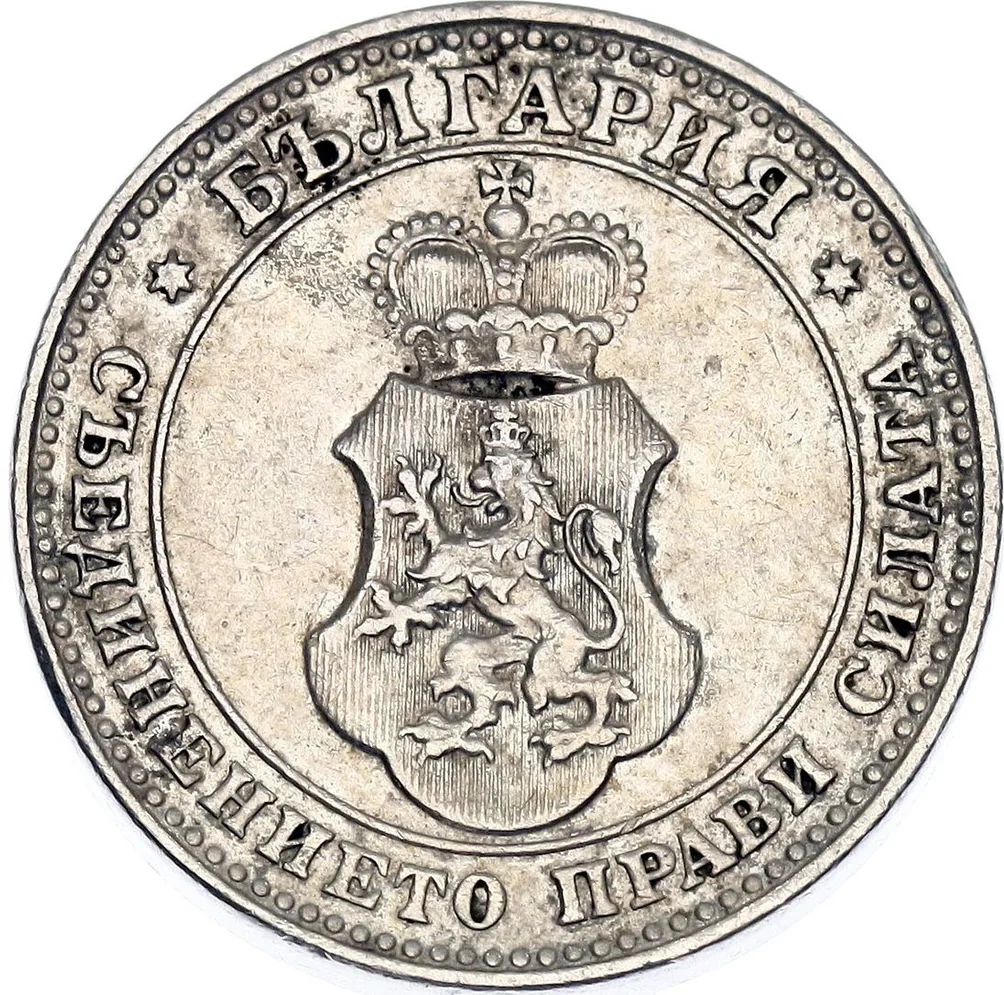
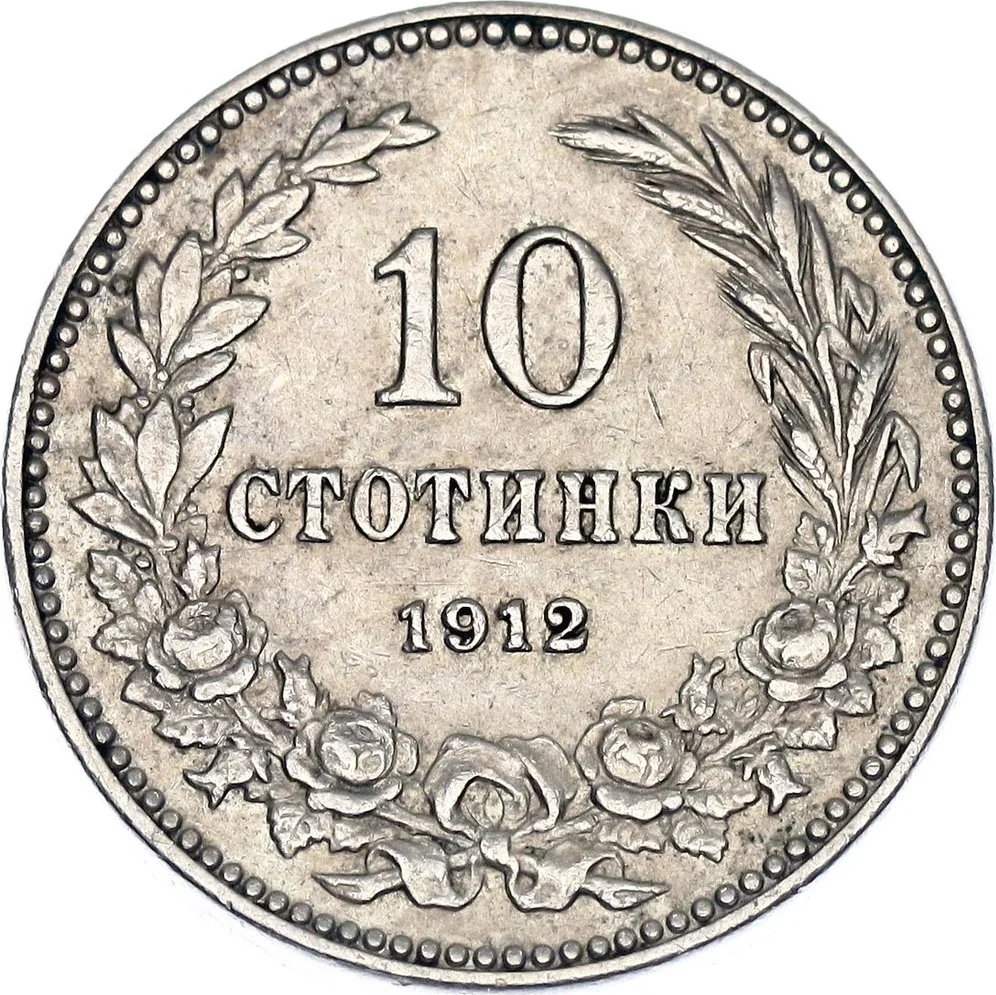
10 Stotinki – Bulgaria
Bulgaria
Context
Years: 1906–1913
Issuer: Bulgaria 
Ruler: Ferdinand I
Currency:
(1881—1952)
Demonetized: Yes
Total mintage: 46,000,000
Material
References
KM: #Click to copy to clipboard25
Numista: #4120
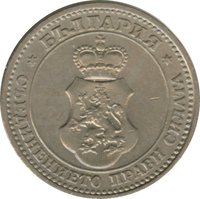
Obverse
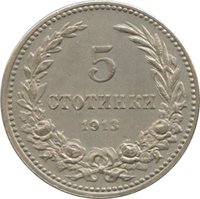
Reverse
Edge
Plain
Categories
| Symbols> Coat of Arms |
| Symbol> Wreath |
Mints
| Name | Mark |
|---|---|
| Kremnica | — |
| Münze Österreich | — |
Mintings
| Year | Mint Mark | Mintage | Quality | Collection |
|---|---|---|---|---|
| 1906 | — | 13,000,000 | ||
| 1912 | — | — | Proof | |
| 1912 | — | 13,000,000 | ||
| 1913 | — | 20,000,000 |
Historical background
In 1906, Bulgaria operated under a complex and transitional monetary system, a legacy of its recent autonomy from the Ottoman Empire. The official currency was the Bulgarian lev, introduced in 1880 and pegged to a bimetallic (gold and silver) standard. However, the state lacked sufficient gold reserves, making the silver-based leva the practical backbone. Alongside this, the Ottoman lira (gold) and other foreign coins, particularly the French gold Napoleon, circulated widely and were legally recognized for large transactions, creating a de facto multi-currency environment. This duality reflected the country's struggle to establish full monetary sovereignty while integrating into the European financial world.
The period was marked by significant monetary instability and debate. A major financial crisis in 1906, triggered by a poor harvest and a sharp decline in grain exports, led to a dramatic fall in state revenue and a drain on gold reserves. This forced the Bulgarian National Bank to suspend the convertibility of banknotes into gold, effectively taking the country off the gold standard it aspired to maintain. The crisis exposed the fragility of the system and intensified political arguments between "metalists," who advocated for a swift return to a strict gold standard, and "chartalists," who favored a managed paper currency to stimulate the economy.
Consequently, 1906 stands as a pivotal year of financial strain and policy crossroads. The government, led by Prime Minister Dimitar Petkov, was compelled to seek a large foreign loan to stabilize the treasury and restore confidence. The immediate situation underscored Bulgaria's economic vulnerability and its dependence on agricultural exports. The debates and decisions of this crisis period would directly shape the major monetary reform that followed in 1906-1907, ultimately leading to Bulgaria's formal adoption of a gold standard in 1908, anchoring the lev to gold and finally unifying the national currency system.
The period was marked by significant monetary instability and debate. A major financial crisis in 1906, triggered by a poor harvest and a sharp decline in grain exports, led to a dramatic fall in state revenue and a drain on gold reserves. This forced the Bulgarian National Bank to suspend the convertibility of banknotes into gold, effectively taking the country off the gold standard it aspired to maintain. The crisis exposed the fragility of the system and intensified political arguments between "metalists," who advocated for a swift return to a strict gold standard, and "chartalists," who favored a managed paper currency to stimulate the economy.
Consequently, 1906 stands as a pivotal year of financial strain and policy crossroads. The government, led by Prime Minister Dimitar Petkov, was compelled to seek a large foreign loan to stabilize the treasury and restore confidence. The immediate situation underscored Bulgaria's economic vulnerability and its dependence on agricultural exports. The debates and decisions of this crisis period would directly shape the major monetary reform that followed in 1906-1907, ultimately leading to Bulgaria's formal adoption of a gold standard in 1908, anchoring the lev to gold and finally unifying the national currency system.
Series: 1906 Bulgaria circulation coins
🌱 Very Common