

5 Cents – Canada
Canada
Context

Material
Diameter: 21.23 mm
Weight: 4.54 g
Thickness: 1.7 mm
Shape: Dodecagonal
Technique: Milled
Alignment: Medal alignment
flip
References
KM: #Click to copy to clipboard39
Numista: #412
Value
Exchange value: 0.05 CAD = $0.04
Inflation-adjusted value: 0.96 CAD
Obverse
Description:
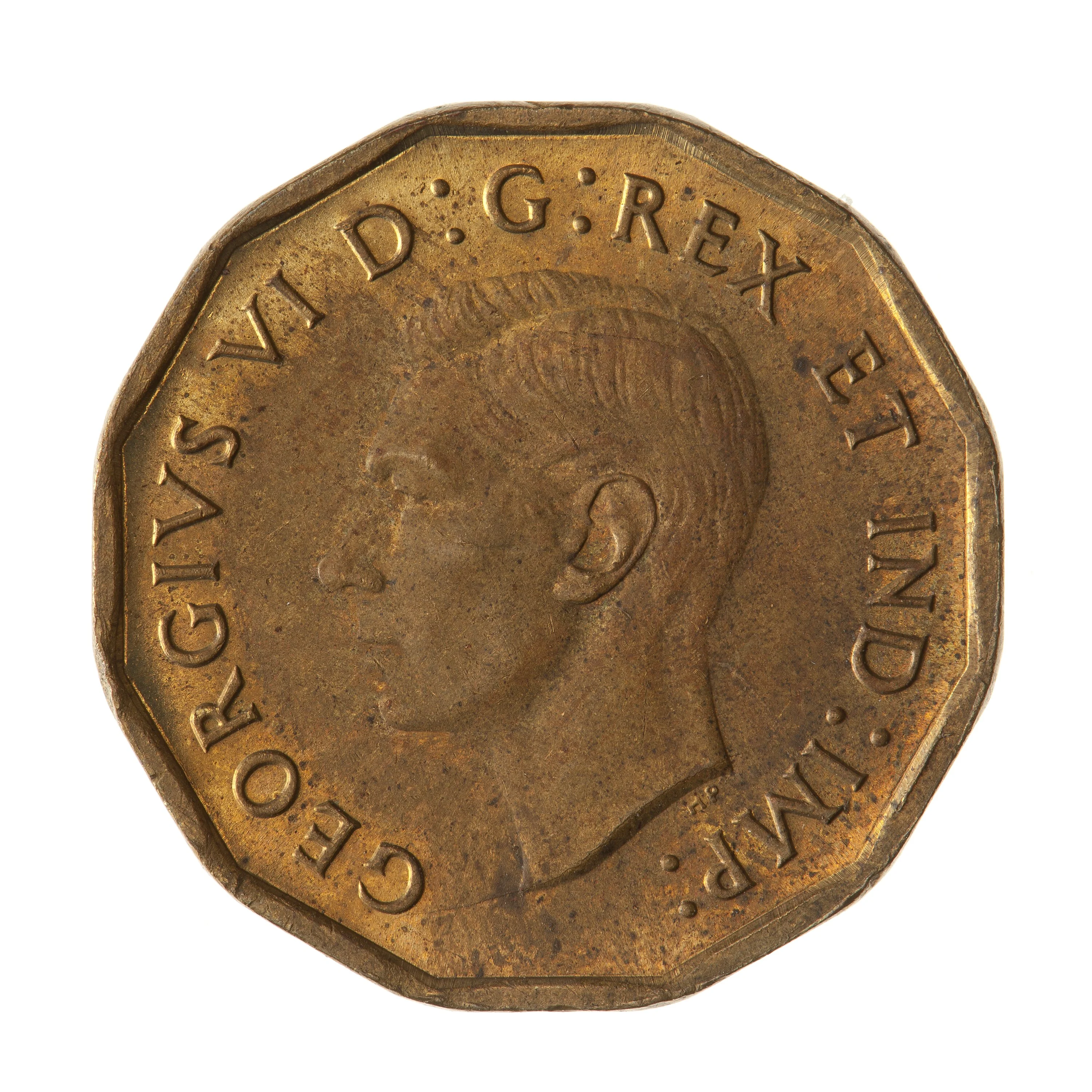
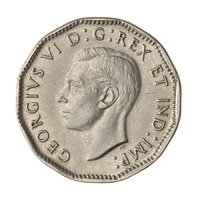
King George VI left-facing portrait.
Inscription:
GEORGIVS VI D:G:REX ET IND:IMP:
Translation:
George VI by the Grace of God King and Emperor of India
Script: Latin
Language: Latin
Engraver: Thomas Shingles
Designer: Thomas Humphrey Paget
Reverse
Description:
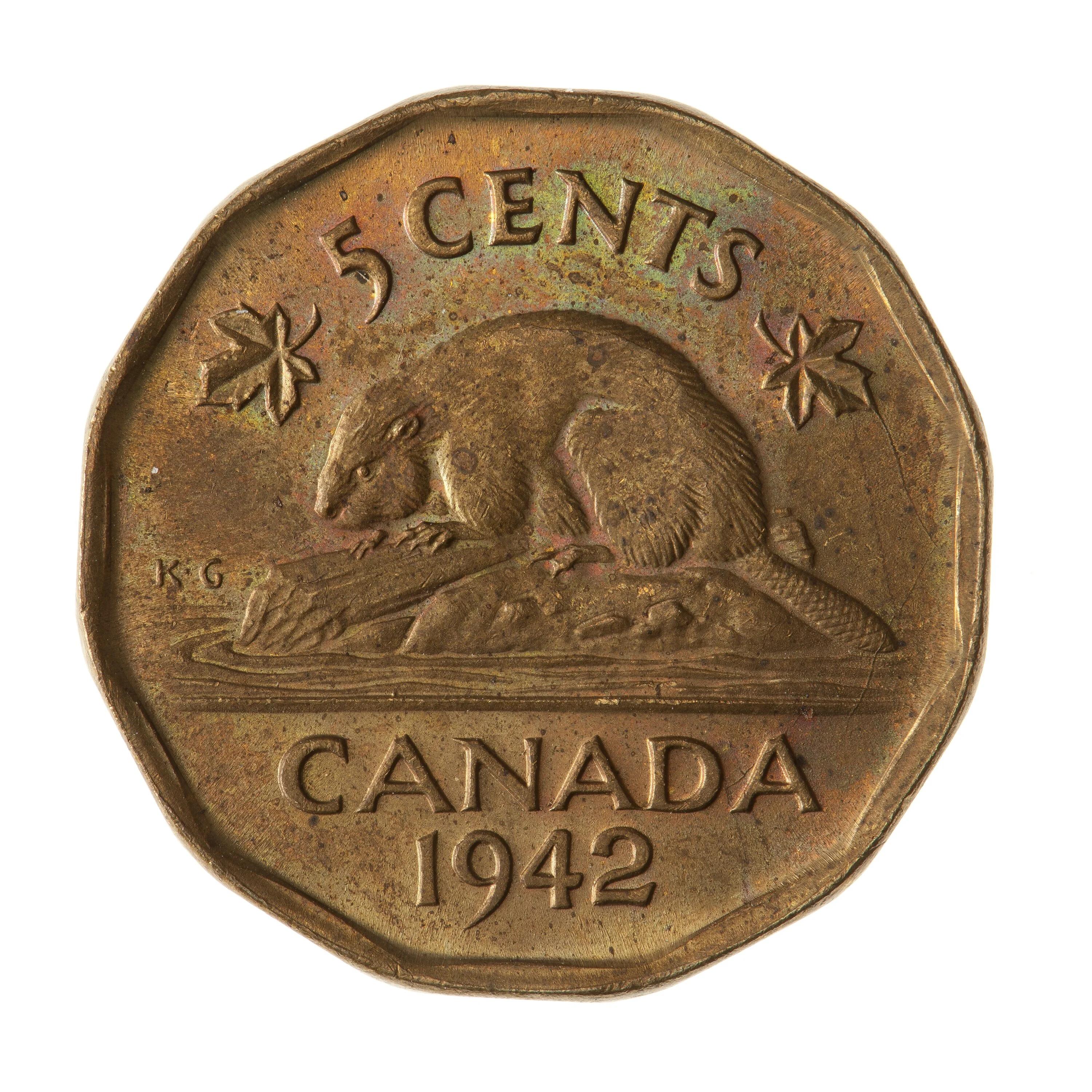
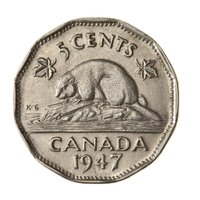
A beaver over "CANADA" is flanked by maple leaves and the face value.
Inscription:
5 CENTS
CANADA
1942
K.G.
CANADA
1942
K.G.
Script: Latin
Engraver: Thomas Shingles
Designer: George Kruger Gray
Edge
Plain
Mints
| Name | Mark |
|---|---|
| Royal Canadian Mint of Ottawa | — |
Mintings
| Year | Mint Mark | Mintage | Quality | Collection |
|---|---|---|---|---|
| 1942 | — | 3,396,234 |
Historical background
In 1942, Canada was in the midst of a profound economic and social transformation driven by its total commitment to the Second World War. The war effort demanded unprecedented government spending, leading to massive deficits, rising inflation, and serious concerns over the stability of the national currency and financial system. To manage this crisis and prevent a run on gold reserves, the federal government passed the Exchange Fund Act and the Foreign Exchange Control Act, effectively suspending the gold standard and placing all of Canada's foreign currency reserves under direct state control. This move severed the direct link between the Canadian dollar and gold, making its value a matter of government policy rather than a fixed convertibility.
The immediate result was the establishment of a fixed exchange rate for the Canadian dollar, pegged at 90.91 US cents (or $1.10 CAD to $1.00 USD) in July 1942. This "wartime peg" was a deliberate devaluation from the pre-war near-parity, instituted to stabilize trade, control capital flight, and facilitate the critical flow of war materials and finances between Canada and its primary ally, the United States. A new bureaucracy, the Foreign Exchange Control Board (FECB), was granted sweeping powers to regulate all transactions involving foreign currencies, requiring citizens and businesses to seek approval for any purchase of foreign assets or currencies.
This wartime regime represented a historic shift toward a managed, fiat currency and centralized economic planning. The government's control over foreign exchange was comprehensive, lasting for the duration of the war and beyond, not being fully dismantled until 1951. The policies of 1942 successfully provided the financial stability needed to support the massive industrial and military mobilization, but they also marked a permanent end to the classical gold standard era in Canada, setting the stage for the modern system of managed exchange rates and active central bank intervention in the post-war economy.
The immediate result was the establishment of a fixed exchange rate for the Canadian dollar, pegged at 90.91 US cents (or $1.10 CAD to $1.00 USD) in July 1942. This "wartime peg" was a deliberate devaluation from the pre-war near-parity, instituted to stabilize trade, control capital flight, and facilitate the critical flow of war materials and finances between Canada and its primary ally, the United States. A new bureaucracy, the Foreign Exchange Control Board (FECB), was granted sweeping powers to regulate all transactions involving foreign currencies, requiring citizens and businesses to seek approval for any purchase of foreign assets or currencies.
This wartime regime represented a historic shift toward a managed, fiat currency and centralized economic planning. The government's control over foreign exchange was comprehensive, lasting for the duration of the war and beyond, not being fully dismantled until 1951. The policies of 1942 successfully provided the financial stability needed to support the massive industrial and military mobilization, but they also marked a permanent end to the classical gold standard era in Canada, setting the stage for the modern system of managed exchange rates and active central bank intervention in the post-war economy.
🌱 Very Common