

5 Cents – Canada
Canada
Context
Material
Diameter: 21.23 mm
Weight: 4.54 g
Thickness: 1.7 mm
Shape: Dodecagonal
Composition: Nickel
Magnetic: Yes
Technique: Milled
Alignment: Medal alignment
flip
References
KM: #Click to copy to clipboard39a
Numista: #409
Value
Exchange value: 0.05 CAD = $0.04
Inflation-adjusted value: 0.88 CAD
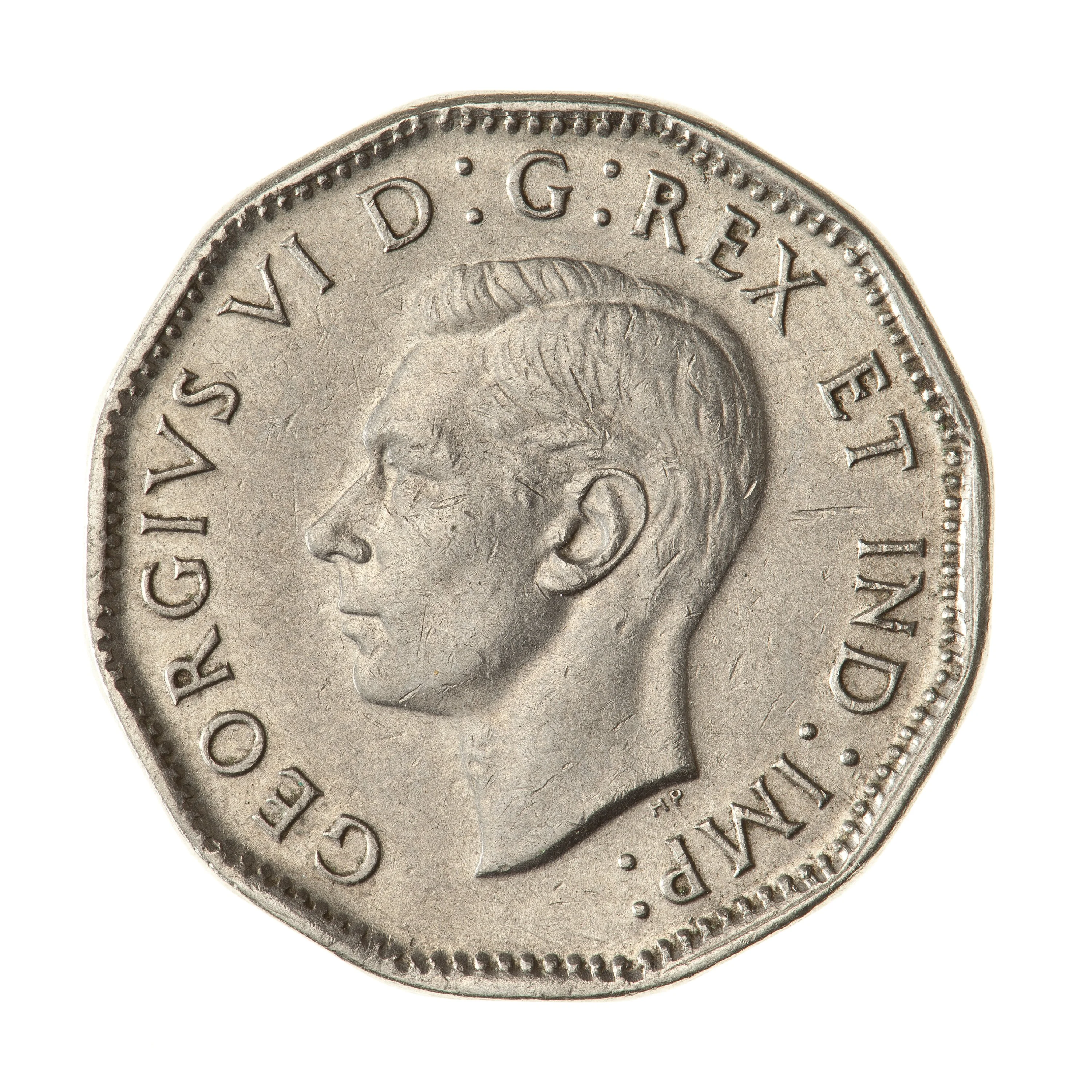
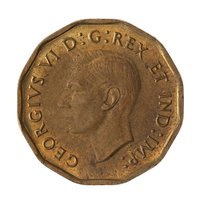
Obverse
Description:
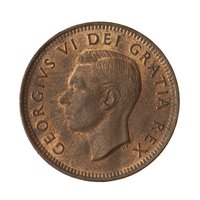
King George VI left-facing portrait.
Inscription:
GEORGIVS VI D:G:REX ET IND:IMP:
HP
HP
Translation:
George VI by the Grace of God King and Emperor of India.
Script: Latin
Language: Latin
Engraver: Thomas Shingles
Designer: Thomas Humphrey Paget
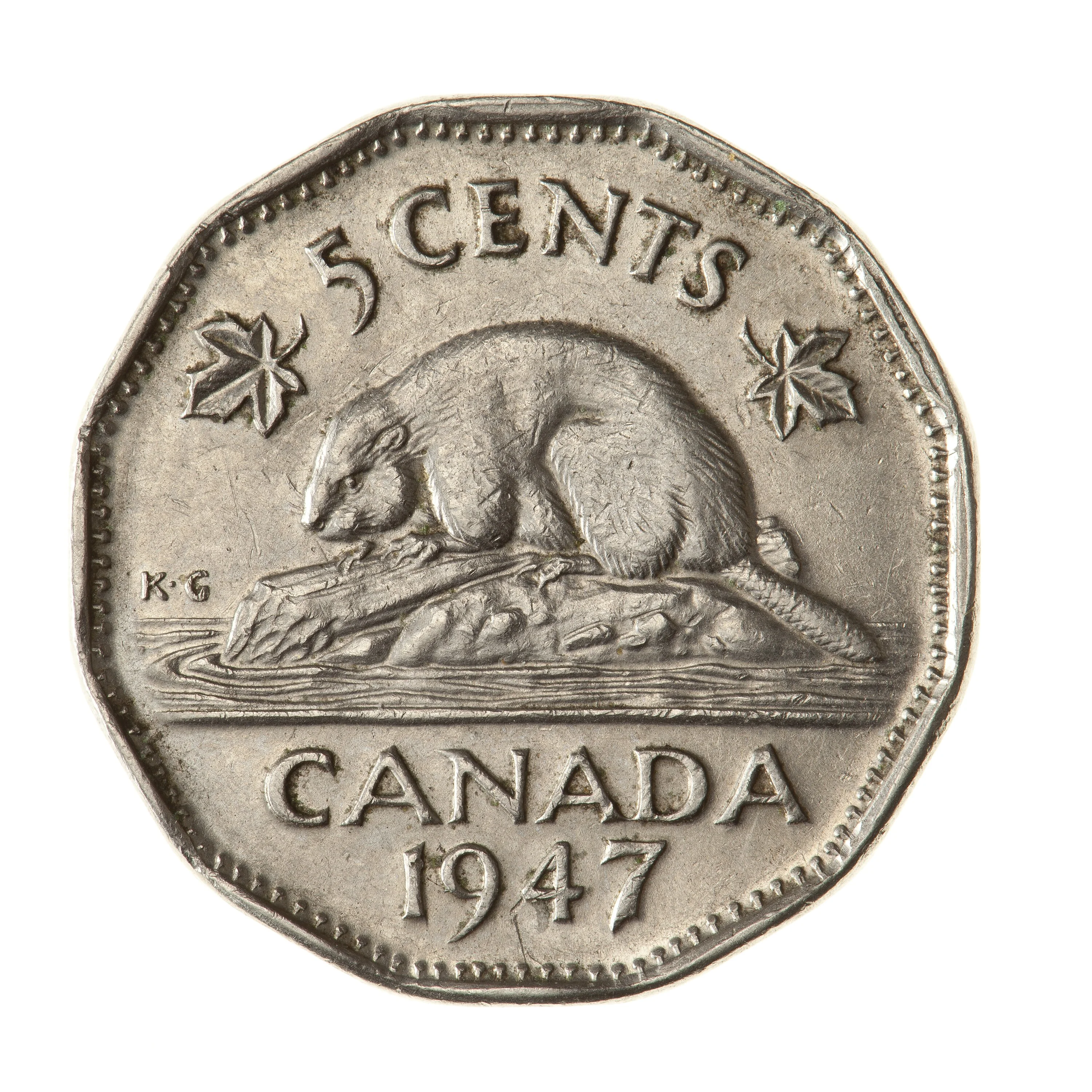
Reverse
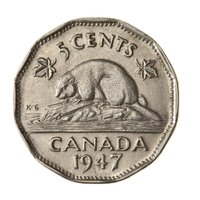
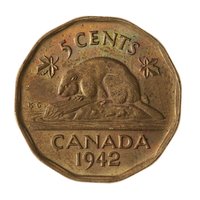
Description:
A beaver on "CANADA" is flanked by maple leaves and the face value. A small leaf by "1947" denotes a 1948 strike from old dies.
Inscription:
5 CENTS
CANADA
1947 *
K·G
CANADA
1947 *
K·G
Script: Latin
Engraver: Thomas Shingles
Designer: George Kruger Gray
Edge
Plain
Mints
| Name | Mark |
|---|---|
| Royal Canadian Mint of Ottawa | — |
Mintings
| Year | Mint Mark | Mintage | Quality | Collection |
|---|---|---|---|---|
| 1946 | — | 6,952,684 | ||
| 1947 | — | 9,595,124 |
Historical background
In 1946, Canada's currency situation was defined by its position within the Bretton Woods international monetary system, established in 1944. The Canadian dollar was fixed to the U.S. dollar at a rate of 1.00 CAD = 0.90 USD, which in turn was pegged to gold at $35 per ounce. This arrangement provided stability and predictability for post-war reconstruction and trade, primarily with the United States, which had become Canada's dominant economic partner. Domestically, the Bank of Canada, nationalized in 1938, managed monetary policy, but its tools were constrained by the fixed exchange rate, which prioritized maintaining the peg over independent domestic interest rate adjustments.
However, significant pressures were building beneath this stable facade. The post-war economy was experiencing strong inflationary pressures due to pent-up consumer demand, the transition from wartime to peacetime production, and global shortages of goods. This created a policy dilemma: raising interest rates to combat inflation would attract foreign capital, putting upward pressure on the Canadian dollar and threatening the fixed parity. Furthermore, Canada was accumulating large U.S. dollar reserves through trade surpluses and capital inflows, which complicated monetary management and fueled domestic money supply growth.
These mounting contradictions led to a historic policy shift. In July 1946, after careful consideration, the Canadian government made the unprecedented decision to float the Canadian dollar, becoming the first major country to do so within the Bretton Woods framework. This move was a pragmatic response to the unique pressures of the Canadian economy, allowing the Bank of Canada greater autonomy to address inflation without being bound to defend a specific exchange rate. The 1946 float set a precedent for Canada's often-independent approach to monetary policy in the decades that followed.
However, significant pressures were building beneath this stable facade. The post-war economy was experiencing strong inflationary pressures due to pent-up consumer demand, the transition from wartime to peacetime production, and global shortages of goods. This created a policy dilemma: raising interest rates to combat inflation would attract foreign capital, putting upward pressure on the Canadian dollar and threatening the fixed parity. Furthermore, Canada was accumulating large U.S. dollar reserves through trade surpluses and capital inflows, which complicated monetary management and fueled domestic money supply growth.
These mounting contradictions led to a historic policy shift. In July 1946, after careful consideration, the Canadian government made the unprecedented decision to float the Canadian dollar, becoming the first major country to do so within the Bretton Woods framework. This move was a pragmatic response to the unique pressures of the Canadian economy, allowing the Bank of Canada greater autonomy to address inflation without being bound to defend a specific exchange rate. The 1946 float set a precedent for Canada's often-independent approach to monetary policy in the decades that followed.
🌱 Very Common