

10 Zlotys – Poland
Poland
Context
Years: 1967–1969
Issuer: Poland 
Period:
(1952—1989)
Currency:
(1949—1994)
Demonetization: 1 January 1978
Total mintage: 20,129,000
Material
Diameter: 28 mm
Weight: 9.5 g
Thickness: 2 mm
Shape: Round
Composition: Copper-nickel
Technique: Milled
Alignment: Medal alignment
flip
References
Y: #Click to copy to clipboard51a
Numista: #4117
Value
Exchange value: 10 PLZ
Obverse
Description:
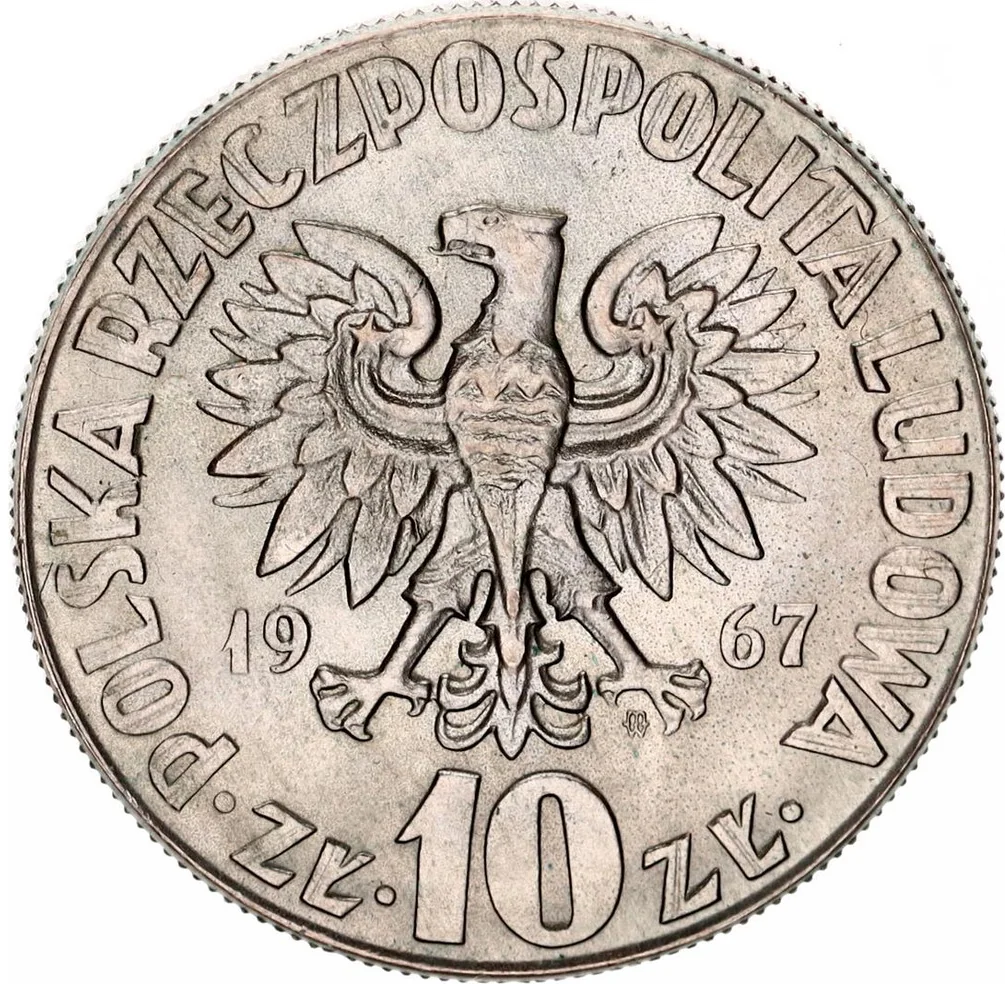
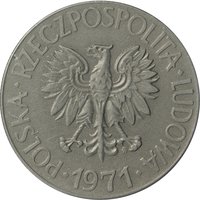
The Polish national coat of arms.
Inscription:
POLSKA RZECZPOSPOLITA LUDOWA
19 67
MW
·ZŁ·10 ZŁ·
19 67
MW
·ZŁ·10 ZŁ·
Translation:
Polish People's Republic
19 67
MW
·ZL·10 ZL·
19 67
MW
·ZL·10 ZL·
Script: Latin
Language: Polish
Designer: Józef Gosławski
Reverse
Description:
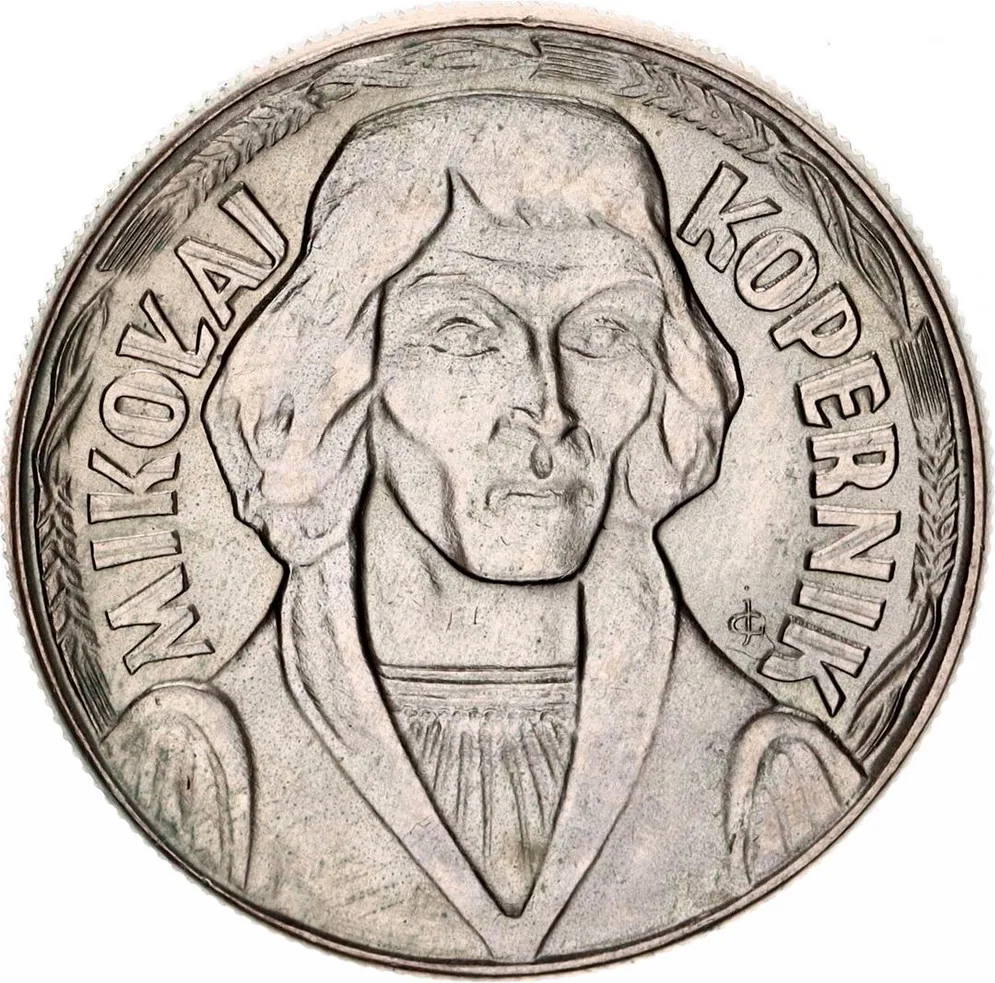
A sun-centered model of the solar system.
Inscription:
MIKOŁAJ KOPERNIK
JG
JG
Translation:
NICOLAUS COPERNICUS
Script: Latin
Language: Polish
Designer: Józef Gosławski
Edge
Reeded
Mints
| Name | Mark |
|---|---|
| Mint of Poland | (MW) |
Mintings
| Year | Mint Mark | Mintage | Quality | Collection |
|---|---|---|---|---|
| 1967 | MW | 2,128,000 | ||
| 1968 | MW | 9,389,000 | ||
| 1969 | MW | 8,612,000 |
Historical background
In 1967, Poland's currency situation was firmly embedded within the rigid framework of a centrally planned economy under communist rule. The official currency, the złoty (PLZ), was a non-convertible "soft currency," meaning it could not be freely exchanged for hard currencies like the US dollar or used in international trade. Its value was administratively set by the state, bearing little relation to market forces, and it was primarily a domestic accounting unit. The government maintained a complex system of multiple, artificial exchange rates for different types of transactions, which overvalued the złoty to create an illusion of economic strength while masking underlying inefficiencies and shortages.
This controlled system existed alongside a pervasive black market for foreign currency, particularly US dollars and West German marks, which operated outside state channels. For ordinary Poles, access to hard currency was extremely limited, but it was highly sought after to purchase luxury or Western goods in special state-run stores (Pewex and Baltona) or on the black market. This dual system created a significant divide between those with access to hard currency (often through relatives abroad or illicit means) and those reliant solely on złotys, exacerbating social inequalities and undermining trust in the official financial system.
The underlying economic context was one of growing strain. While the mid-1960s saw some stabilization after earlier crises, the economy was characterized by chronic imbalances, inefficient production, and mounting foreign debt. The overvalued official exchange rate discouraged exports and made imports artificially cheap for the state, contributing to trade deficits. The currency regime of 1967, therefore, was not only a tool of financial control but also a symptom of the systemic weaknesses that would culminate in the severe economic and political crises of the following decade, leading to worker protests and the eventual rise of the Solidarity movement.
This controlled system existed alongside a pervasive black market for foreign currency, particularly US dollars and West German marks, which operated outside state channels. For ordinary Poles, access to hard currency was extremely limited, but it was highly sought after to purchase luxury or Western goods in special state-run stores (Pewex and Baltona) or on the black market. This dual system created a significant divide between those with access to hard currency (often through relatives abroad or illicit means) and those reliant solely on złotys, exacerbating social inequalities and undermining trust in the official financial system.
The underlying economic context was one of growing strain. While the mid-1960s saw some stabilization after earlier crises, the economy was characterized by chronic imbalances, inefficient production, and mounting foreign debt. The overvalued official exchange rate discouraged exports and made imports artificially cheap for the state, contributing to trade deficits. The currency regime of 1967, therefore, was not only a tool of financial control but also a symptom of the systemic weaknesses that would culminate in the severe economic and political crises of the following decade, leading to worker protests and the eventual rise of the Solidarity movement.
🌱 Very Common