

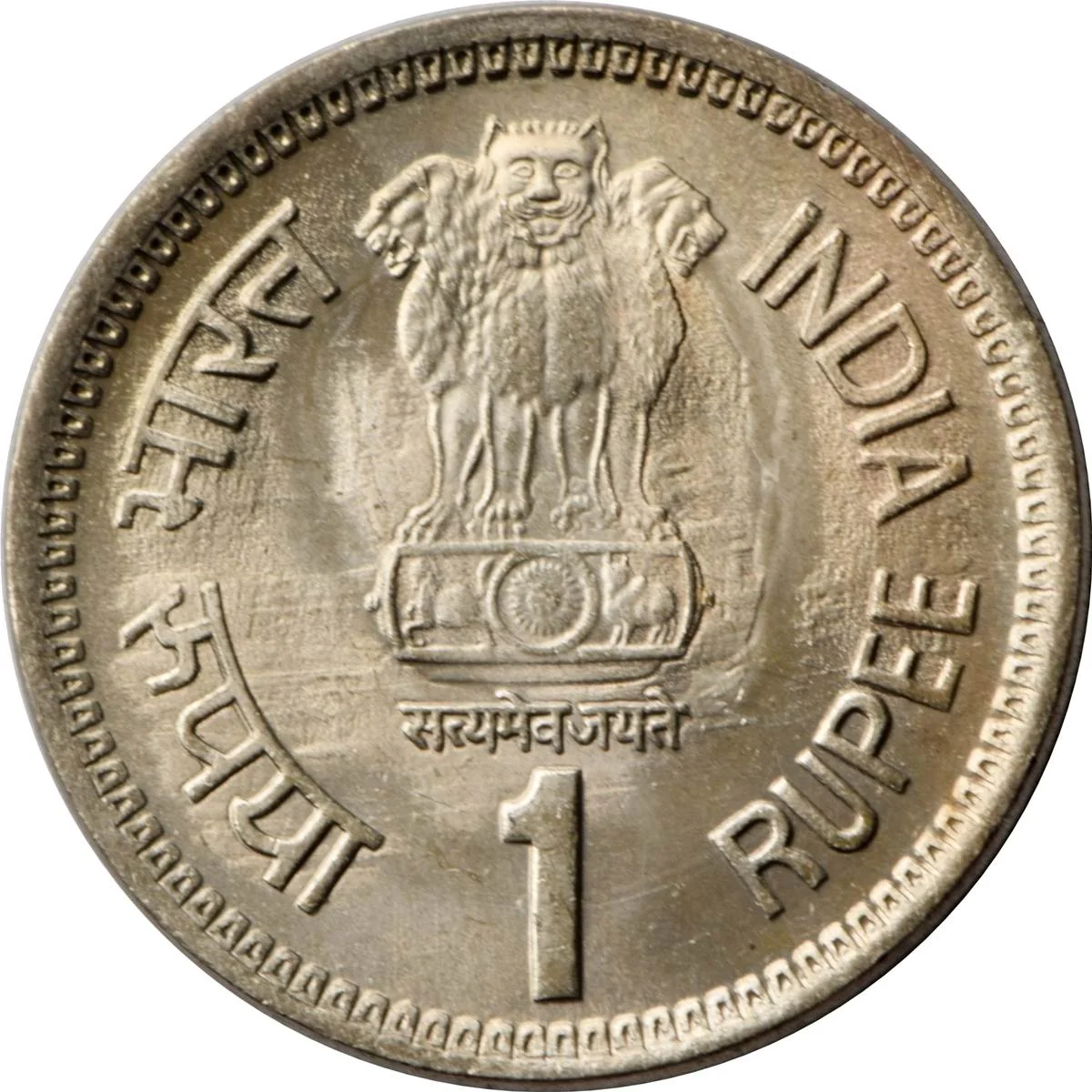
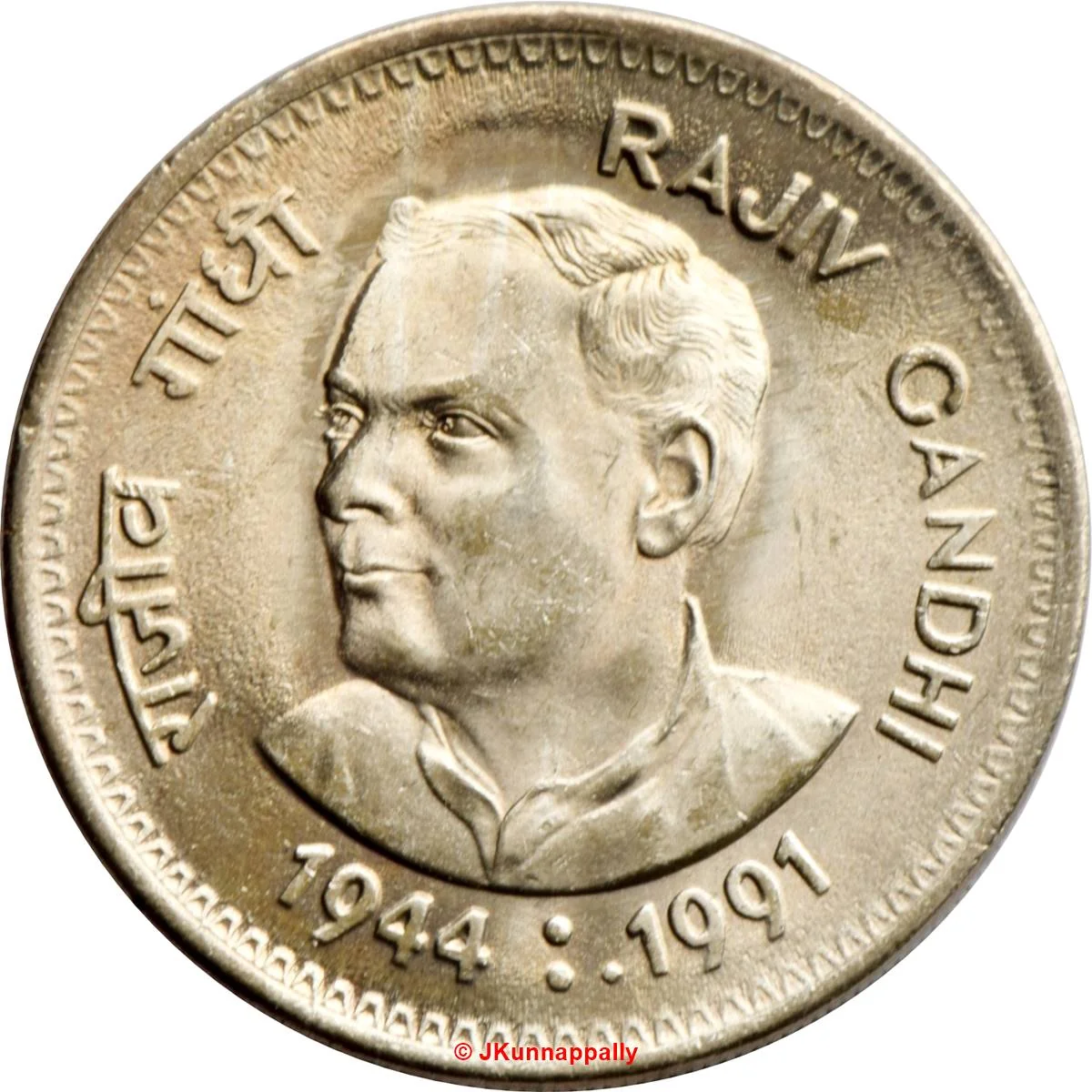
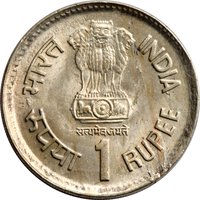
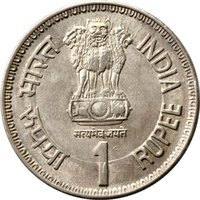
1 Rupee – India
Circulating commemorative coins
Commemoration: Rajiv Gandhi
India

Material
Diameter: 26 mm
Weight: 6 g
Thickness: 1.5 mm
Shape: Round
Composition: Copper-nickel
Technique: Milled
Alignment: Medal alignment
flip
References
KM: #Click to copy to clipboard89
Numista: #4112
Value
Exchange value: 1 INR = $0.01
Inflation-adjusted value: 10.37 INR
Obverse
Reverse
Edge
Reeded
Categories
| Person> Politician |
Mintings
| Year | Mint Mark | Mintage | Quality | Collection |
|---|---|---|---|---|
| 1991 | * | — | ||
| 1991 | ♦ | — |
Historical background
In 1991, India faced a severe balance of payments crisis, marking a pivotal moment in its economic history. Years of fiscal deficits, high inflation, and a reliance on external borrowing had left the country's foreign exchange reserves dangerously depleted. By mid-1991, reserves had plummeted to approximately $1.2 billion, barely enough to cover two weeks of essential imports, pushing the nation to the brink of sovereign default. This acute external vulnerability was exacerbated by the Gulf War, which caused a spike in oil prices and a loss of remittances from Indian workers in the Middle East.
The immediate trigger for the crisis was a loss of confidence in the Indian government's ability to meet its external obligations, leading to a withdrawal of foreign currency deposits by non-resident Indians. With traditional financing options exhausted, India was forced to airlift 47 tonnes of gold to the Bank of England and 20 tonnes to the Union Bank of Switzerland as collateral for an emergency loan from the International Monetary Fund (IMF). This humiliating pledge of national gold symbolized the depth of the economic emergency and created immense political pressure for fundamental reform.
The crisis became the catalyst for sweeping economic liberalization. The newly formed government under Prime Minister P.V. Narasimha Rao, with Dr. Manmohan Singh as Finance Minister, dismantled the License Raj, devalued the rupee in a two-step adjustment to make exports competitive, and initiated a shift from a closed, centrally planned economy to a market-oriented one. Thus, the currency crisis of 1991 was not merely a financial emergency but the painful birth of a new Indian economy, setting it on a path of integration with the global market.
The immediate trigger for the crisis was a loss of confidence in the Indian government's ability to meet its external obligations, leading to a withdrawal of foreign currency deposits by non-resident Indians. With traditional financing options exhausted, India was forced to airlift 47 tonnes of gold to the Bank of England and 20 tonnes to the Union Bank of Switzerland as collateral for an emergency loan from the International Monetary Fund (IMF). This humiliating pledge of national gold symbolized the depth of the economic emergency and created immense political pressure for fundamental reform.
The crisis became the catalyst for sweeping economic liberalization. The newly formed government under Prime Minister P.V. Narasimha Rao, with Dr. Manmohan Singh as Finance Minister, dismantled the License Raj, devalued the rupee in a two-step adjustment to make exports competitive, and initiated a shift from a closed, centrally planned economy to a market-oriented one. Thus, the currency crisis of 1991 was not merely a financial emergency but the painful birth of a new Indian economy, setting it on a path of integration with the global market.
🌱 Very Common