

50 Sene – Samoa
Samoa
Context
Material
Diameter: 32.31 mm
Weight: 13.6 g
Thickness: 2.3 mm
Shape: Round
Composition: Copper-nickel
Technique: Milled
Alignment: Medal alignment
flip
References
KM: #Click to copy to clipboard17
Numista: #4105
Value
Exchange value: 0.50 WST
Obverse
Description:
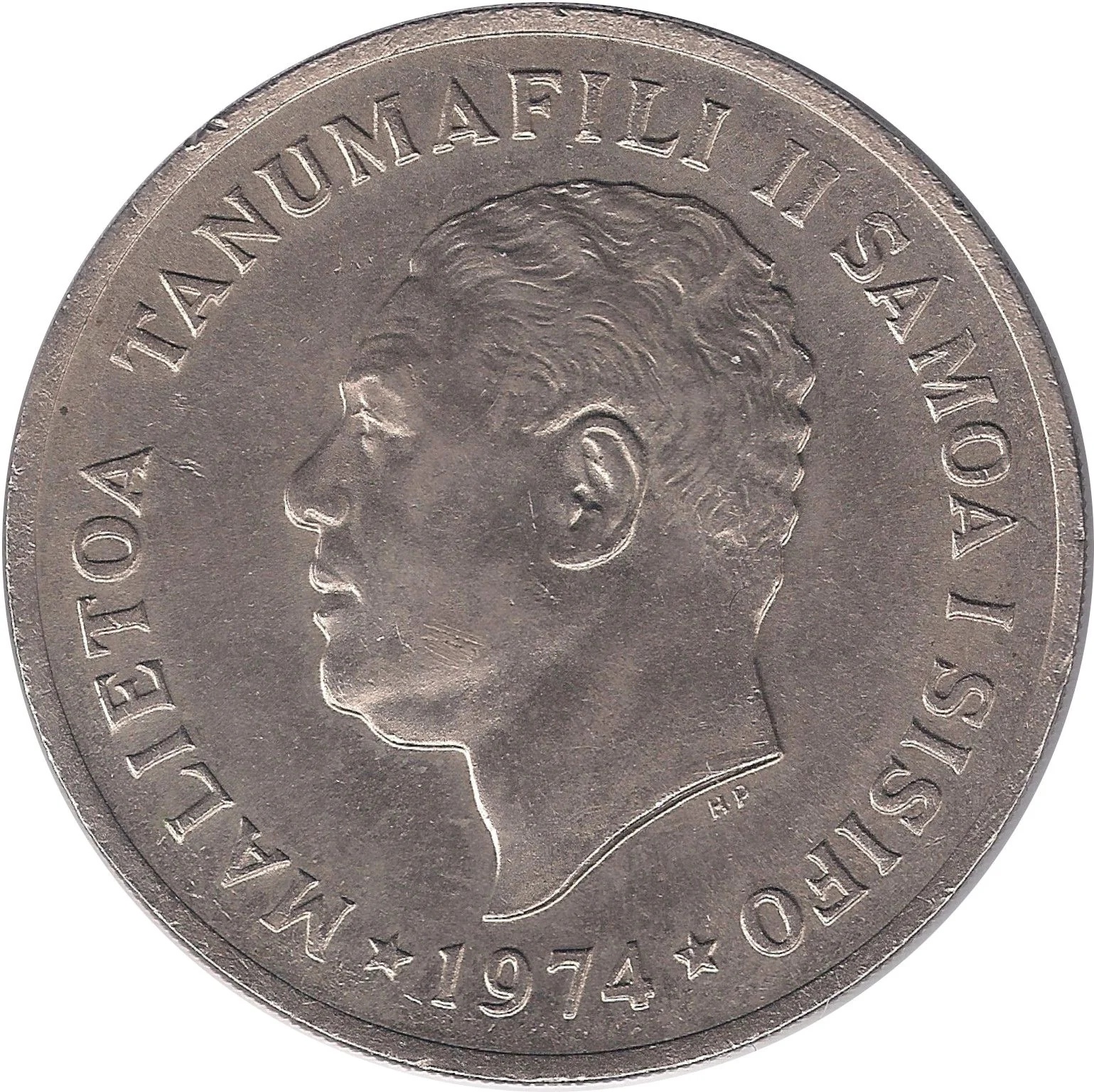
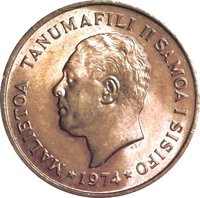
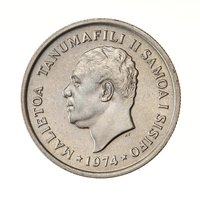
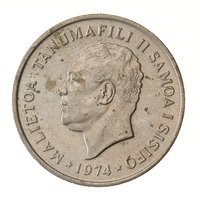
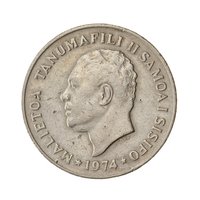
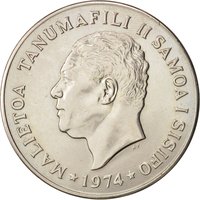
Malietoa Tanumafili II, left-facing portrait with date beneath.
Inscription:
MALIETOA TANUMAFILI II SAMOA SISIFO
*1974*
*1974*
Translation:
MALIETOA TANUMAFILI II WESTERN SAMOA
*1974*
*1974*
Script: Latin
Engraver: Thomas Humphrey Paget
Reverse
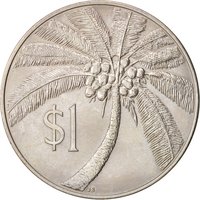
Description:
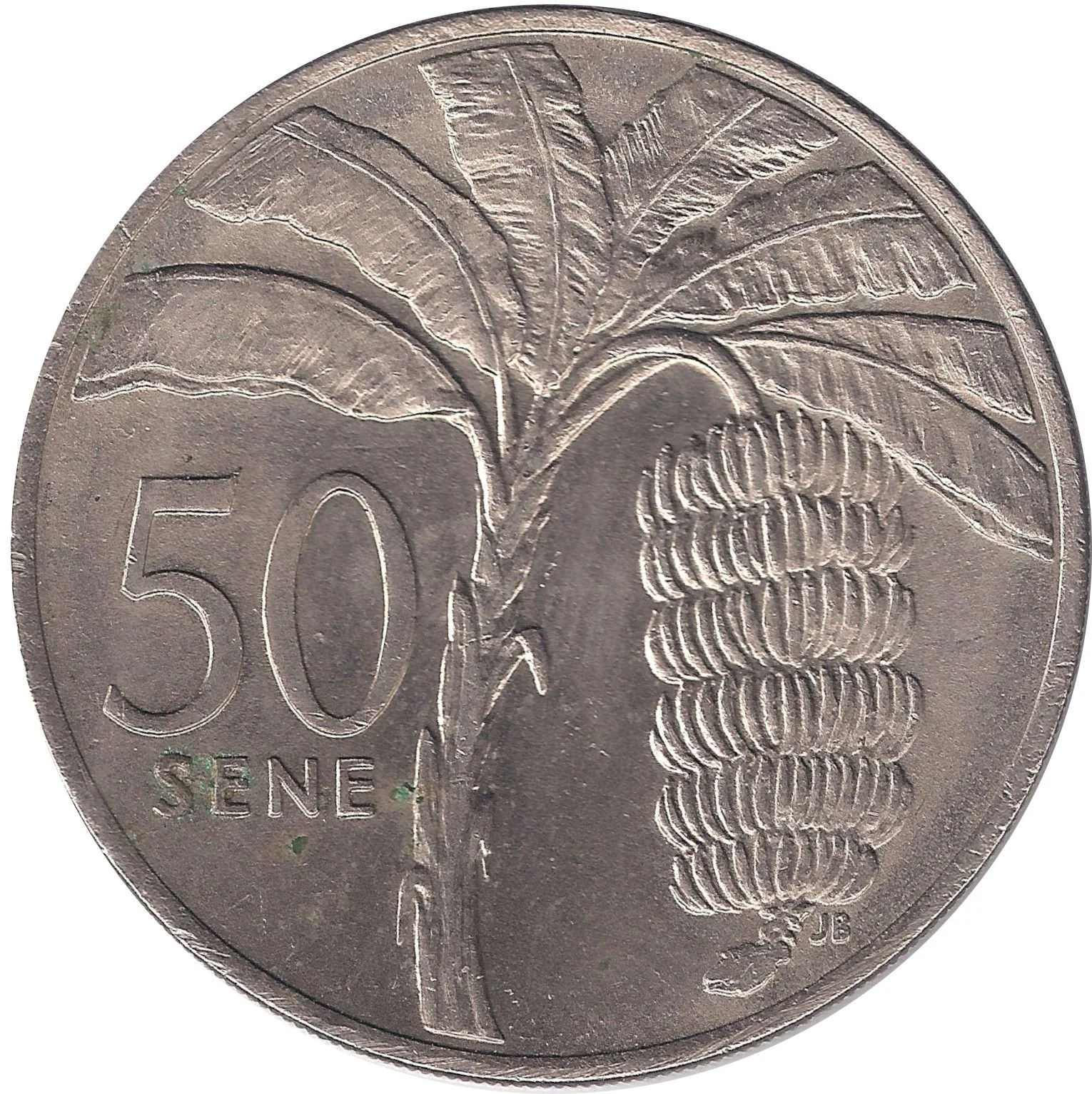
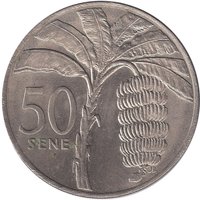
Banana Tree, left denomination.
Inscription:
50
SENE
SENE
Script: Latin
Engraver: George James Berry
Edge
Reeded
Categories
| Person> Politician |
| Plant> Fruit |
Mints
| Name | Mark |
|---|---|
| Royal Australian Mint | — |
| Royal Mint | — |
Mintings
| Year | Mint Mark | Mintage | Quality | Collection |
|---|---|---|---|---|
| 1974 | — | 50,000 | ||
| 1988 | — | — | ||
| 1993 | — | — | ||
| 1996 | — | — | ||
| 2000 | — | — |
Historical background
In 1974, Samoa (officially the Independent State of Western Samoa) was navigating a significant monetary transition. Since gaining independence from New Zealand in 1962, the country continued to use the New Zealand pound and, from 1967, the New Zealand dollar as its official currency. This arrangement provided stability but limited Samoa's independent monetary policy and symbolic economic sovereignty. The Samoan government, led by Prime Minister Tupua Tamasese Lealofi IV, viewed the establishment of a national currency as a key step in consolidating nationhood and gaining greater control over its domestic economy.
The groundwork for this change was laid with the passing of the Central Bank of Samoa Act 1974, which established the country's own central monetary authority. This new institution was tasked with issuing and managing a distinct national currency, the Samoan tālā, and its subunit, the sene. The tālā was pegged at par to the New Zealand dollar initially, ensuring a smooth transition and maintaining confidence in the new currency. This parity meant that for a period, the two currencies were interchangeable within Samoa.
The introduction of the Samoan tālā in 1974 was therefore both a practical economic measure and a powerful national symbol. It represented a final step in the decolonisation process, moving away from the direct monetary control of New Zealand. While maintaining a fixed link to its former colonial power's currency for stability, the creation of the Central Bank and the tālā provided the tools for Samoa to begin shaping its own financial destiny, a crucial development for the nation's long-term economic planning and identity.
The groundwork for this change was laid with the passing of the Central Bank of Samoa Act 1974, which established the country's own central monetary authority. This new institution was tasked with issuing and managing a distinct national currency, the Samoan tālā, and its subunit, the sene. The tālā was pegged at par to the New Zealand dollar initially, ensuring a smooth transition and maintaining confidence in the new currency. This parity meant that for a period, the two currencies were interchangeable within Samoa.
The introduction of the Samoan tālā in 1974 was therefore both a practical economic measure and a powerful national symbol. It represented a final step in the decolonisation process, moving away from the direct monetary control of New Zealand. While maintaining a fixed link to its former colonial power's currency for stability, the creation of the Central Bank and the tālā provided the tools for Samoa to begin shaping its own financial destiny, a crucial development for the nation's long-term economic planning and identity.
Series: 1974 Samoa circulation coins
🌱 Common