

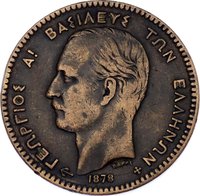
Obverse
Description:
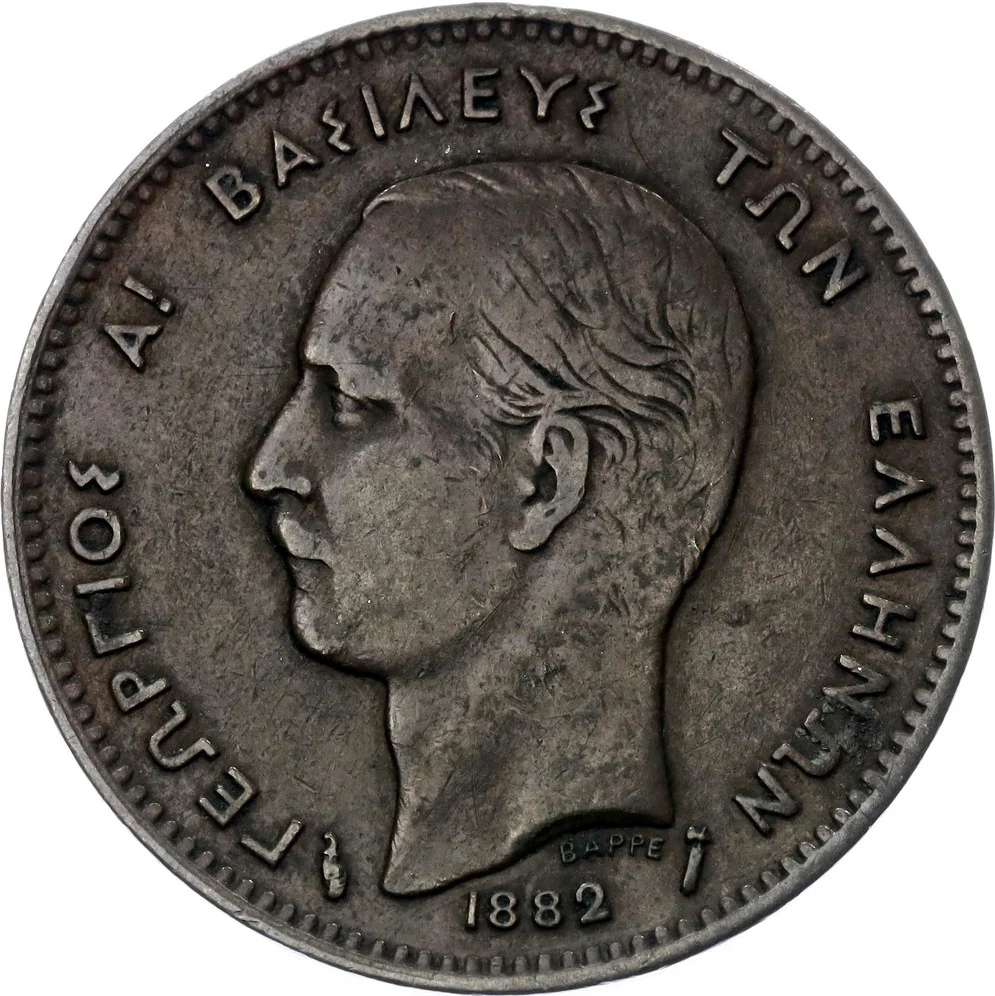
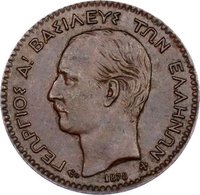
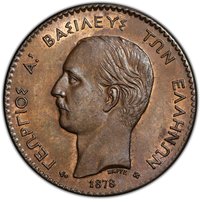
Portrait of King George I, left-facing, with date beneath.
Inscription:
ΓΕΩΡΓΙΟΣ Α! ΒΑΣΙΛΕΥΣ ΤΩΝ ΕΛΛΗΝΩΝ
ΒΑΡΡΕ
1882
ΒΑΡΡΕ
1882
Translation:
GEORGE A! KING OF THE GREEKS
BARRE
1882
BARRE
1882
Script: Greek
Language: Greek
Engraver: Jean-Auguste Barre
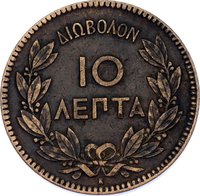
Reverse
Description:
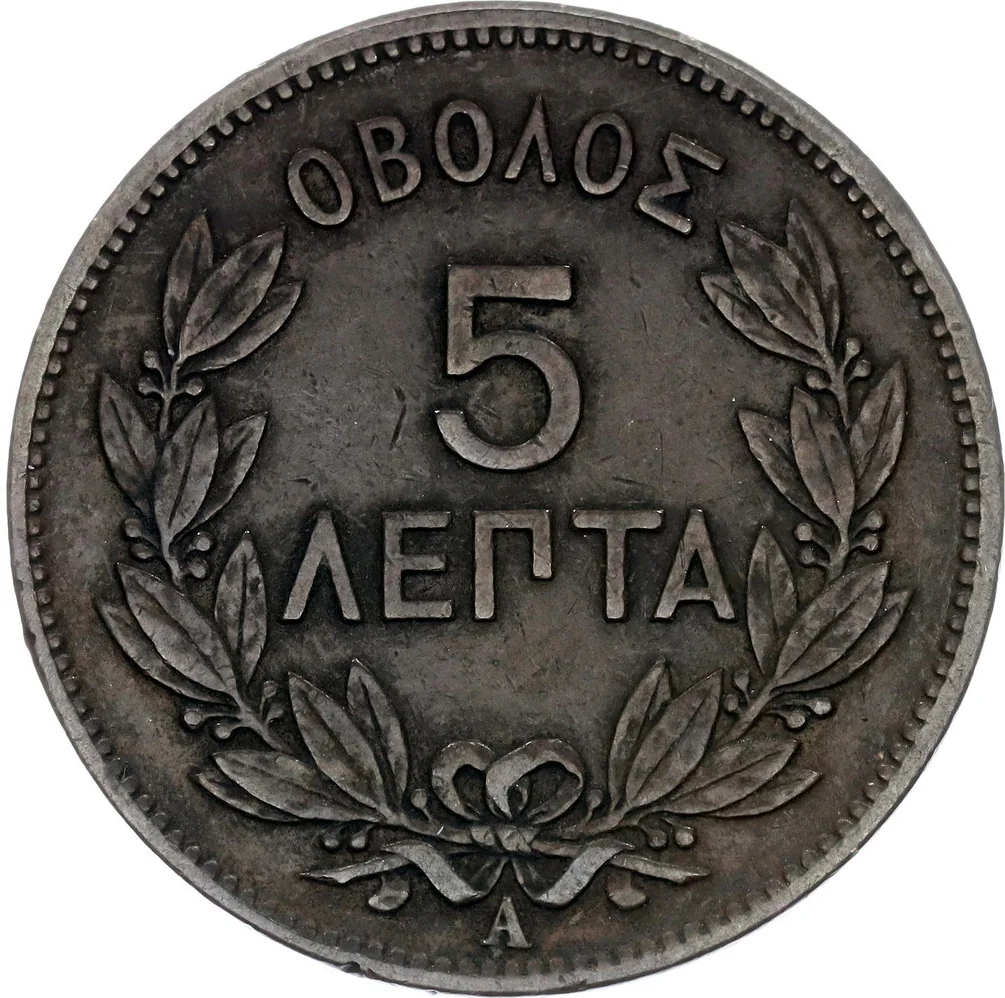
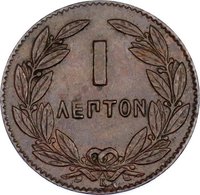
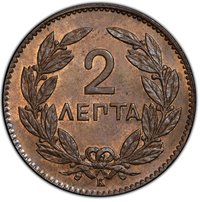
Wreath denomination
Inscription:
ΟΒΟΛΟΣ
5
ΛΕΠΤΑ
A
5
ΛΕΠΤΑ
A
Translation:
Obolos
5
Lepta
5
Lepta
Script: Greek
Language: Greek
Engraver: Jean-Auguste Barre
Edge
Plain
Mints
| Name | Mark |
|---|---|
| Monnaie de Paris | A |
| Bordeaux | K |
Historical background
By 1878, Greece had been using the Greek drachma as its national currency since independence in 1832, but its monetary system was in a state of profound instability and transition. The country was not on a unified metallic standard; instead, it operated a bimetallic system in theory, but in practice, a chaotic mix of Greek silver and copper coins circulated alongside a multitude of foreign gold and silver coins, particularly the French franc. Severe state debt, chronic budget deficits, and excessive issuance of fractional copper currency had led to a significant divergence between the nominal and intrinsic value of Greek coinage, causing public distrust and hampering trade.
The immediate backdrop in 1878 was Greece's diplomatic and military mobilization during the Russo-Turkish War (1877-78), which raised hopes of territorial expansion. In anticipation of potential war, the government, led by Charilaos Trikoupis, undertook massive military spending. This was financed largely through foreign loans and the aggressive minting of low-value copper lepta coins, which flooded the market. The result was rapid inflation, a sharp depreciation of the drachma's exchange rate, and a effective suspension of silver convertibility, pushing the system closer to a de facto fiat currency.
Consequently, 1878 represented a crisis point that underscored the urgent need for reform. The monetary chaos of that year strengthened the resolve of reformist politicians to pursue stabilization. This momentum would lead, just six years later in 1884, to Greece's pivotal accession to the Latin Monetary Union, which legally pegged the drachma to the gold and silver standards of France and other member nations. Therefore, the situation in 1878 is best understood as the turbulent prelude to Greece's eventual integration into the European monetary order of the late 19th century.
The immediate backdrop in 1878 was Greece's diplomatic and military mobilization during the Russo-Turkish War (1877-78), which raised hopes of territorial expansion. In anticipation of potential war, the government, led by Charilaos Trikoupis, undertook massive military spending. This was financed largely through foreign loans and the aggressive minting of low-value copper lepta coins, which flooded the market. The result was rapid inflation, a sharp depreciation of the drachma's exchange rate, and a effective suspension of silver convertibility, pushing the system closer to a de facto fiat currency.
Consequently, 1878 represented a crisis point that underscored the urgent need for reform. The monetary chaos of that year strengthened the resolve of reformist politicians to pursue stabilization. This momentum would lead, just six years later in 1884, to Greece's pivotal accession to the Latin Monetary Union, which legally pegged the drachma to the gold and silver standards of France and other member nations. Therefore, the situation in 1878 is best understood as the turbulent prelude to Greece's eventual integration into the European monetary order of the late 19th century.
Series: 1878 Greece circulation coins
🌱 Very Common