

5 dollars – United States
Add to wishlist
United States
Context
Years: 1813–1834
Issuer: United States
Period:
(since 1776)
Currency:
(since 1785)
Total mintage: 911,075
Material
References
KM: #
Numista: #40775
Value
Exchange value: 5 USD = $5.00
Bullion value: $1232.28
Obverse
Description:
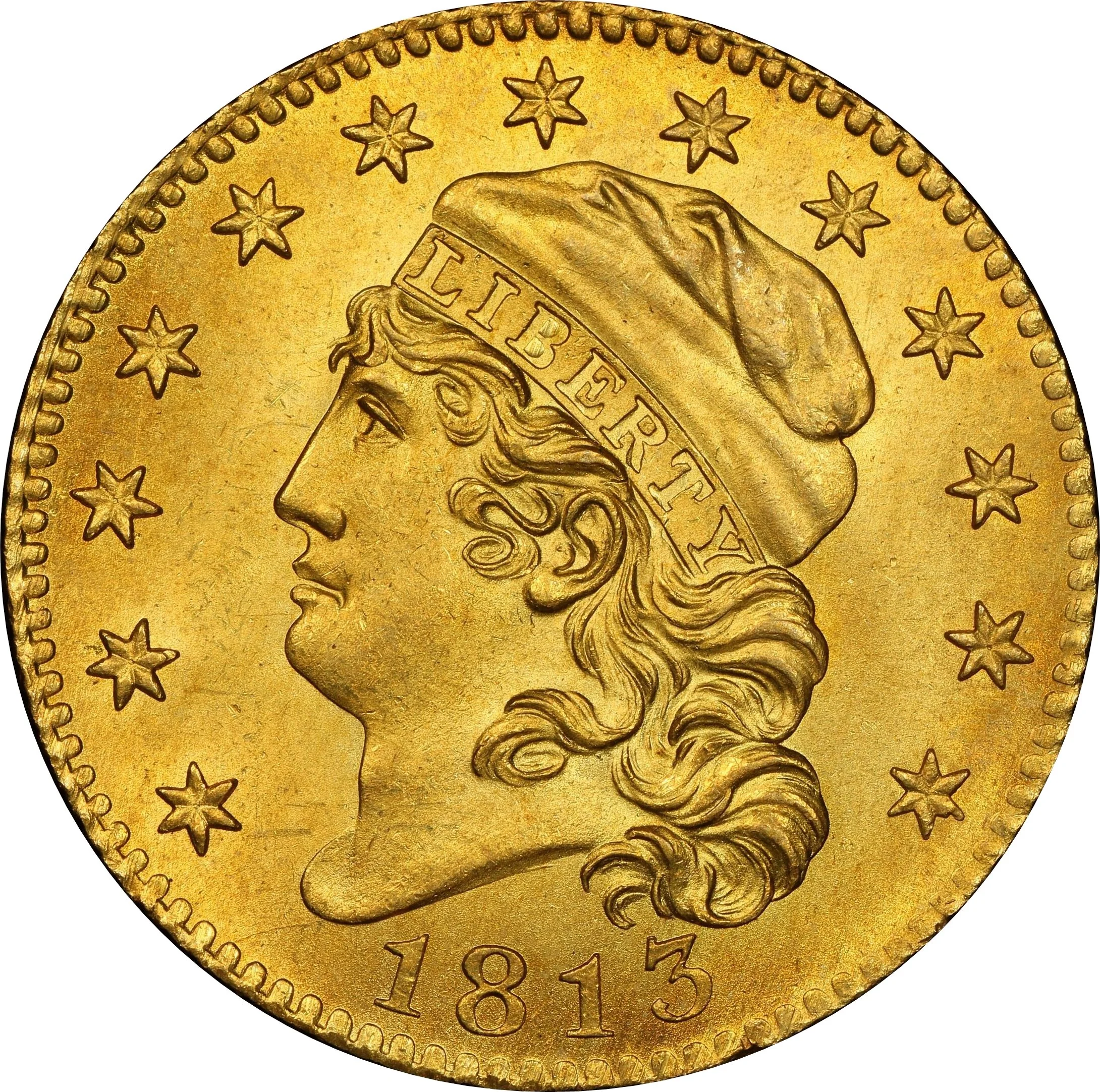
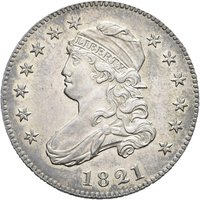
Liberty cap left, 13 stars, date below.
Inscription:
LIBERTY
1813
1813
Script: Latin
Designers: John Reich, William Kneass
Reverse
Description:
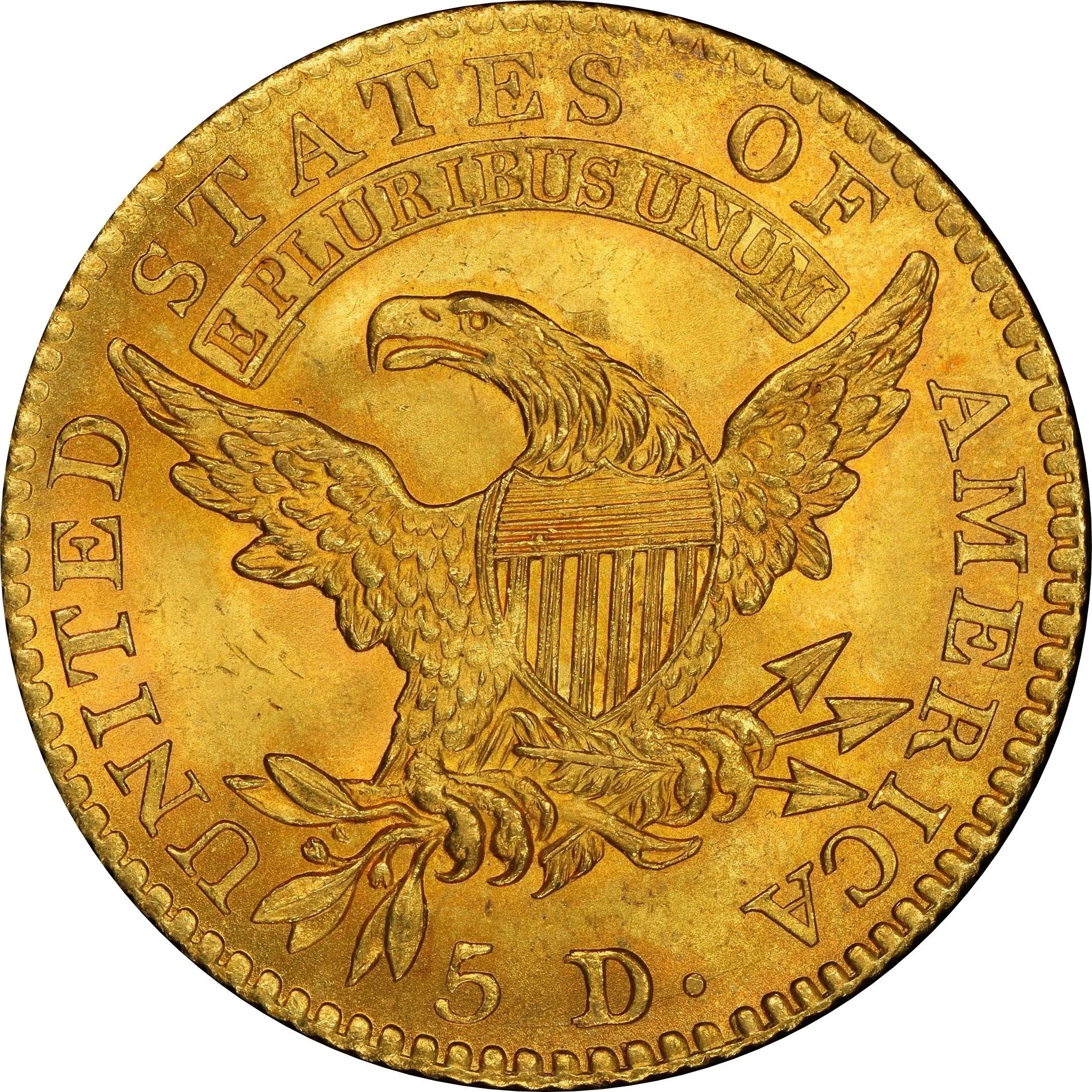
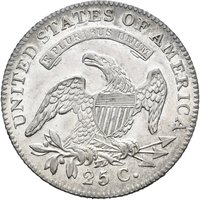
American eagle with shield, arrows, and olive branch, motto above.
Inscription:
UNITED STATES OF AMERICA
E PLURIBUS UNUM
5 D.
E PLURIBUS UNUM
5 D.
Script: Latin
Designers: John Reich, William Kneass
Edge
Reeded
Categories
| Symbol> Phrygian cap |
| Object> Cold weapons |
| Animal> Bird> Eagle |
| Symbol> Allegory |
Mints
| Name | Mark |
|---|---|
| United States Mint of Philadelphia | — |
Mintings
| Year | Mint Mark | Mintage | Quality | Collection |
|---|---|---|---|---|
| 1813 | — | 95,428 | ||
| 1814 | — | 15,454 | ||
| 1815 | — | 635 | ||
| 1818 | — | 48,588 | ||
| 1819 | — | 51,723 | ||
| 1820 | — | 263,806 | ||
| 1820 | — | 5 | Proof | |
| 1821 | — | 34,641 | ||
| 1821 | — | 3 | Proof | |
| 1822 | — | 17,796 | ||
| 1823 | — | 14,485 | ||
| 1824 | — | 17,340 | ||
| 1825 | — | 29,060 | ||
| 1825 | — | 3 | Proof | |
| 1826 | — | 18,069 | ||
| 1826 | — | 3 | Proof | |
| 1827 | — | 24,913 | ||
| 1828 | — | 28,029 | ||
| 1828 | — | 5 | Proof | |
| 1829 | — | 57,442 | ||
| 1829 | — | 3 | Proof | |
| 1830 | — | 3 | Proof | |
| 1830 | — | — | ||
| 1831 | — | 3 | Proof | |
| 1831 | — | — | ||
| 1832 | — | — | ||
| 1832 | — | 3 | Proof | |
| 1833 | — | 193,630 | ||
| 1833 | — | 5 | Proof | |
| 1834 | — | — |
Historical background
In 1813, the United States was grappling with a severe and chaotic currency crisis, a direct consequence of the War of 1812. The federal government, lacking a central bank after the First Bank of the United States' charter expired in 1811, struggled to finance the war effort. With limited ability to raise taxes or secure loans, the Treasury resorted to issuing Treasury notes. While not official legal tender, these notes circulated as a form of government paper money, adding to a complex and unreliable monetary landscape.
The heart of the problem lay in the proliferation of state-chartered private banks, which exploded in number from 88 in 1811 to over 200 by 1813. Facing little regulation and pressured to help fund the war, these banks issued vast amounts of paper banknotes with insufficient specie (gold and silver) reserves to back them. This led to widespread inflation and a dramatic variation in the value of money from one bank, or even one region, to another. A note from a distant bank might trade at a steep discount, making commerce difficult and eroding public trust.
Consequently, the nation operated on a fractured system where gold and silver coin was scarce and hoarded, federal Treasury notes were in circulation but not always trusted, and a flood of depreciating and often fraudulent private banknotes dominated everyday transactions. This "wildcat banking" environment created significant economic uncertainty, hindered interstate trade, and exposed the critical weaknesses of a decentralized financial system during a national emergency, setting the stage for the eventual rechartering of a central bank with the Second Bank of the United States in 1816.
The heart of the problem lay in the proliferation of state-chartered private banks, which exploded in number from 88 in 1811 to over 200 by 1813. Facing little regulation and pressured to help fund the war, these banks issued vast amounts of paper banknotes with insufficient specie (gold and silver) reserves to back them. This led to widespread inflation and a dramatic variation in the value of money from one bank, or even one region, to another. A note from a distant bank might trade at a steep discount, making commerce difficult and eroding public trust.
Consequently, the nation operated on a fractured system where gold and silver coin was scarce and hoarded, federal Treasury notes were in circulation but not always trusted, and a flood of depreciating and often fraudulent private banknotes dominated everyday transactions. This "wildcat banking" environment created significant economic uncertainty, hindered interstate trade, and exposed the critical weaknesses of a decentralized financial system during a national emergency, setting the stage for the eventual rechartering of a central bank with the Second Bank of the United States in 1816.

💎 Extremely Rare