

5 pounds (First World War outbreak) – Gibraltar
Add to wishlist
Non-circulating coins
Commemoration: Centenary of the outbreak of the first world war
Series: Centenary of the First World War
United Kingdom
Context
Year: 2014
Country: United Kingdom
Issuer: Gibraltar
Ruler: Elizabeth II
Currency:
(since 1971)
Total mintage: 45
Material
References
Numista: #407509
Value
Exchange value: 5 GIP
Bullion value: $5616.64
Inflation-adjusted value: 7.32 GIP
Obverse
Description:
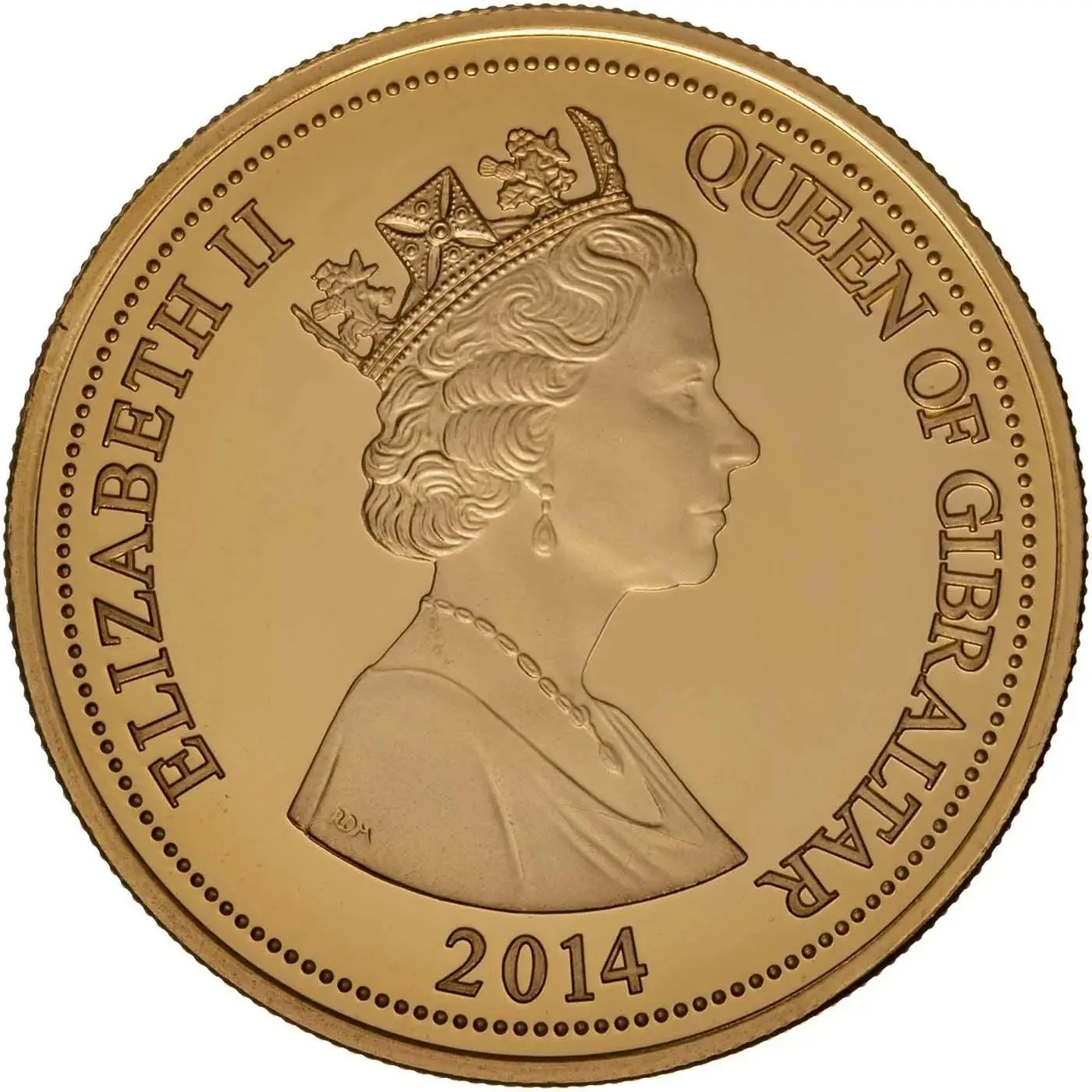
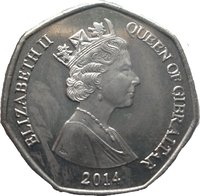
Queen Elizabeth II right-facing bust in George IV State Diadem, with legend and date.
Inscription:
ELIZABETH II
QUEEN OF GIBRALTAR
2014
RDM
QUEEN OF GIBRALTAR
2014
RDM
Script: Latin
Engraver: Raphael David Maklouf
Reverse
Description:
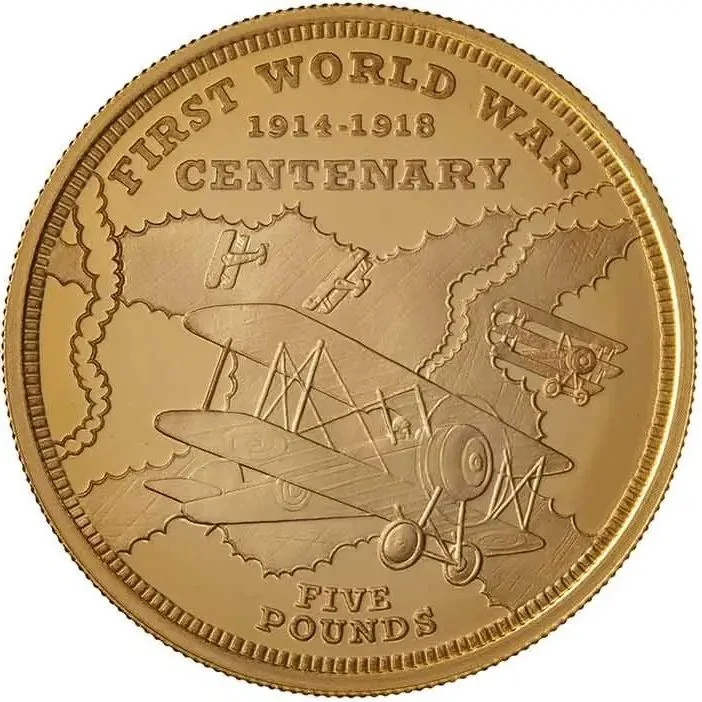
Airco biplane in combat.
Inscription:
FIRST WORLD WAR
1914-1918
CENTENARY
FIVE POUNDS
1914-1918
CENTENARY
FIVE POUNDS
Script: Latin
Designer: Michael Guilfoyle
Edge
Reeded
Categories
| Transportation> Aircraft |
| History> War |
Mints
| Name | Mark |
|---|---|
| Tower Mint | — |
Mintings
| Year | Mint Mark | Mintage | Quality | Collection |
|---|---|---|---|---|
| 2014 | — | 45 | Proof |
Historical background
In 2014, Gibraltar's currency situation was defined by its longstanding and stable use of the Gibraltar pound (GIP), which is pegged at par with the British pound sterling (GBP). Both currencies circulated interchangeably within the territory, with the Gibraltar government issuing its own banknotes and coins. This arrangement provided economic stability and was a clear reflection of Gibraltar's constitutional status as a British Overseas Territory, ensuring seamless financial integration with the United Kingdom.
However, the year was marked by significant political tension that briefly threatened this monetary stability. In July 2013, Gibraltar's government had created an artificial reef, leading to Spanish authorities implementing stringent border controls. This dispute escalated in 2014, with Spain suggesting the possibility of imposing a €50 border fee. More pertinently, there were threats from Spanish officials to exclude Gibraltar from the European Union's single payments area, which could have disrupted cross-border euro transactions and card payments. While these measures targeted the flow of goods and people, they indirectly raised concerns about financial fluidity, though the core peg to sterling remained unchallenged.
Ultimately, the currency peg itself was never in serious jeopardy. The Gibraltar pound's value and stability were firmly underpinned by substantial sterling reserves held by the Gibraltar government. The 2014 tensions highlighted the geopolitical sensitivities of Gibraltar's position but did not alter its fundamental monetary framework. The situation underscored that while political disputes with Spain could create practical economic friction, the legal and institutional commitment to the sterling peg provided a resilient anchor for Gibraltar's financial system.
However, the year was marked by significant political tension that briefly threatened this monetary stability. In July 2013, Gibraltar's government had created an artificial reef, leading to Spanish authorities implementing stringent border controls. This dispute escalated in 2014, with Spain suggesting the possibility of imposing a €50 border fee. More pertinently, there were threats from Spanish officials to exclude Gibraltar from the European Union's single payments area, which could have disrupted cross-border euro transactions and card payments. While these measures targeted the flow of goods and people, they indirectly raised concerns about financial fluidity, though the core peg to sterling remained unchallenged.
Ultimately, the currency peg itself was never in serious jeopardy. The Gibraltar pound's value and stability were firmly underpinned by substantial sterling reserves held by the Gibraltar government. The 2014 tensions highlighted the geopolitical sensitivities of Gibraltar's position but did not alter its fundamental monetary framework. The situation underscored that while political disputes with Spain could create practical economic friction, the legal and institutional commitment to the sterling peg provided a resilient anchor for Gibraltar's financial system.
Series: Centenary of the First World War

✨ Legendary