

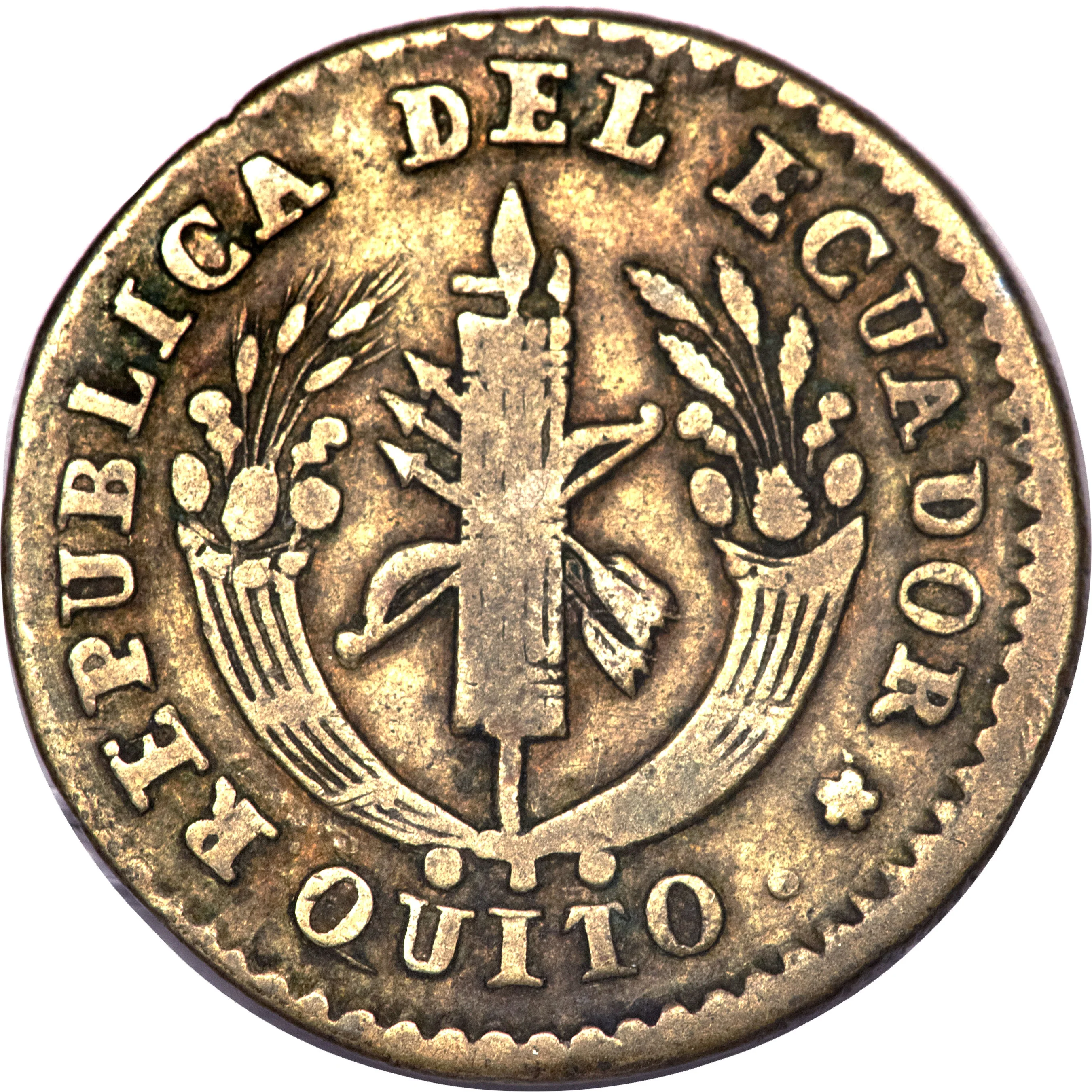
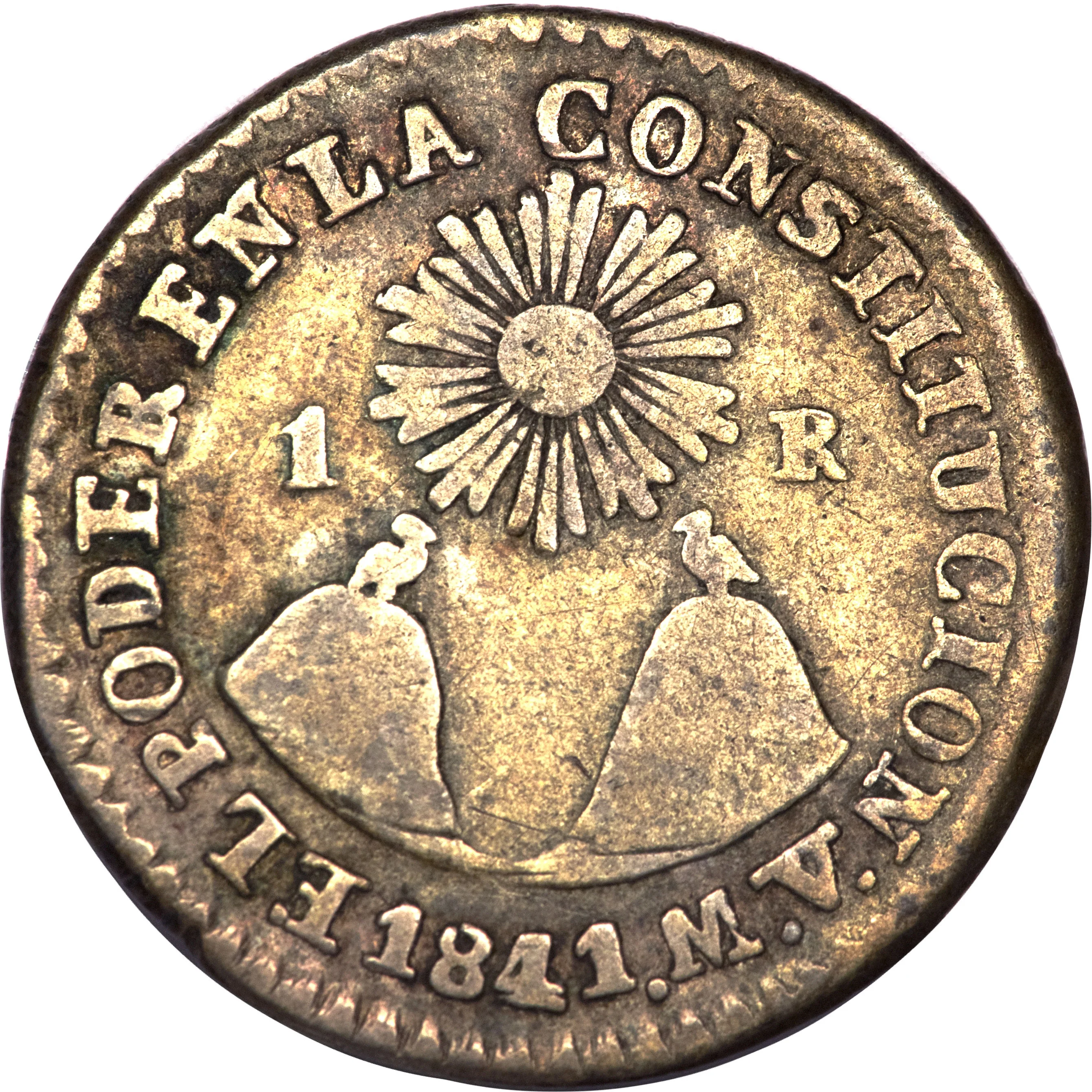
Mintings
| Year | Mint Mark | Mintage | Quality | Collection |
|---|---|---|---|---|
| 1836 | FP | — | ||
| 1836 | GJ | — | ||
| 1836 | MV | — | ||
| 1837 | FP | — | ||
| 1838 | MV | — | ||
| 1838 | ST | — | ||
| 1839 | MV | — | ||
| 1840 | MV | — | ||
| 1841 | MV | — |
Historical background
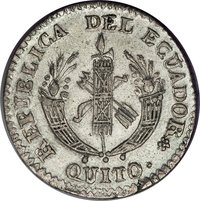
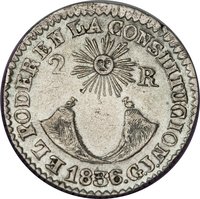
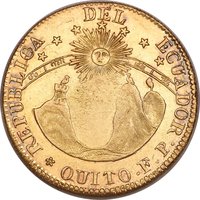
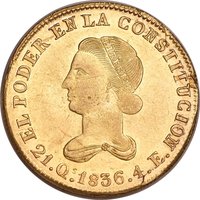
In 1836, Ecuador was a young and financially precarious republic, grappling with the complex monetary legacy of its colonial past and the disruptive forces of its recent independence. The country lacked a unified national currency, leading to a chaotic circulation of a wide variety of coins. The most prevalent were silver coins from neighboring Colombia (the Gran Colombian peso or real), older Spanish colonial pieces like the real and the peso fuerte, and even debased or counterfeit coins. This monetary fragmentation severely hindered domestic commerce and state finances, as the value and purity of coins varied widely, creating confusion and facilitating fraud.
The root of this instability lay in the collapse of the Gran Colombia federation in 1830, which left Ecuador without a central mint. The fledgling government, first under President Juan José Flores, struggled with chronic budget deficits and external debt, leaving it without the resources to institute a formal monetary system. Consequently, the state’s fiscal operations were conducted using this heterogeneous mix of foreign and old colonial coins, with their values often set by arbitrary decree rather than market-driven precious metal content. This environment discouraged both internal and external trade, as merchants faced significant uncertainty in every transaction.
Therefore, the currency situation in 1836 was one of transitional disarray, marking a low point before eventual reform. The pressing need for economic sovereignty and stability would soon lead to decisive action. Within a few years, this crisis would prompt the establishment of Ecuador's own mint in Quito (the Casa de la Moneda) in 1838, and the issuance of its first national coins, the escudo and real, in an effort to impose order, assert national identity, and stabilize the republic's fragile economy.
The root of this instability lay in the collapse of the Gran Colombia federation in 1830, which left Ecuador without a central mint. The fledgling government, first under President Juan José Flores, struggled with chronic budget deficits and external debt, leaving it without the resources to institute a formal monetary system. Consequently, the state’s fiscal operations were conducted using this heterogeneous mix of foreign and old colonial coins, with their values often set by arbitrary decree rather than market-driven precious metal content. This environment discouraged both internal and external trade, as merchants faced significant uncertainty in every transaction.
Therefore, the currency situation in 1836 was one of transitional disarray, marking a low point before eventual reform. The pressing need for economic sovereignty and stability would soon lead to decisive action. Within a few years, this crisis would prompt the establishment of Ecuador's own mint in Quito (the Casa de la Moneda) in 1838, and the issuance of its first national coins, the escudo and real, in an effort to impose order, assert national identity, and stabilize the republic's fragile economy.
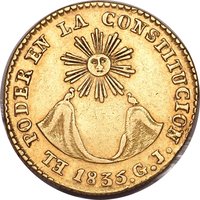
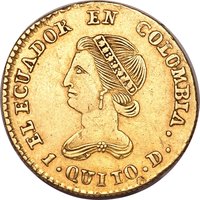
💎 Extremely Rare