

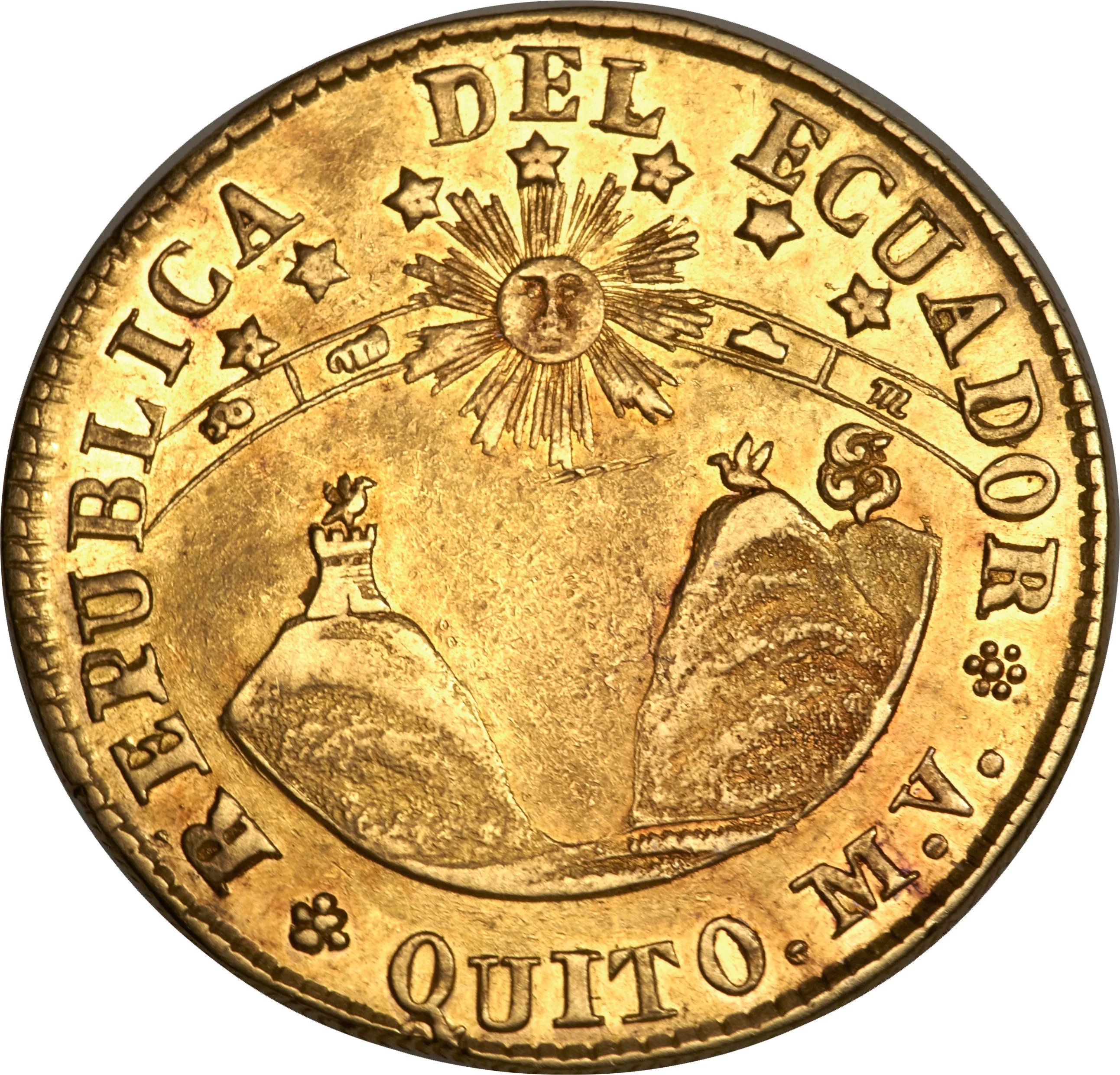
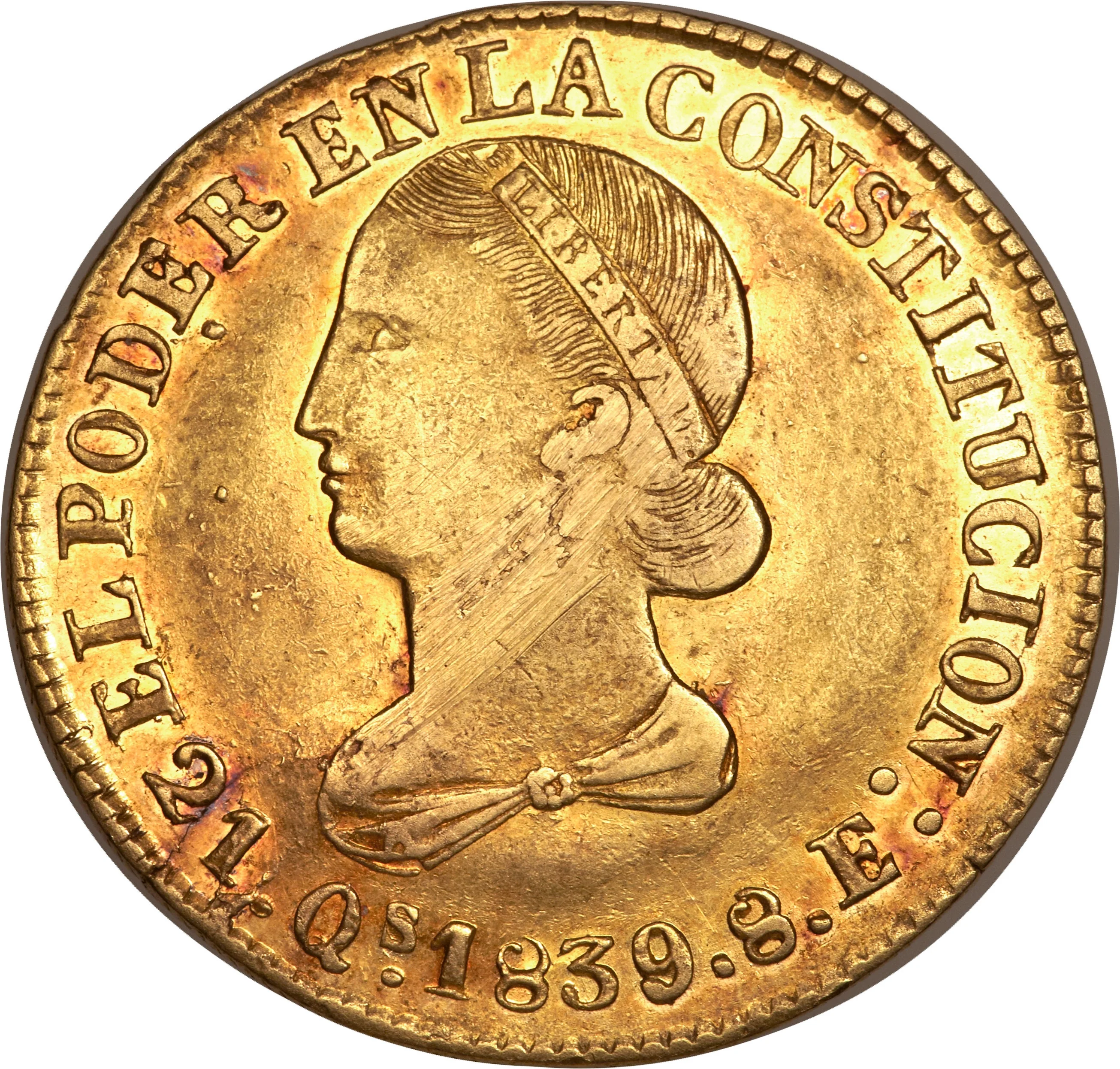
Mints
| Name | Mark |
|---|---|
| Casa de Moneda | — |
Mintings
| Year | Mint Mark | Mintage | Quality | Collection |
|---|---|---|---|---|
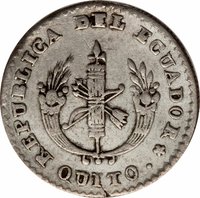
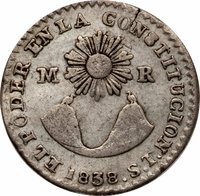
| 1838 | MV | — | ||
| 1838 | ST | — | ||
| 1839 | MV | — | ||
| 1840 | MV | — | ||
| 1841 | MV | — | ||
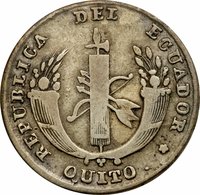
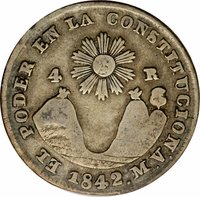
| 1842 | MV | — | ||
| 1843 | MV | — |
Historical background
In 1838, Ecuador was a young republic navigating the turbulent economic aftermath of its independence from Spain (achieved in 1830). The nation lacked a unified national currency, leading to a chaotic and fragmented monetary system. The primary circulating medium was the silver Peso, but its value and physical composition were inconsistent. Alongside these, a wide array of foreign coins—primarily Spanish colonial reales, but also coins from other Latin American nations and even counterfeits—circulated freely, creating a complex and unreliable environment for commerce.
This monetary anarchy was exacerbated by a severe shortage of precious metals, the traditional basis for currency. The national mint struggled with low production, and the government had no means to control the money supply or guarantee value. Consequently, transactions often relied on barter, and the value of coins was determined more by their weight and perceived metal content than by any official face value. This system was inefficient, hindered internal trade, and made the state vulnerable to fluctuations in the international flow of silver.
The situation presented a critical challenge to the state-building efforts of President Juan José Flores. A stable and sovereign currency was understood as essential for economic development, national integration, and asserting the legitimacy of the new republic. While 1838 did not see a definitive reform, the monetary chaos of this period laid bare the urgent need for one. It set the stage for future governments to pursue the difficult task of replacing the colonial monetary legacy with a unified national currency, a process that would remain fraught with difficulty for decades.
This monetary anarchy was exacerbated by a severe shortage of precious metals, the traditional basis for currency. The national mint struggled with low production, and the government had no means to control the money supply or guarantee value. Consequently, transactions often relied on barter, and the value of coins was determined more by their weight and perceived metal content than by any official face value. This system was inefficient, hindered internal trade, and made the state vulnerable to fluctuations in the international flow of silver.
The situation presented a critical challenge to the state-building efforts of President Juan José Flores. A stable and sovereign currency was understood as essential for economic development, national integration, and asserting the legitimacy of the new republic. While 1838 did not see a definitive reform, the monetary chaos of this period laid bare the urgent need for one. It set the stage for future governments to pursue the difficult task of replacing the colonial monetary legacy with a unified national currency, a process that would remain fraught with difficulty for decades.
✨ Legendary