

Mintings
| Year | Mint Mark | Mintage | Quality | Collection |
|---|---|---|---|---|
| 1841 | MV | — | ||
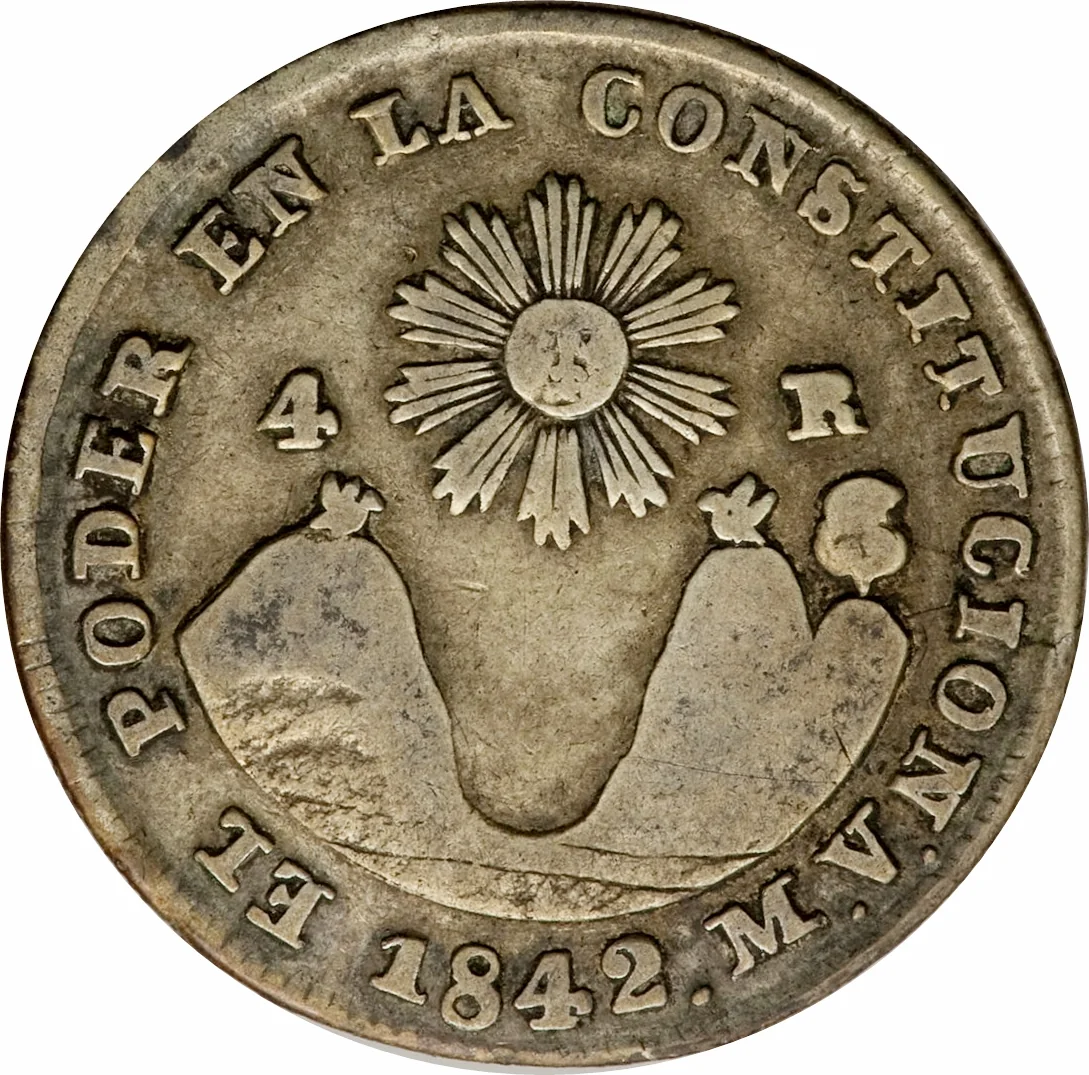
| 1842 | MV | — | ||
| 1843 | MV | — |
Historical background
In 1841, Ecuador was a young republic, just over a decade old, grappling with the profound monetary disorder inherited from the colonial era and the wars of independence. The nation lacked a unified national currency, leading to a chaotic circulation of a wide variety of coins. These included worn Spanish colonial pieces (reales and pesos), coins from neighboring South American republics like Colombia and Peru, and even counterfeits, all circulating simultaneously at fluctuating and disputed values. This fragmentation severely hampered domestic trade, complicated tax collection for the state, and created a climate of commercial uncertainty that stifled economic development.
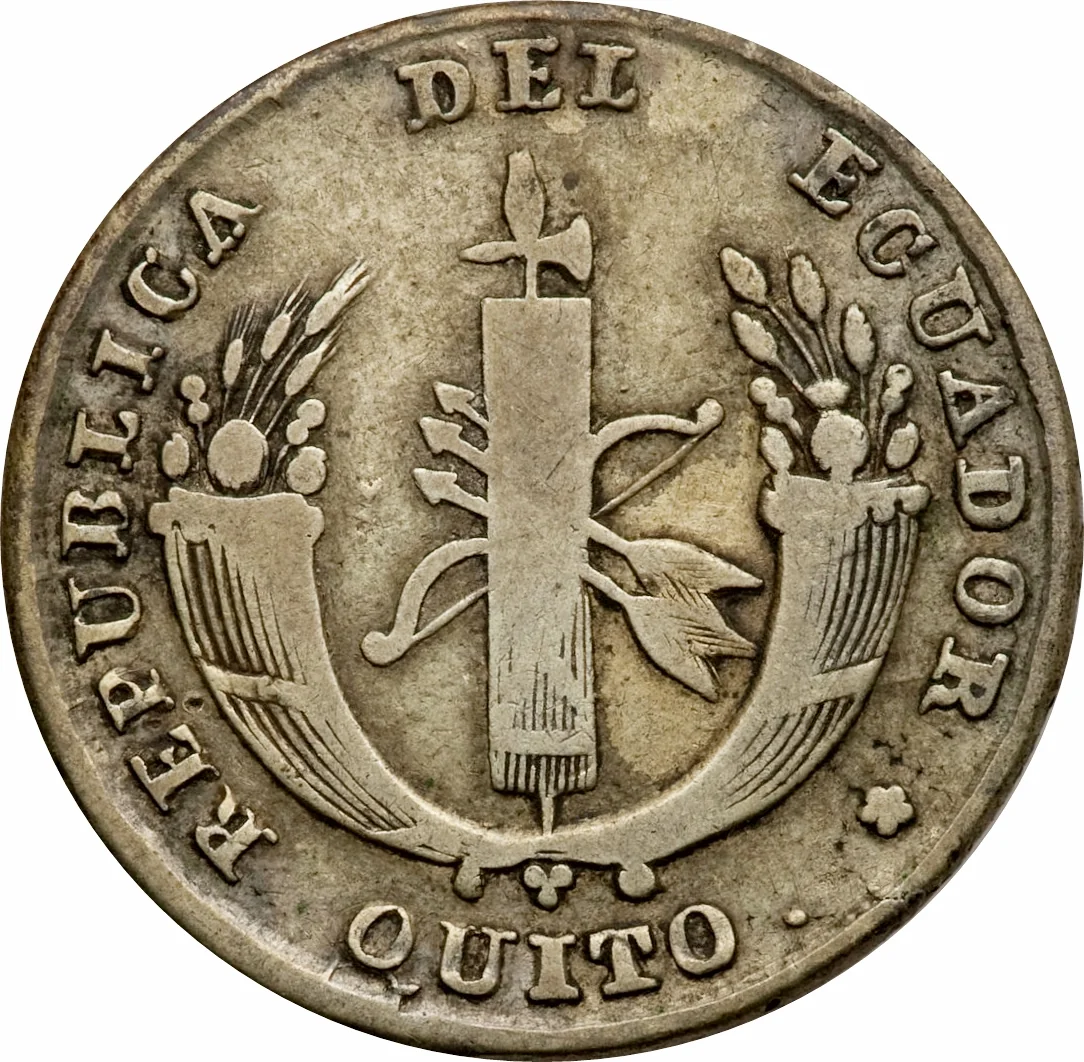
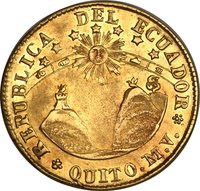
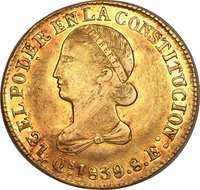
The core of the problem was an acute shortage of official minted specie, particularly low-denomination coins needed for everyday transactions. To address this, the government of President Juan José Flores had taken a significant step in 1833 by authorizing the minting of Ecuador's first national coins at the Quito Mint. These were silver reales and gold escudos, bearing the coat of arms of the new state. However, by 1841, the output from the Quito Mint remained insufficient to displace the heterogeneous mix of foreign and old coins. The situation was exacerbated by the outflow of full-weight silver coins to international markets, leaving behind a degraded circulating medium.
Consequently, the monetary landscape in 1841 was one of transition and frustration. While the Republic had symbolically established its sovereignty through its own coinage, the practical reality for merchants and citizens was a daily calculation involving multiple coin types with no fixed exchange rate. This period highlighted the urgent need for a stronger, more centralized monetary authority and a uniform currency system—a challenge that would persist for decades as Ecuador continued to struggle with establishing financial stability and integrating into the global economy.
The core of the problem was an acute shortage of official minted specie, particularly low-denomination coins needed for everyday transactions. To address this, the government of President Juan José Flores had taken a significant step in 1833 by authorizing the minting of Ecuador's first national coins at the Quito Mint. These were silver reales and gold escudos, bearing the coat of arms of the new state. However, by 1841, the output from the Quito Mint remained insufficient to displace the heterogeneous mix of foreign and old coins. The situation was exacerbated by the outflow of full-weight silver coins to international markets, leaving behind a degraded circulating medium.
Consequently, the monetary landscape in 1841 was one of transition and frustration. While the Republic had symbolically established its sovereignty through its own coinage, the practical reality for merchants and citizens was a daily calculation involving multiple coin types with no fixed exchange rate. This period highlighted the urgent need for a stronger, more centralized monetary authority and a uniform currency system—a challenge that would persist for decades as Ecuador continued to struggle with establishing financial stability and integrating into the global economy.

💎 Extremely Rare