

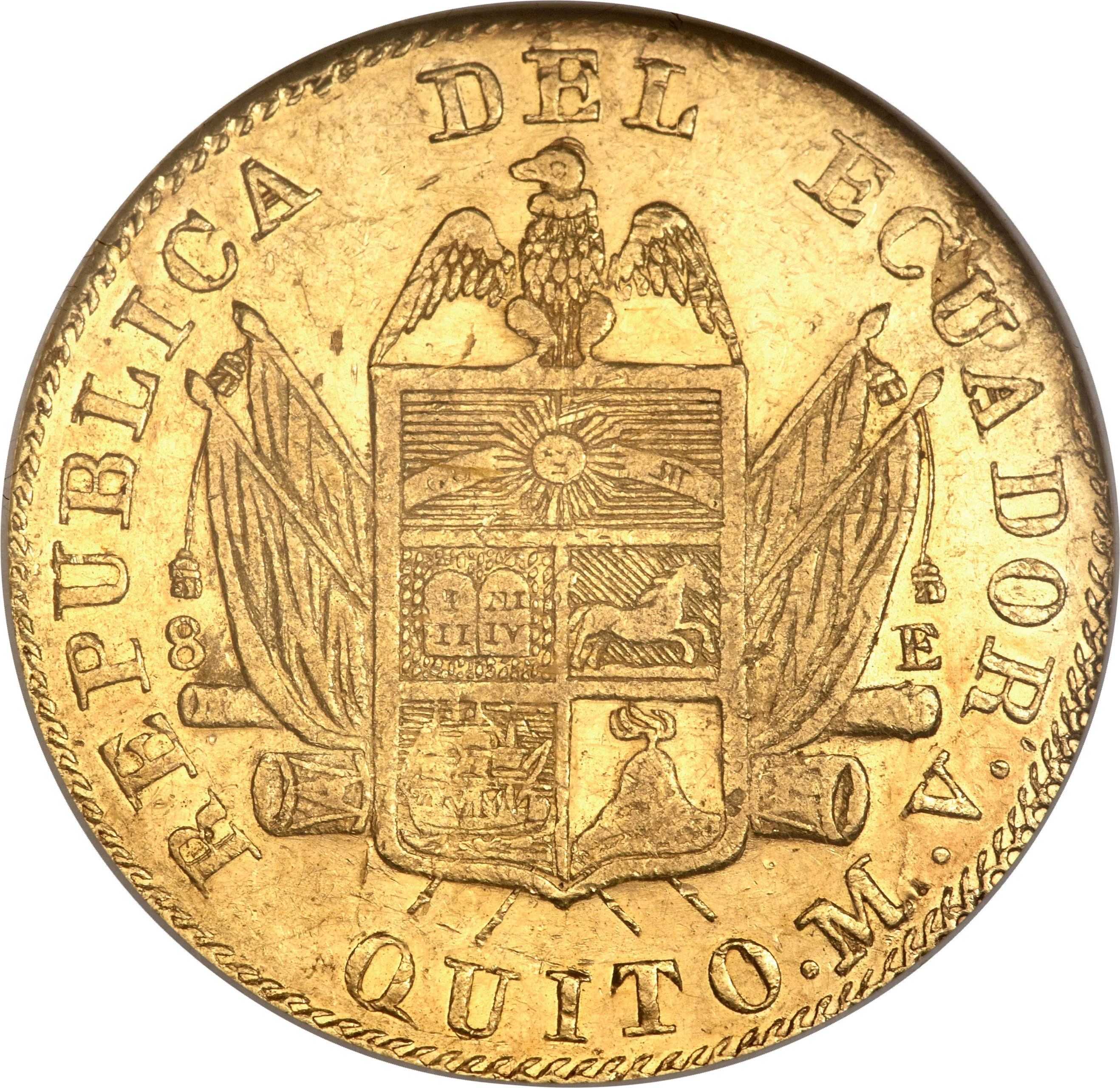
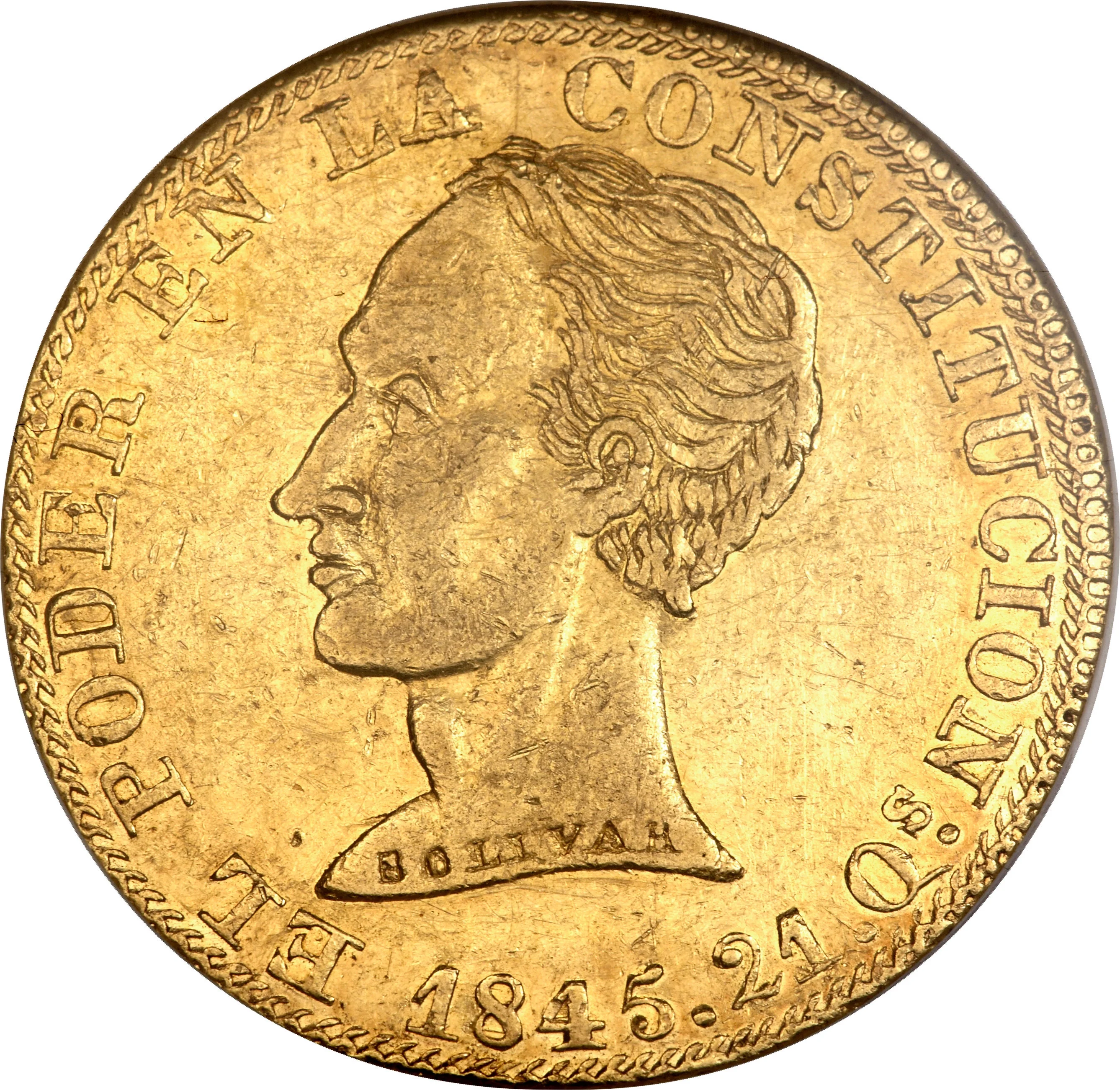
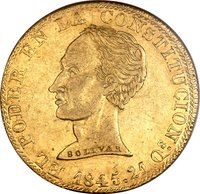
Mintings
| Year | Mint Mark | Mintage | Quality | Collection |
|---|---|---|---|---|
| 1845 | MV | — |
Historical background
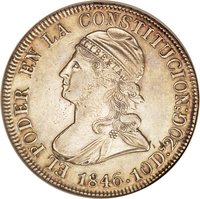
In 1845, Ecuador's currency situation was characterized by profound instability and fragmentation, a direct legacy of its turbulent early post-independence era. Following the dissolution of Gran Colombia in 1830, the new republic inherited a chaotic monetary system with a severe shortage of circulating coinage. To fill this void, a confusing mix of foreign coins—primarily Peruvian, Bolivian, and Colombian—circulated alongside a limited number of coins minted in Quito. The most significant and problematic currency, however, was the peso feble (weak peso), a debased silver coin whose value was officially set but constantly fluctuated in practice, eroding public trust and hindering commerce.
This monetary disarray was exacerbated by the fiscal crises of the state. Successive governments, particularly during the authoritarian rule of President Juan José Flores (1830-1835, 1839-1845), resorted to printing paper money and debasing coinage to finance budget deficits and military expenses. This led to rampant inflation and a deep distrust of any government-issued currency. The situation reached a tipping point in 1845 with the Marcist Revolution, which ousted Flores. The new provisional government faced immediate pressure to address the monetary chaos as a foundation for economic recovery and political legitimacy.
Consequently, the year 1845 was a transitional moment, marked more by crisis than resolution. The new leadership recognized the urgent need for monetary reform but was initially consumed by political consolidation. The primary challenges were to retire the devalued peso feble, standardize the coinage in circulation, and establish a credible national mint. While comprehensive reform would not be fully realized until later administrations, the events of 1845 set the stage for subsequent efforts to create a unified, stable national currency, making it a pivotal year that highlighted the intrinsic link between monetary integrity and the fragile project of nation-building.
This monetary disarray was exacerbated by the fiscal crises of the state. Successive governments, particularly during the authoritarian rule of President Juan José Flores (1830-1835, 1839-1845), resorted to printing paper money and debasing coinage to finance budget deficits and military expenses. This led to rampant inflation and a deep distrust of any government-issued currency. The situation reached a tipping point in 1845 with the Marcist Revolution, which ousted Flores. The new provisional government faced immediate pressure to address the monetary chaos as a foundation for economic recovery and political legitimacy.
Consequently, the year 1845 was a transitional moment, marked more by crisis than resolution. The new leadership recognized the urgent need for monetary reform but was initially consumed by political consolidation. The primary challenges were to retire the devalued peso feble, standardize the coinage in circulation, and establish a credible national mint. While comprehensive reform would not be fully realized until later administrations, the events of 1845 set the stage for subsequent efforts to create a unified, stable national currency, making it a pivotal year that highlighted the intrinsic link between monetary integrity and the fragile project of nation-building.
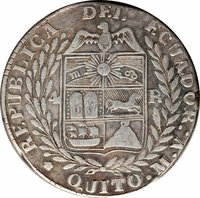
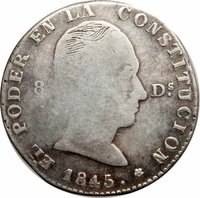
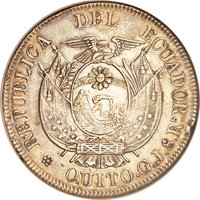
✨ Legendary