

Mintings
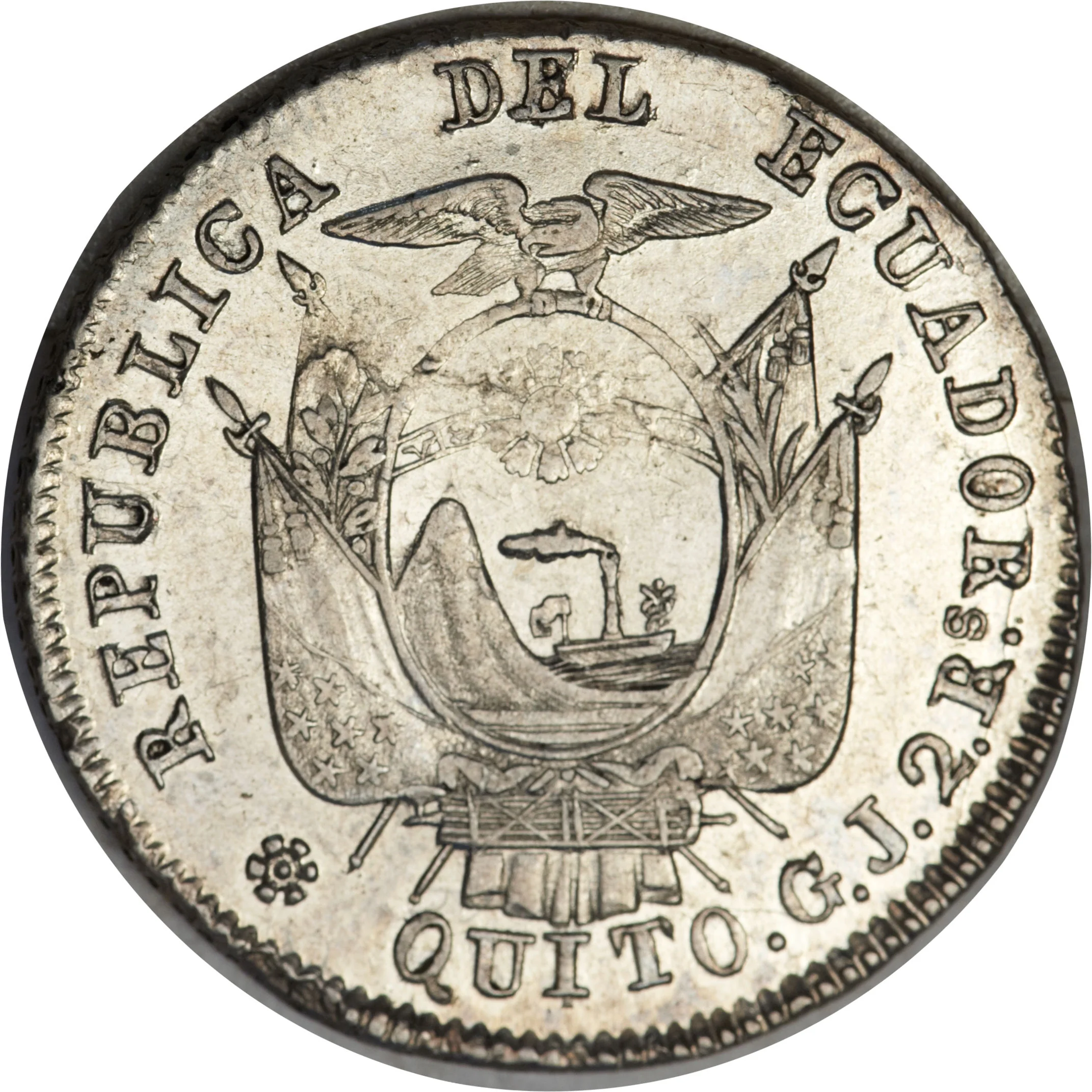
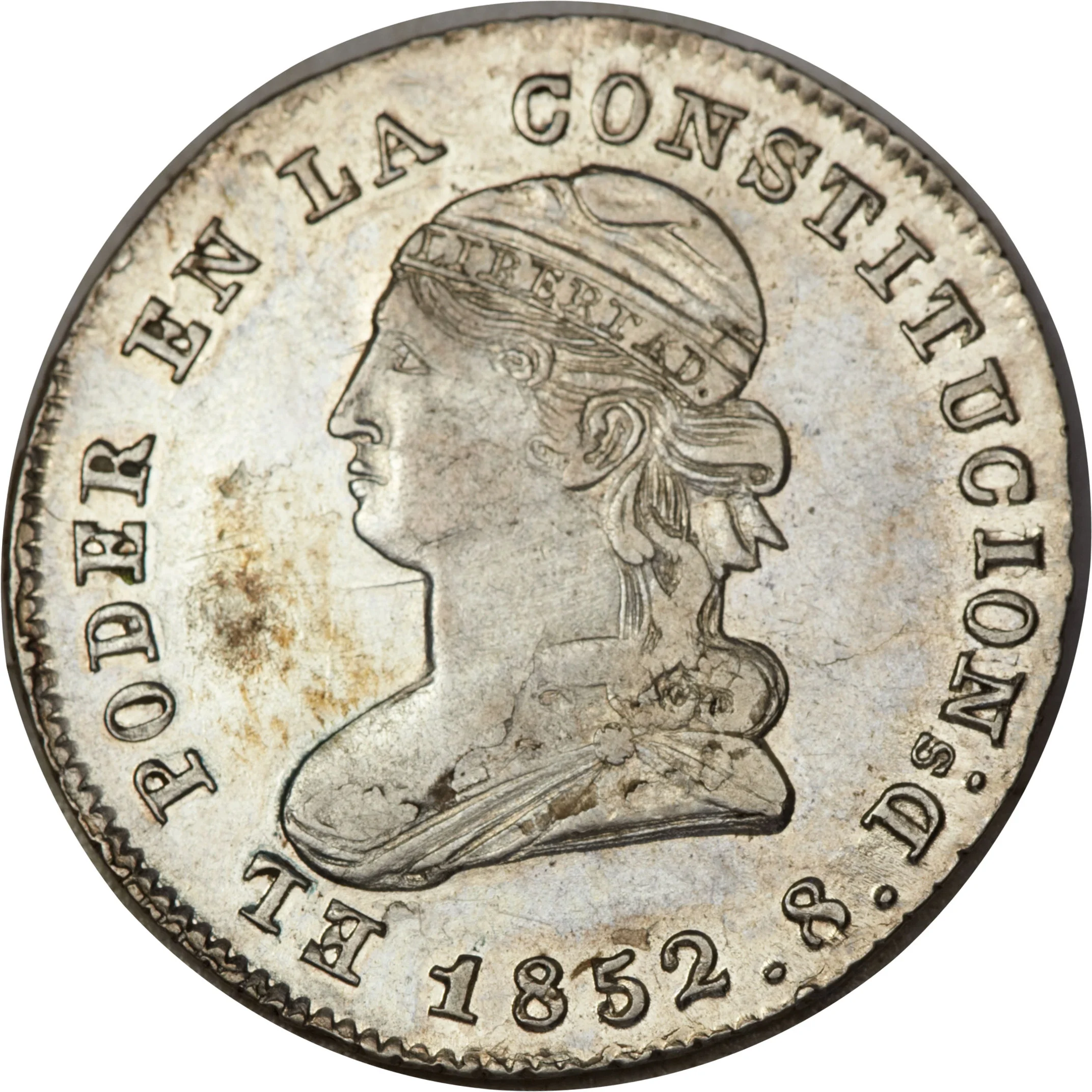
| Year | Mint Mark | Mintage | Quality | Collection |
|---|---|---|---|---|
| 1847 | GJ | — | ||
| 1848 | GJ | — | ||
| 1849 | GJ | — | ||
| 1850 | GJ | — | ||
| 1851 | GJ | — | ||
| 1852 | GJ | — |
Historical background
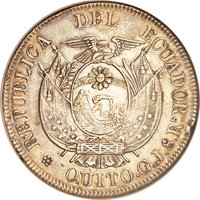
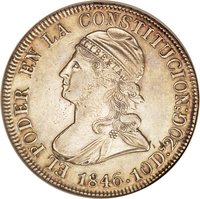
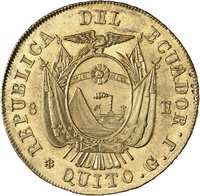
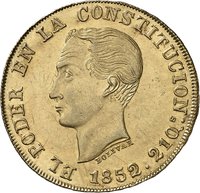
In 1847, Ecuador found itself in a precarious monetary situation, a direct legacy of its post-independence fragmentation and the collapse of Gran Colombia. The nation lacked a unified, sovereign currency. Instead, its economy operated on a chaotic system of multiple coinages, primarily consisting of worn and clipped Spanish colonial silver coins (reales) and a limited supply of Colombian-era coinage. This scarcity of sound, full-weight currency severely hampered both daily commerce and state finances, as the government struggled to collect taxes and fund its operations with a reliable medium of exchange.
The core of the problem was a chronic trade deficit and a resulting outflow of precious metal. Ecuador's primary export, cacao, generated earnings, but these were insufficient to cover imports of manufactured goods. This imbalance led to a continuous drain of silver coins out of the country, leaving behind a degraded and insufficient circulating medium. Furthermore, the government's repeated attempts to address budget shortfalls by minting debased coinage—most notably the low-quality "quartillos" (quarter-real coins)—only eroded public trust. These coins, often containing less silver than their face value, were widely rejected in private transactions, exacerbating the monetary disorder.
Consequently, by 1847, Ecuador was effectively in a state of monetary crisis. The lack of a trustworthy standard created uncertainty for merchants, discouraged investment, and stifled economic development. This unstable environment set the stage for the significant monetary reforms that would follow in the subsequent decades, most notably the official adoption of the silver Sucre as the national currency in 1856, an attempt to impose order and sovereignty on the nation's financial system.
The core of the problem was a chronic trade deficit and a resulting outflow of precious metal. Ecuador's primary export, cacao, generated earnings, but these were insufficient to cover imports of manufactured goods. This imbalance led to a continuous drain of silver coins out of the country, leaving behind a degraded and insufficient circulating medium. Furthermore, the government's repeated attempts to address budget shortfalls by minting debased coinage—most notably the low-quality "quartillos" (quarter-real coins)—only eroded public trust. These coins, often containing less silver than their face value, were widely rejected in private transactions, exacerbating the monetary disorder.
Consequently, by 1847, Ecuador was effectively in a state of monetary crisis. The lack of a trustworthy standard created uncertainty for merchants, discouraged investment, and stifled economic development. This unstable environment set the stage for the significant monetary reforms that would follow in the subsequent decades, most notably the official adoption of the silver Sucre as the national currency in 1856, an attempt to impose order and sovereignty on the nation's financial system.
💎 Very Rare