

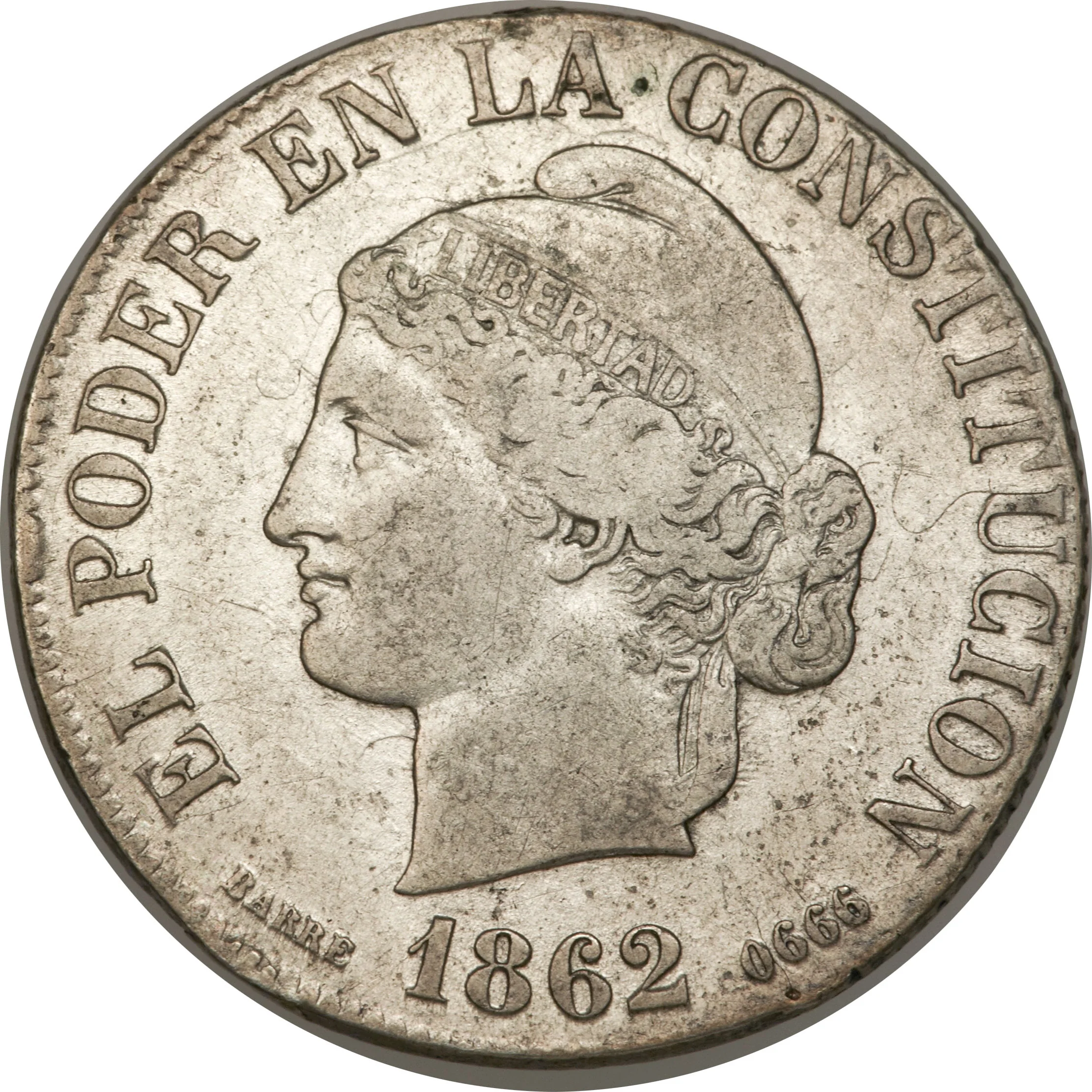
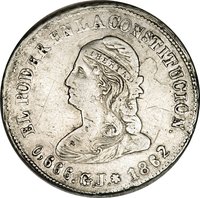
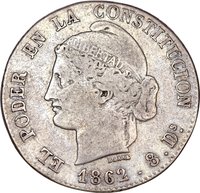
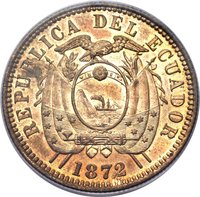
Obverse
Script: Latin
Engraver: Désiré-Albert Barre
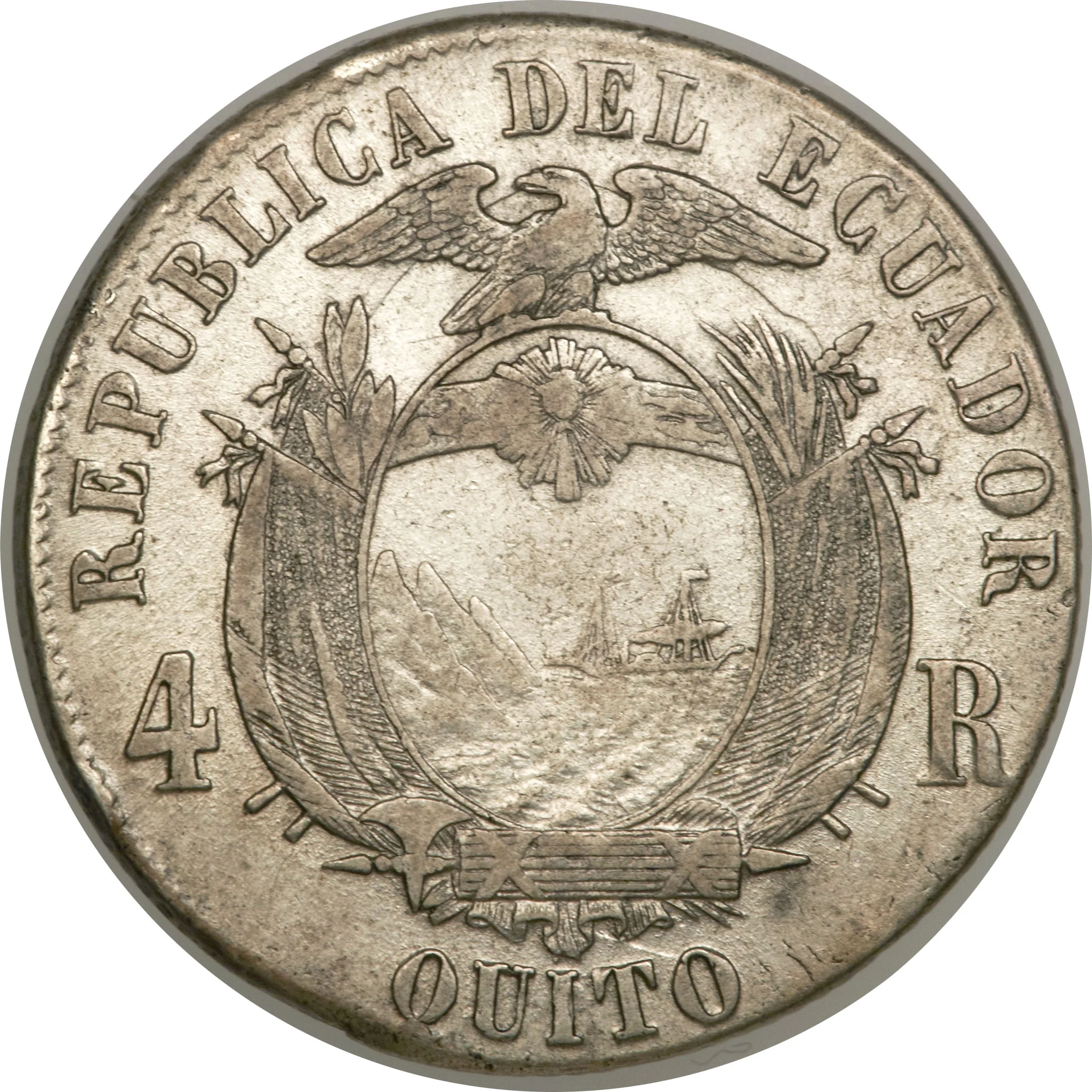
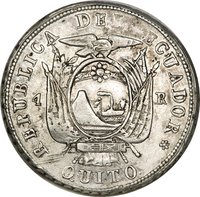
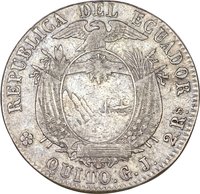
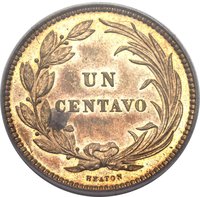
Reverse
Script: Latin
Engraver: Désiré-Albert Barre
Edge
Mintings
| Year | Mint Mark | Mintage | Quality | Collection |
|---|---|---|---|---|
| 1862 | — | — |
Historical background
In 1862, Ecuador's currency situation was characterized by profound instability and fragmentation, a direct legacy of its turbulent early post-independence decades. The nation lacked a unified monetary system, with a chaotic mix of foreign and domestic coins circulating at varying values. Spanish colonial coins (like pesos and reales), Colombian coins from the Gran Colombia era, and even Peruvian and Bolivian currency were all in use, alongside debased and counterfeit coins. This disorder severely hampered commerce, as the value of money differed significantly from region to region, creating confusion and facilitating fraud.
The root of this monetary anarchy lay in the state's chronic fiscal weakness. Successive governments, facing empty treasuries due to economic stagnation and political strife, had repeatedly resorted to issuing low-value copper coinage (moneda de cobre) to meet immediate expenses. This led to massive inflation of the copper currency and a disastrous flight from copper to silver (ley de Gresham in practice), where "bad money drove out the good." By 1862, the copper currency had become nearly worthless, destroying public trust and crippling everyday transactions for the populace, while the state's inability to collect taxes in reliable specie perpetuated the crisis.
Recognizing the urgent need for reform, President Gabriel García Moreno, who had consolidated power in 1861, was actively seeking solutions in 1862. His government understood that monetary unity was essential for national integration and economic modernization. Therefore, the period was one of transition and planning, setting the stage for the decisive monetary reform that would come in 1863 with the creation of the Banco del Ecuador and the introduction of a new, decimal-based national currency, the peso, tied to the silver standard, in an ambitious attempt to finally impose order on the nation's finances.
The root of this monetary anarchy lay in the state's chronic fiscal weakness. Successive governments, facing empty treasuries due to economic stagnation and political strife, had repeatedly resorted to issuing low-value copper coinage (moneda de cobre) to meet immediate expenses. This led to massive inflation of the copper currency and a disastrous flight from copper to silver (ley de Gresham in practice), where "bad money drove out the good." By 1862, the copper currency had become nearly worthless, destroying public trust and crippling everyday transactions for the populace, while the state's inability to collect taxes in reliable specie perpetuated the crisis.
Recognizing the urgent need for reform, President Gabriel García Moreno, who had consolidated power in 1861, was actively seeking solutions in 1862. His government understood that monetary unity was essential for national integration and economic modernization. Therefore, the period was one of transition and planning, setting the stage for the decisive monetary reform that would come in 1863 with the creation of the Banco del Ecuador and the introduction of a new, decimal-based national currency, the peso, tied to the silver standard, in an ambitious attempt to finally impose order on the nation's finances.
✨ Legendary