

5 dollars – Canada
Add to wishlist
Canada
Context
Material
Diameter: 38 mm
Weight: 31.1 g
Silver Weight:: 31.10 g
Thickness: 3.15 mm
Shape: Round
Composition: 99.99% Silver
Standard: Silver ounce
Magnetic: No
Technique: Milled
Alignment: Medal alignment
flip
References
KM: #
Numista: #40500
Value
Exchange value: 5 CAD
Bullion value: $79.41
Inflation-adjusted value: 8.87 CAD
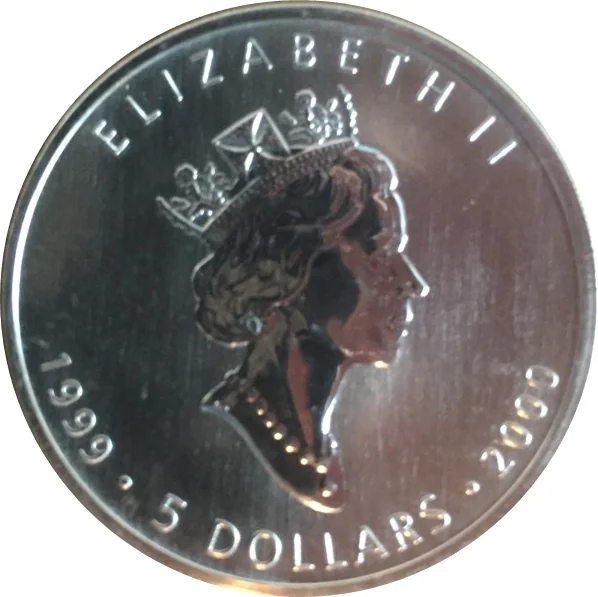
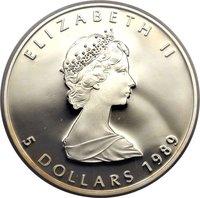
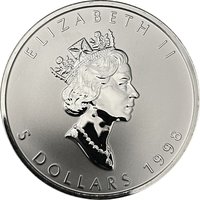
Obverse
Description:
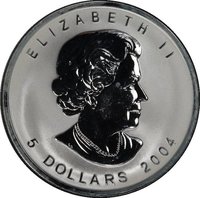
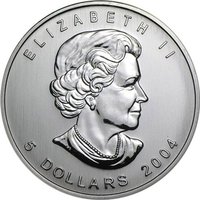
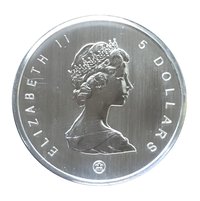
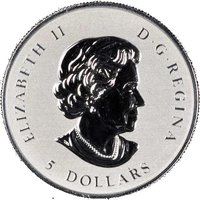
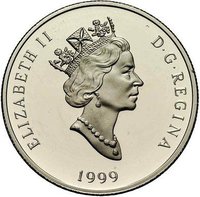
Queen Elizabeth II at 64, wearing the royal diadem and jewels, facing right.
Inscription:
ELIZABETH II
1999 · 5 DOLLARS · 2000
1999 · 5 DOLLARS · 2000
Script: Latin
Engraver: Dora de Pédery-Hunt
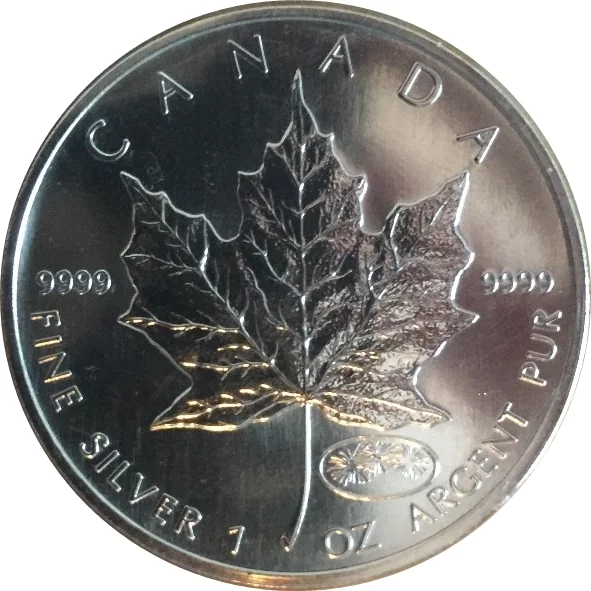
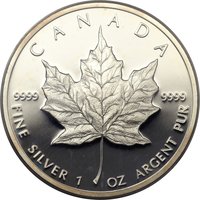
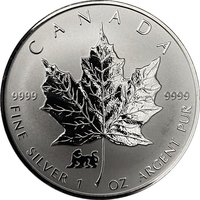
Reverse
Description:
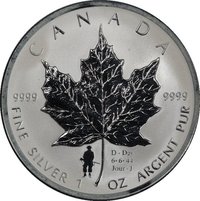
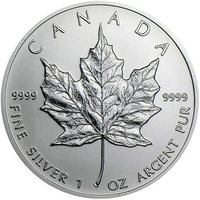
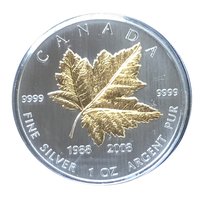
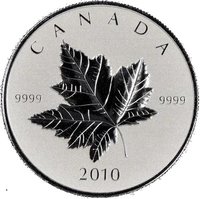
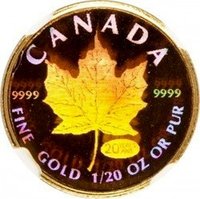
Maple leaf.
Inscription:
CANADA
9999 9999
FINE SILVER 1 OZ ARGENT PUR
9999 9999
FINE SILVER 1 OZ ARGENT PUR
Script: Latin
Designer: Walter Ott
Edge
Reeded
Categories
| Event> Millennium |
Mints
| Name | Mark |
|---|---|
| Royal Canadian Mint of Ottawa | — |
Mintings
| Year | Mint Mark | Mintage | Quality | Collection |
|---|---|---|---|---|
| 1999 | — | 298,775 |
Historical background
In 1999, Canada's currency situation was characterized by a period of significant weakness for the Canadian dollar, often colloquially referred to as the "loonie" after the aquatic bird featured on the one-dollar coin. The year saw the currency trade at historic lows, averaging approximately 67 cents U.S. and even briefly touching an all-time low of 63.11 cents U.S. in August. This prolonged depreciation, which had been ongoing since the mid-1970s, was a source of national concern and intense public and political debate, framing the dollar as a symbol of economic anxiety.
The primary drivers of this weakness were rooted in commodity prices and interest rate differentials. Global commodity prices, particularly for oil and natural gas, were languishing at very low levels, reducing export revenues for the resource-heavy Canadian economy. Simultaneously, the United States Federal Reserve was maintaining higher interest rates than the Bank of Canada to cool a booming U.S. economy, attracting capital flows south of the border and further pressuring the Canadian dollar. This combination created a persistent drag, despite Canada's solid fiscal fundamentals, including a federal budget surplus.
The low dollar presented a classic double-edged sword for the economy. It provided a substantial boost to exporters and manufacturers, making Canadian goods more competitive internationally and fueling growth in sectors like automotive and forestry. However, it also increased the cost of imports, contributing to higher consumer prices, and amplified the burden of foreign-denominated debt. By the end of 1999, the loonie had recovered slightly from its summer lows, but it remained deeply depressed, setting the stage for a dramatic reversal that would begin in the early 2000s as commodity prices, particularly oil, began their historic ascent.
The primary drivers of this weakness were rooted in commodity prices and interest rate differentials. Global commodity prices, particularly for oil and natural gas, were languishing at very low levels, reducing export revenues for the resource-heavy Canadian economy. Simultaneously, the United States Federal Reserve was maintaining higher interest rates than the Bank of Canada to cool a booming U.S. economy, attracting capital flows south of the border and further pressuring the Canadian dollar. This combination created a persistent drag, despite Canada's solid fiscal fundamentals, including a federal budget surplus.
The low dollar presented a classic double-edged sword for the economy. It provided a substantial boost to exporters and manufacturers, making Canadian goods more competitive internationally and fueling growth in sectors like automotive and forestry. However, it also increased the cost of imports, contributing to higher consumer prices, and amplified the burden of foreign-denominated debt. By the end of 1999, the loonie had recovered slightly from its summer lows, but it remained deeply depressed, setting the stage for a dramatic reversal that would begin in the early 2000s as commodity prices, particularly oil, began their historic ascent.
Series: SML
🌟 Limited