

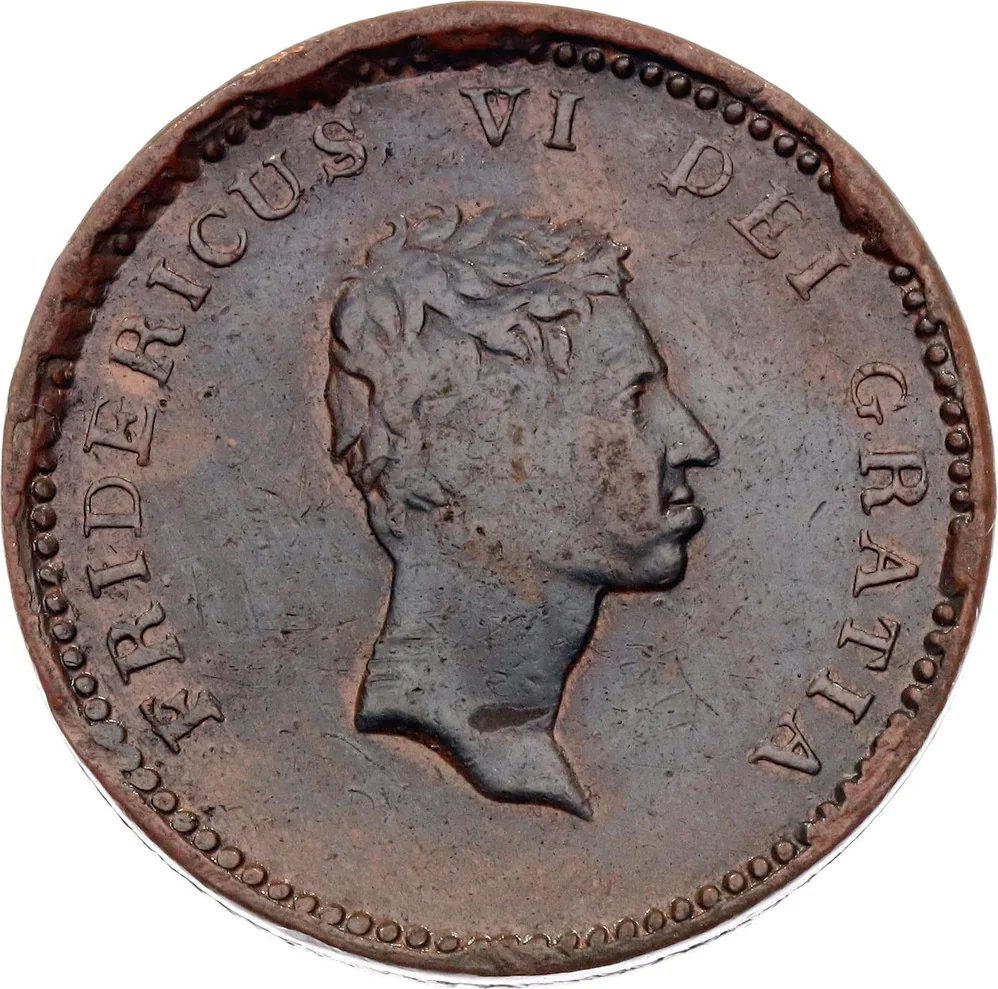
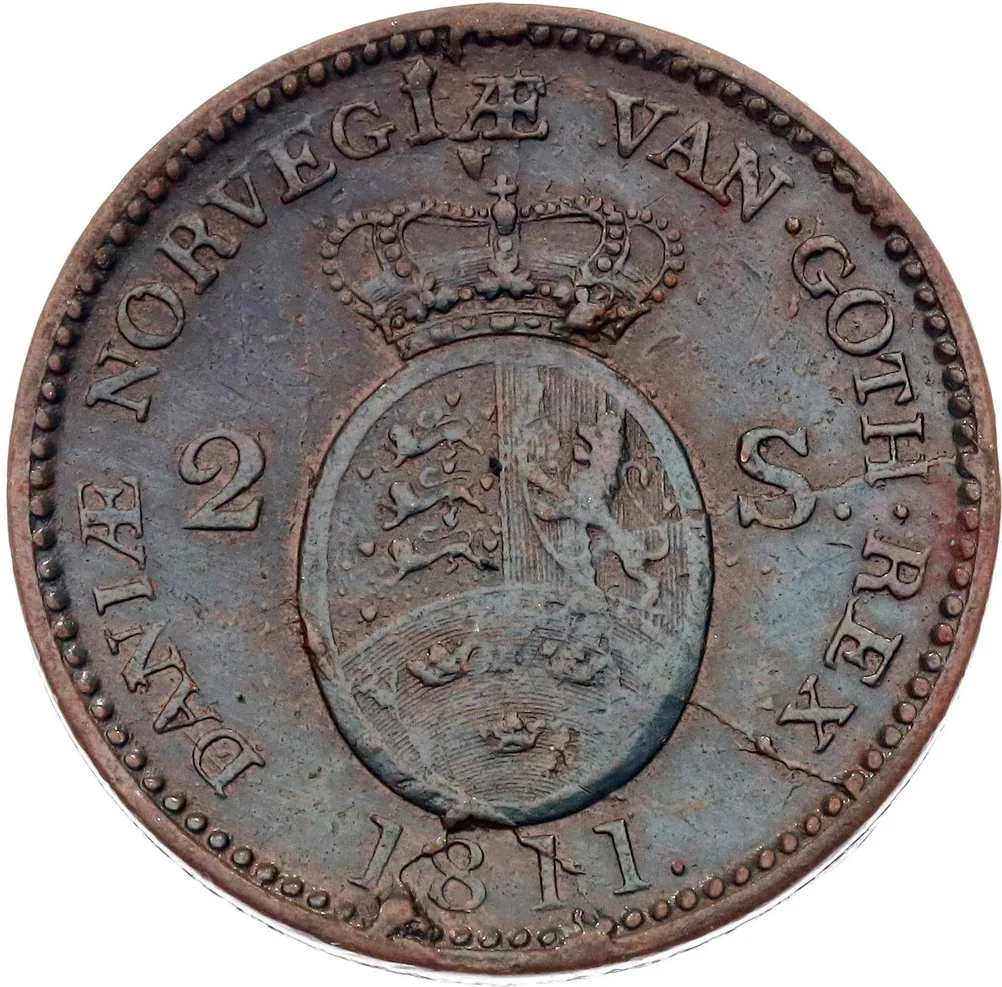
2 skilling – Denmark
Add to wishlist
Denmark
Context
Material
References
KM: #
Numista: #40308
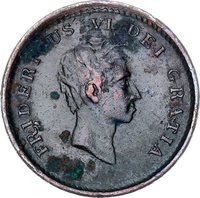
Obverse
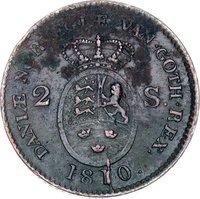
Reverse
Edge
Plain
Categories
| Symbols> Coat of Arms |
Mintings
| Year | Mint Mark | Mintage | Quality | Collection |
|---|---|---|---|---|
| 1810 | — | — | ||
| 1811 | — | — |
Historical background
In 1810, Denmark found itself in a precarious monetary crisis, deeply entangled in the wider geopolitical turmoil of the Napoleonic Wars. Having sided with France, the kingdom was subjected to a punishing British naval blockade that severed vital trade routes. This isolation, combined with the immense costs of maintaining a large military, led to severe economic strain. The state's response was to finance its deficits by dramatically increasing the money supply, primarily through the issuance of excessive amounts of paper currency known as kurantsedler.
This flood of paper money, not backed by sufficient silver reserves, led to rampant inflation and a catastrophic loss of public confidence. A stark disparity emerged between the value of the silver rigsdaler and the paper kurantrigsdaler, with the paper currency trading at a steep and volatile discount. The situation created a chaotic dual-currency system where everyday transactions became fraught with uncertainty, harming commerce and eroding the living standards of the population, particularly those on fixed incomes.
The crisis of 1810 was a pivotal moment that exposed the fragility of Denmark's fiscal and monetary structures under extreme pressure. It set the stage for a series of subsequent reforms, most notably the establishment of the Rigsbank in 1813 and a controversial state bankruptcy in 1814, which aimed to restructure the national debt and stabilize the currency. Thus, the monetary situation of 1810 represents the nadir of a period of financial instability that would force a fundamental restructuring of Denmark's economic foundations in the postwar era.
This flood of paper money, not backed by sufficient silver reserves, led to rampant inflation and a catastrophic loss of public confidence. A stark disparity emerged between the value of the silver rigsdaler and the paper kurantrigsdaler, with the paper currency trading at a steep and volatile discount. The situation created a chaotic dual-currency system where everyday transactions became fraught with uncertainty, harming commerce and eroding the living standards of the population, particularly those on fixed incomes.
The crisis of 1810 was a pivotal moment that exposed the fragility of Denmark's fiscal and monetary structures under extreme pressure. It set the stage for a series of subsequent reforms, most notably the establishment of the Rigsbank in 1813 and a controversial state bankruptcy in 1814, which aimed to restructure the national debt and stabilize the currency. Thus, the monetary situation of 1810 represents the nadir of a period of financial instability that would force a fundamental restructuring of Denmark's economic foundations in the postwar era.
🌟 Uncommon