

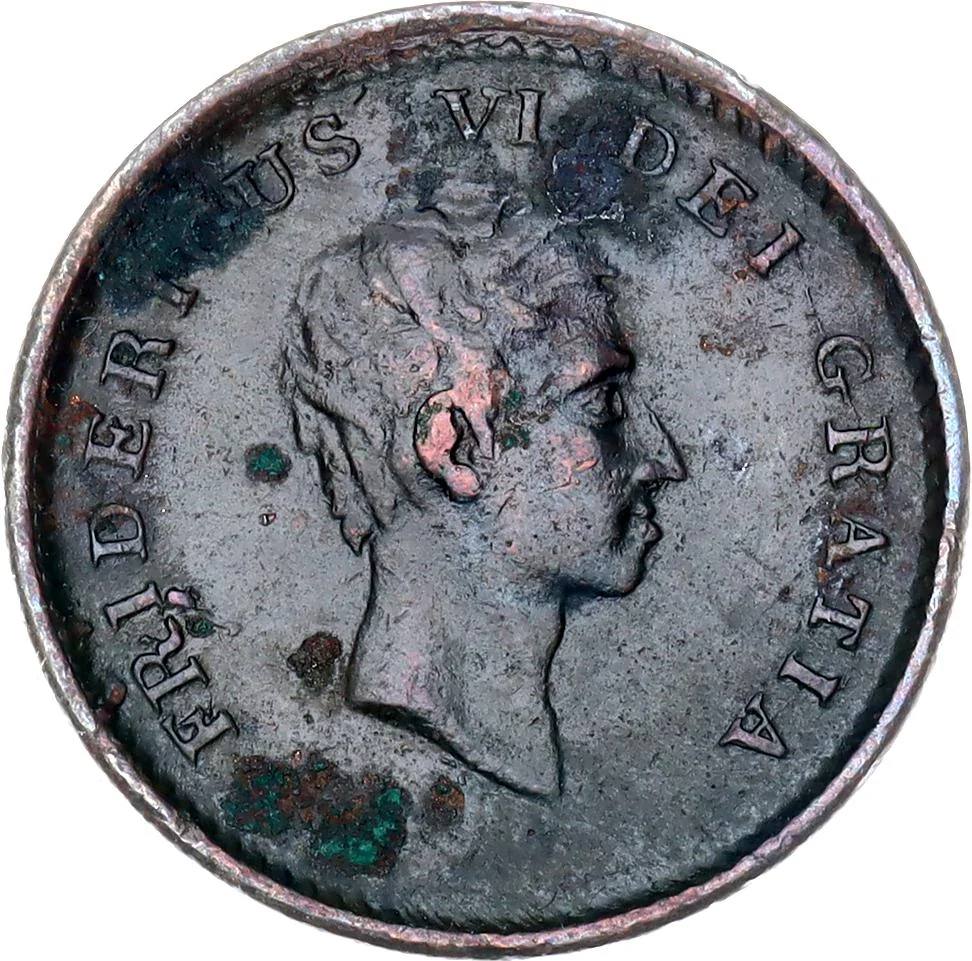
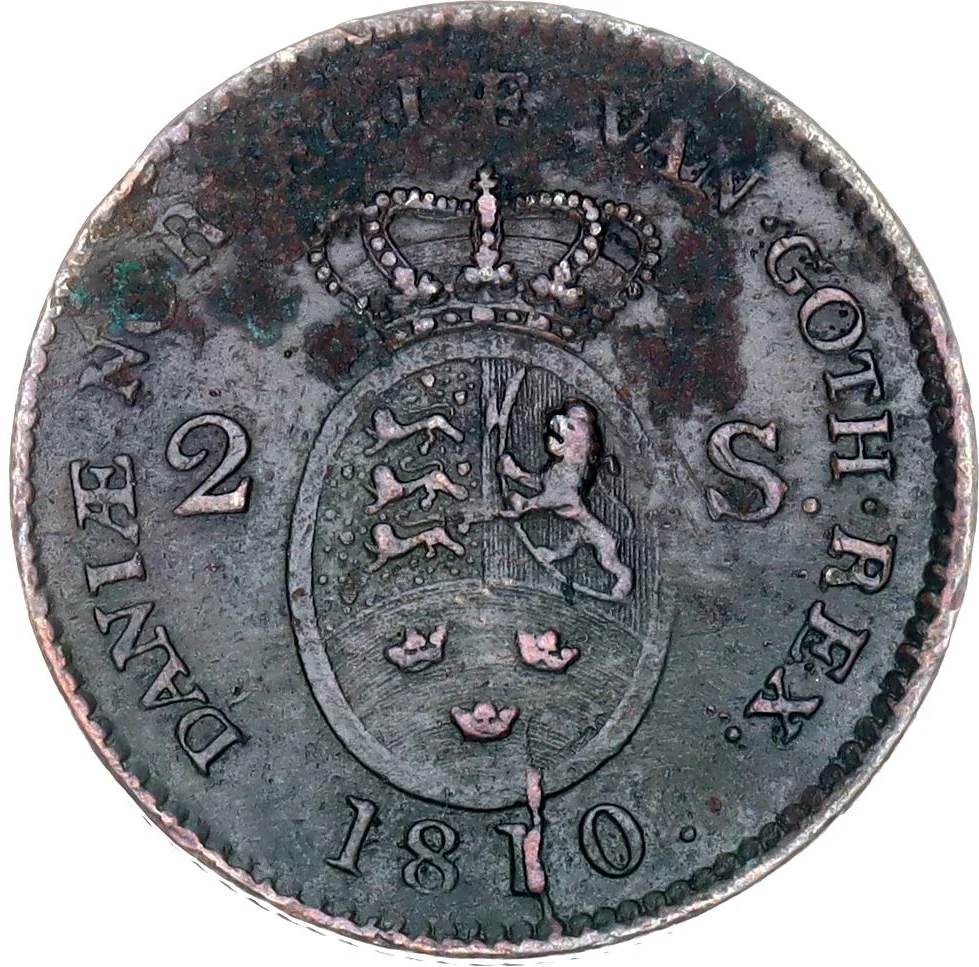
2 skilling – Denmark
Add to wishlist
Denmark
Context
Material
References
KM: #
Numista: #22577
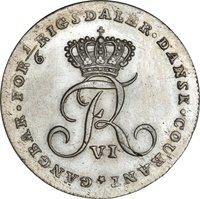
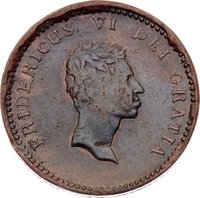
Obverse
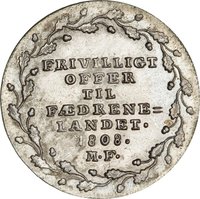
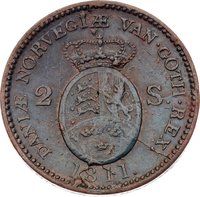
Reverse
Edge
Center reeded as of security edge
Categories
| Symbols> Coat of Arms |
Mintings
| Year | Mint Mark | Mintage | Quality | Collection |
|---|---|---|---|---|
| 1809 | — | — | ||
| 1810 | — | — |
Historical background
In 1809, Denmark found itself in a precarious monetary crisis, a direct consequence of its alliance with Napoleonic France during the ongoing Napoleonic Wars. The British naval blockade, initiated after the 1807 Bombardment of Copenhagen, had severed Denmark from its vital colonial trade and traditional markets. This isolation led to severe shortages of essential goods, rampant smuggling, and a catastrophic collapse in state revenue, while military expenditures remained high. The government, led by Crown Prince Frederik (the future Frederik VI), was forced to finance its operations through extensive borrowing from the central bank, the Kurantbanken.
The primary currency in circulation was the kurantdaler, a paper currency not backed by silver, which had been suspended since 1803. To meet its obligations, the state compelled the Kurantbanken to issue massive amounts of this unbacked paper money, leading to rapid inflation and a steep decline in its value. By 1809, the exchange rate between the silver rigsdaler and the paper kurantdaler had deteriorated dramatically, causing widespread economic distress. Prices soared, savings were eroded, and public confidence in the currency evaporated, creating a deep divide between those paid in devalued paper and those who could demand payment in more stable silver.
The situation culminated in the Currency Regulation of 1813, a state bankruptcy in all but name. This reform introduced a new national bank (Rigsbanken) and a new currency, the rigsbankdaler, in an attempt to restore stability. However, the 1809 period represents the peak of the crisis, characterized by a near-worthless paper currency, a bankrupt treasury, and a population suffering under the twin burdens of war and severe inflation, setting the stage for the drastic financial reset that would follow.
The primary currency in circulation was the kurantdaler, a paper currency not backed by silver, which had been suspended since 1803. To meet its obligations, the state compelled the Kurantbanken to issue massive amounts of this unbacked paper money, leading to rapid inflation and a steep decline in its value. By 1809, the exchange rate between the silver rigsdaler and the paper kurantdaler had deteriorated dramatically, causing widespread economic distress. Prices soared, savings were eroded, and public confidence in the currency evaporated, creating a deep divide between those paid in devalued paper and those who could demand payment in more stable silver.
The situation culminated in the Currency Regulation of 1813, a state bankruptcy in all but name. This reform introduced a new national bank (Rigsbanken) and a new currency, the rigsbankdaler, in an attempt to restore stability. However, the 1809 period represents the peak of the crisis, characterized by a near-worthless paper currency, a bankrupt treasury, and a population suffering under the twin burdens of war and severe inflation, setting the stage for the drastic financial reset that would follow.
🌟 Uncommon