

5 pounds – Egypt
Add to wishlist
Egypt
Context
Year: 1976
Islamic (Hijri) Year:: 1396
Issuer: Egypt
Period:
(since 1971)
Currency:
(since 1916)
Total mintage: 1,000
Material
References
KM: #
Numista: #403054
Value
Exchange value: 5 EGP
Bullion value: $3495.06
Obverse
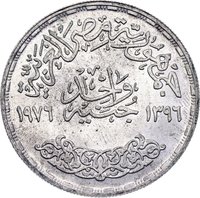
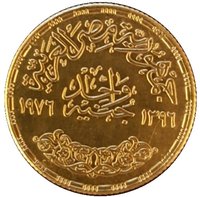
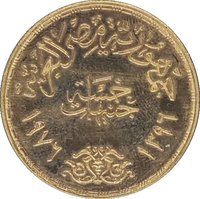
Description:
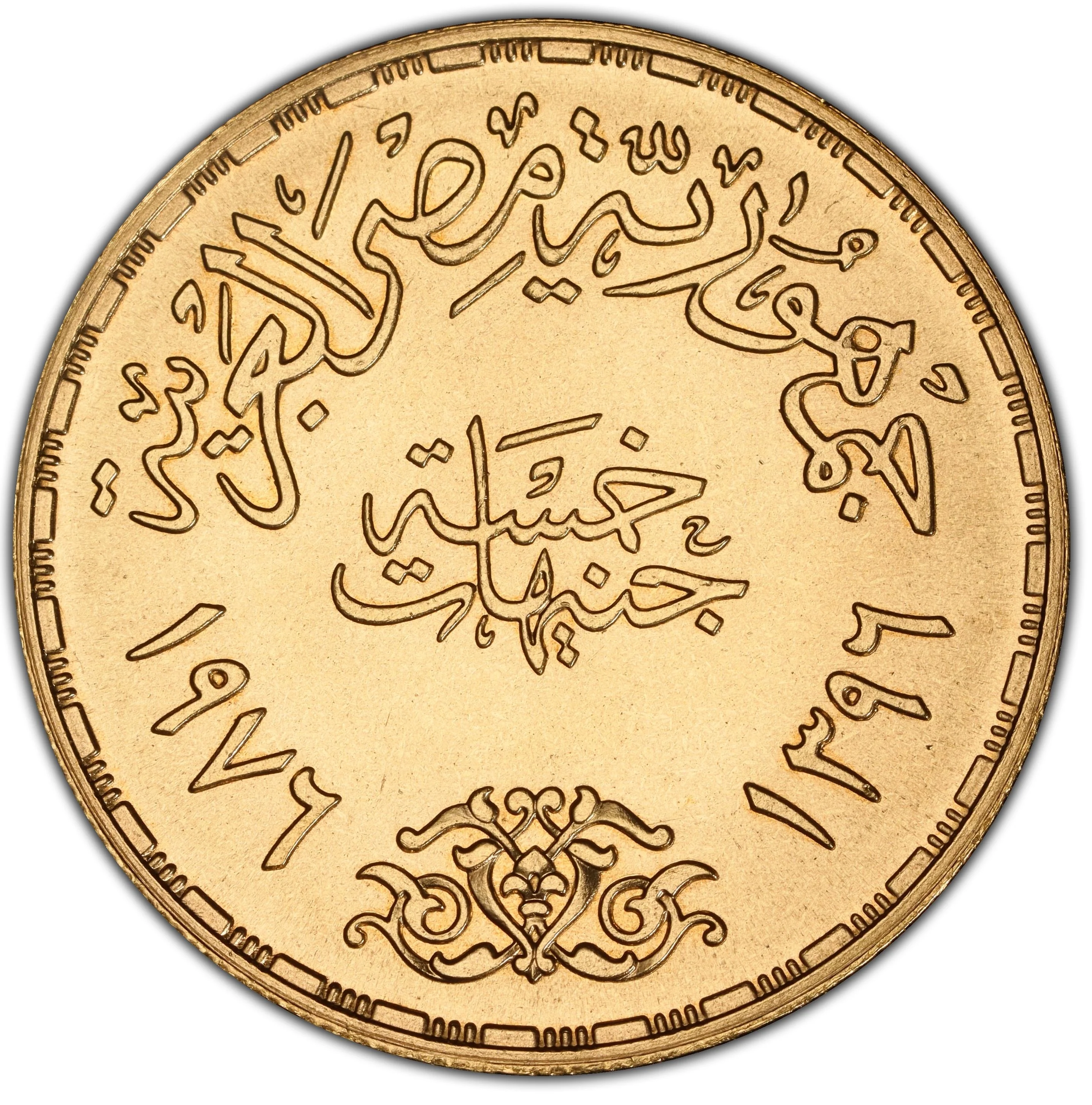
Denominations separate dates.
Inscription:
جمهورية مصر العربية
خمسة
جنيهات
١٣٩٦ ١٩٧٦
خمسة
جنيهات
١٣٩٦ ١٩٧٦
Translation:
Arab Republic of Egypt
Five
Pounds
1396 1976
Five
Pounds
1396 1976
Script: Arabic (naskh)
Language: Arabic
Reverse
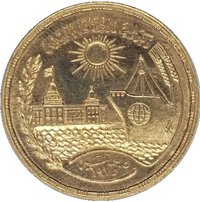
Description:
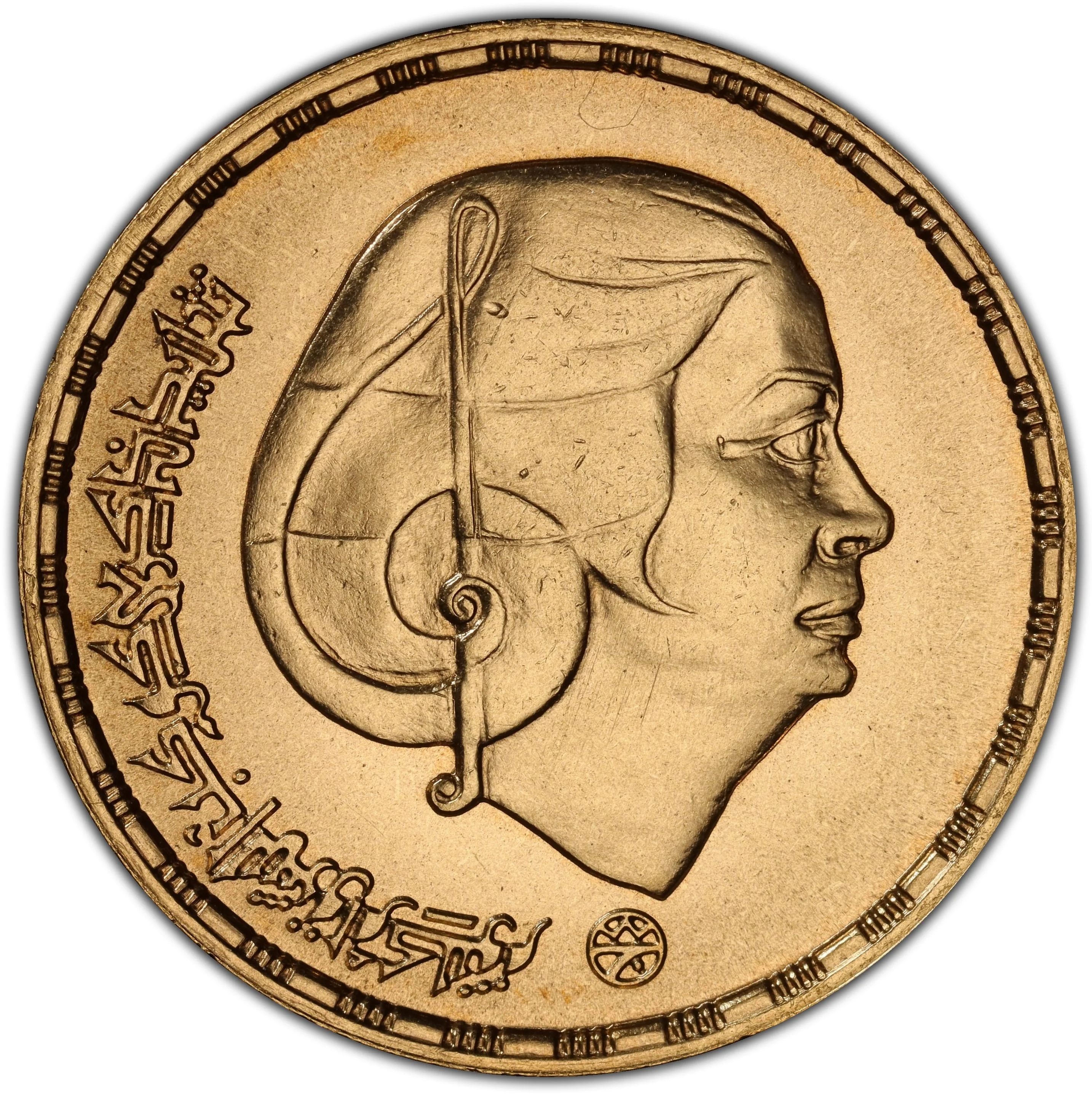
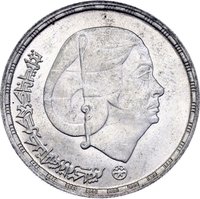
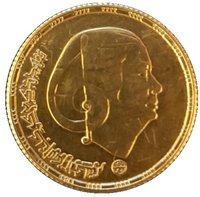
Om Kalthoum, music note in hair.
Inscription:
تخليد ذكرى كوكب الشرق أم كلثوم
Translation:
Commemorating the memory of the Star of the East, Umm Kulthum
Script: Arabic (kufic)
Language: Arabic
Edge
Reeded
Mints
| Name | Mark |
|---|---|
| Egyptian Mint Authority | — |
Mintings
| Year | Mint Mark | Mintage | Quality | Collection |
|---|---|---|---|---|
| 1976 | — | 1,000 |
Historical background
In 1976, Egypt’s currency situation was defined by the severe pressures of the "Open Door" (Infitah) economic policy initiated by President Anwar Sadat. This policy aimed to liberalize the economy, attract foreign investment, and move away from the state-controlled model of the Nasser era. However, it exposed fundamental weaknesses: a bloated public sector, heavy subsidies on basic goods, and a vast trade deficit. These factors, combined with the lingering costs of the 1973 war, led to rampant inflation and a growing black market where the Egyptian pound traded at a fraction of its official value. The government maintained a complex system of multiple exchange rates, which created distortions, encouraged corruption, and discouraged the formal inflows of hard currency the policy sought to attract.
The core of the crisis was a critical shortage of foreign reserves, exacerbated by a decline in key revenue sources. While worker remittances and Suez Canal receipts increased, they were offset by a drop in oil prices and a collapse in tourism following the 1973 war. Furthermore, high global food prices increased the cost of Egypt’s substantial imports. This reserve drain made it impossible to defend the overvalued official exchange rate. The black market thrived as the public and businesses sought hard currency for transactions, with the pound's unofficial value plummeting to less than half the official rate, revealing a profound loss of confidence in the domestic currency.
Consequently, 1976 became a pivotal year that forced decisive action. The unsustainable disparities led the Egyptian government to formally approach the International Monetary Fund (IMF) for a standby agreement. This move, finalized in early 1977, was a direct response to the currency crisis and committed Egypt to a series of stringent economic reforms. The most immediate and controversial condition was the reduction of state subsidies, which would trigger the "Bread Riots" of January 1977. Thus, the currency situation of 1976 set the stage for a painful economic transition, marking the beginning of Egypt's long and tumultuous relationship with IMF-sponsored structural adjustment.
The core of the crisis was a critical shortage of foreign reserves, exacerbated by a decline in key revenue sources. While worker remittances and Suez Canal receipts increased, they were offset by a drop in oil prices and a collapse in tourism following the 1973 war. Furthermore, high global food prices increased the cost of Egypt’s substantial imports. This reserve drain made it impossible to defend the overvalued official exchange rate. The black market thrived as the public and businesses sought hard currency for transactions, with the pound's unofficial value plummeting to less than half the official rate, revealing a profound loss of confidence in the domestic currency.
Consequently, 1976 became a pivotal year that forced decisive action. The unsustainable disparities led the Egyptian government to formally approach the International Monetary Fund (IMF) for a standby agreement. This move, finalized in early 1977, was a direct response to the currency crisis and committed Egypt to a series of stringent economic reforms. The most immediate and controversial condition was the reduction of state subsidies, which would trigger the "Bread Riots" of January 1977. Thus, the currency situation of 1976 set the stage for a painful economic transition, marking the beginning of Egypt's long and tumultuous relationship with IMF-sponsored structural adjustment.
✨ Legendary