

5 Cents – Canada
Canada
Context
Years: 1963–1964
Issuer: Canada 
Ruler: Elizabeth II
Currency:
(since 1858)
Total mintage: 122,045,388
Material
References
KM: #Click to copy to clipboard57
Numista: #403
Value
Exchange value: 0.05 CAD = $0.04
Inflation-adjusted value: 0.51 CAD
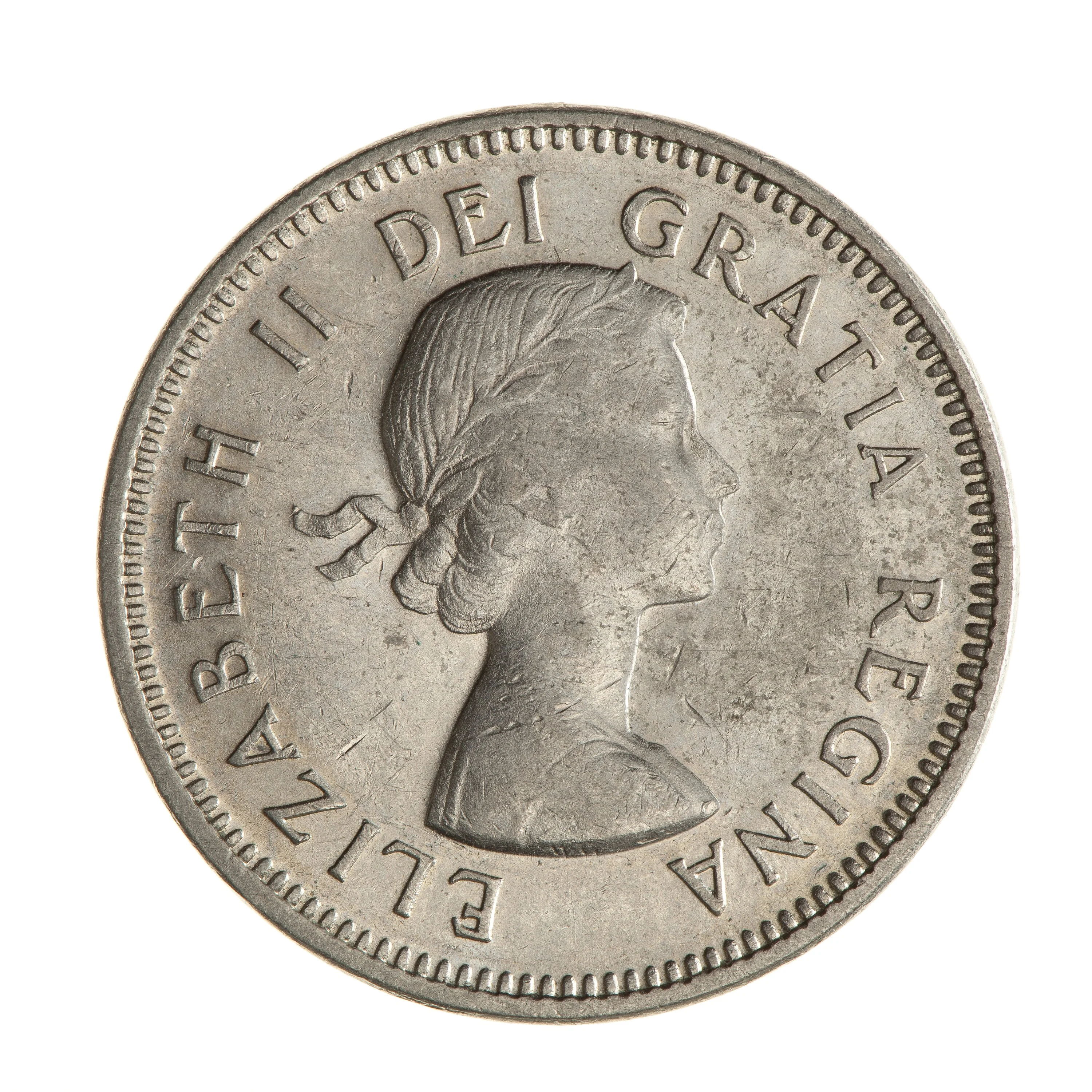
Obverse
Description:
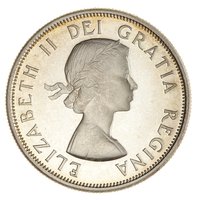
Bust of Queen Elizabeth II at age 27, wearing a wreath and facing right.
Inscription:
ELIZABETH II DEI GRATIA REGINA
M·G·
M·G·
Translation:
Elizabeth II by the Grace of God Queen
M·G·
M·G·
Script: Latin
Engraver: Thomas Shingles
Designer: Mary Gillick
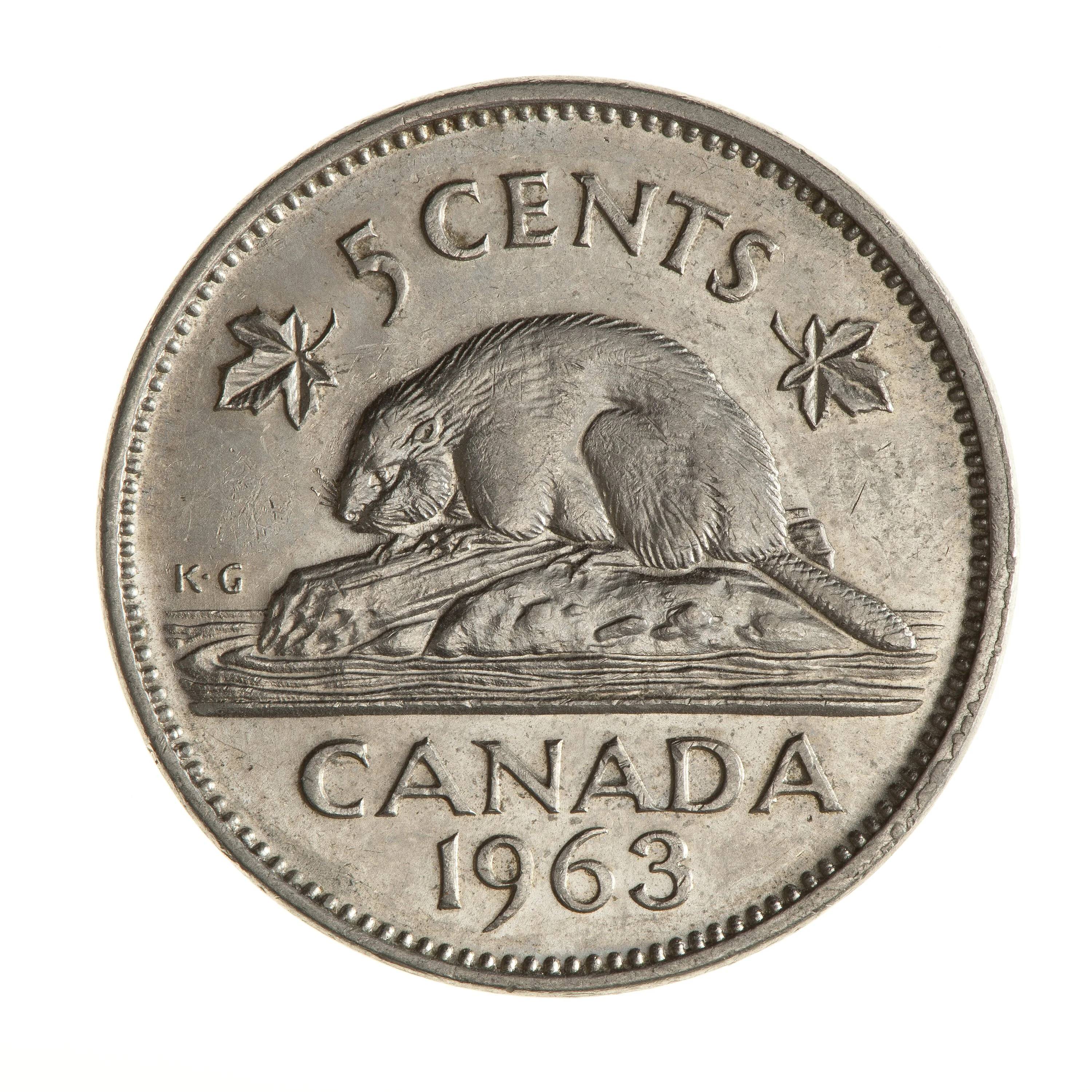
Reverse
Description:
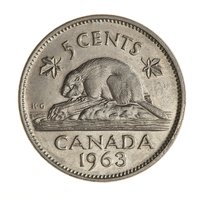
A beaver encircled by "CANADA" and the face value, flanked by maple leaves, adapts the small beaver design from KM# 50a to a round format.
Inscription:
5 CENTS
CANADA
1964
K·G
CANADA
1964
K·G
Script: Latin
Engraver: Thomas Shingles
Designer: George Kruger Gray
Edge
Plain
Mints
| Name | Mark |
|---|---|
| Royal Canadian Mint of Ottawa | — |
Mintings
| Year | Mint Mark | Mintage | Quality | Collection |
|---|---|---|---|---|
| 1963 | — | 43,970,320 | ||
| 1964 | — | 78,075,068 |
Historical background
In 1963, Canada's currency situation was dominated by the legacy of the 1962 currency crisis and the subsequent fixed exchange rate regime. Facing speculative pressure and a declining Canadian dollar, the government of Prime Minister John Diefenbaker had been forced to abandon its floating currency in May 1962. It pegged the dollar at 92.5 U.S. cents, established a reserve fund to defend this parity, and requested a support package from the International Monetary Fund and other central banks. This dramatic move was a retreat from a decade of a floating dollar and was intended to restore international confidence and halt capital flight.
The new Liberal government of Lester B. Pearson, elected in April 1963, inherited this fragile system. Its primary monetary challenge was maintaining the fixed peg while navigating domestic pressures for economic growth and lower unemployment. The government and the Bank of Canada, under Governor Louis Rasminsky, were committed to the peg as a cornerstone of financial stability, but it constrained monetary policy. Interest rates had to be managed to protect the currency's value, often prioritizing the balance of payments and investor confidence over domestic stimulus.
Thus, the currency situation in 1963 was one of cautious stabilization. The focus was on maintaining the fixed exchange rate as a defensive measure, rebuilding foreign exchange reserves, and proving Canada's creditworthiness. This environment set the stage for the mid-1960s, during which a strong economic recovery would eventually allow for a return to a floating Canadian dollar in 1970, but in 1963, the policy was firmly one of defending the peg as a necessary anchor for the economy.
The new Liberal government of Lester B. Pearson, elected in April 1963, inherited this fragile system. Its primary monetary challenge was maintaining the fixed peg while navigating domestic pressures for economic growth and lower unemployment. The government and the Bank of Canada, under Governor Louis Rasminsky, were committed to the peg as a cornerstone of financial stability, but it constrained monetary policy. Interest rates had to be managed to protect the currency's value, often prioritizing the balance of payments and investor confidence over domestic stimulus.
Thus, the currency situation in 1963 was one of cautious stabilization. The focus was on maintaining the fixed exchange rate as a defensive measure, rebuilding foreign exchange reserves, and proving Canada's creditworthiness. This environment set the stage for the mid-1960s, during which a strong economic recovery would eventually allow for a return to a floating Canadian dollar in 1970, but in 1963, the policy was firmly one of defending the peg as a necessary anchor for the economy.
🌱 Very Common