

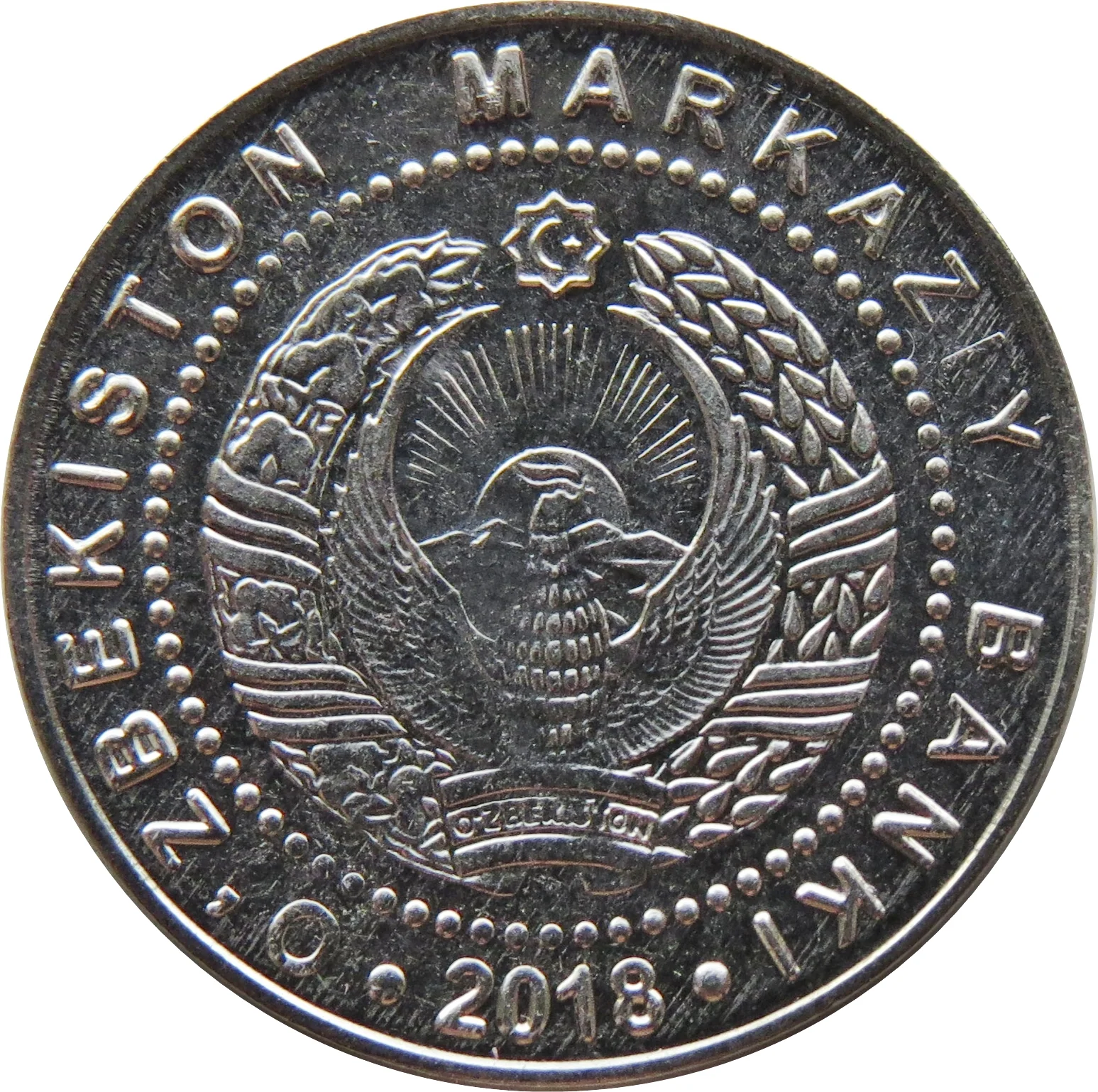
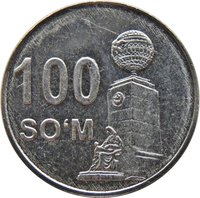
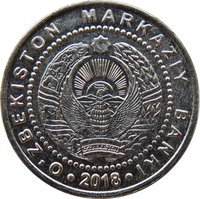
Obverse
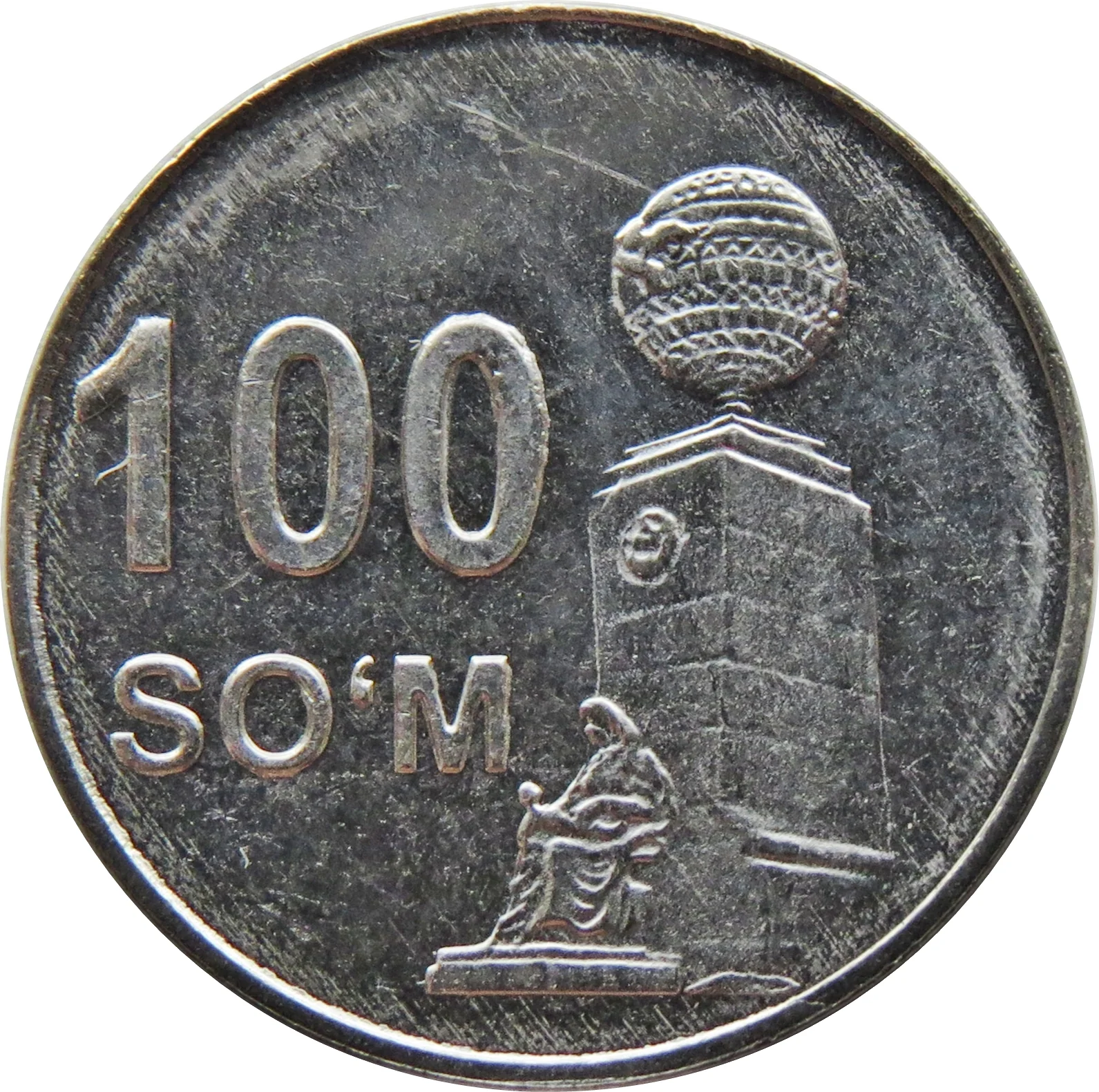
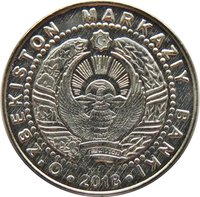
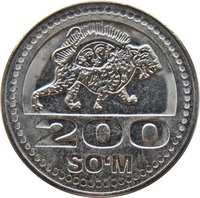
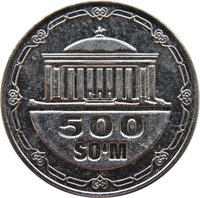
Reverse
Edge
Plain
Categories
| Symbols> Coat of Arms |
| Symbol> Sun |
| Animal> Bird |
| Mythology> Fantastic animal |
| Building> Memorial |
Mintings
| Year | Mint Mark | Mintage | Quality | Collection |
|---|---|---|---|---|
| 2018 | — | — |
Historical background
In 2018, Uzbekistan was in the midst of a historic and challenging transition in its currency regime, a direct consequence of sweeping economic reforms initiated by President Shavkat Mirziyoyev following his election in 2016. For decades, the Uzbek som (UZS) operated under a strict, Soviet-style system with an official exchange rate set by the Central Bank that was vastly overvalued compared to the black-market rate. This created a severe currency shortage, discouraged foreign investment, and fostered a large informal economy. Mirziyoyev’s administration identified liberalizing the currency market as a critical first step to integrate Uzbekistan into the global economy and attract foreign capital.
The key reform occurred in September 2017, when the government abolished the official exchange rate and unified it with the market rate, leading to an immediate devaluation of nearly 100%. The reverberations of this shock continued throughout 2018. The year was characterized by the som’s ongoing depreciation on the newly established currency exchange, with its value against the US dollar falling from approximately 8,100 UZS at the start of the year to around 8,400 UZS by December. This decline was driven by pent-up demand for foreign currency from businesses and citizens, as well as lingering structural issues in the economy. While the unified rate eliminated the black market in principle, volatility and access to hard currency remained significant concerns for both the population and enterprises.
Overall, 2018 was a year of painful adjustment but foundational progress. The liberalization successfully removed a major barrier to trade and investment, setting the stage for subsequent reforms in banking, taxation, and the private sector. However, the population felt the pressure through imported inflation and a reduction in purchasing power. The government’s challenge shifted from implementing the initial liberalization to managing its consequences: building foreign exchange reserves, controlling inflation, and ensuring the stability of the newly floated som, tasks that would define the economic agenda for the years to follow.
The key reform occurred in September 2017, when the government abolished the official exchange rate and unified it with the market rate, leading to an immediate devaluation of nearly 100%. The reverberations of this shock continued throughout 2018. The year was characterized by the som’s ongoing depreciation on the newly established currency exchange, with its value against the US dollar falling from approximately 8,100 UZS at the start of the year to around 8,400 UZS by December. This decline was driven by pent-up demand for foreign currency from businesses and citizens, as well as lingering structural issues in the economy. While the unified rate eliminated the black market in principle, volatility and access to hard currency remained significant concerns for both the population and enterprises.
Overall, 2018 was a year of painful adjustment but foundational progress. The liberalization successfully removed a major barrier to trade and investment, setting the stage for subsequent reforms in banking, taxation, and the private sector. However, the population felt the pressure through imported inflation and a reduction in purchasing power. The government’s challenge shifted from implementing the initial liberalization to managing its consequences: building foreign exchange reserves, controlling inflation, and ensuring the stability of the newly floated som, tasks that would define the economic agenda for the years to follow.
🌱 Very Common