

200 francs – Morocco
Add to wishlist
Morocco
Context
Year: 1953
Islamic (Hijri) Year:: 1372
Issuer: Morocco
Ruler: Mohammed V
Currency:
(1910—1959)
Demonetized: Yes
Total mintage: 10,176,080
Material
References
Y: #
Numista: #4006
Value
Bullion value: $14.09
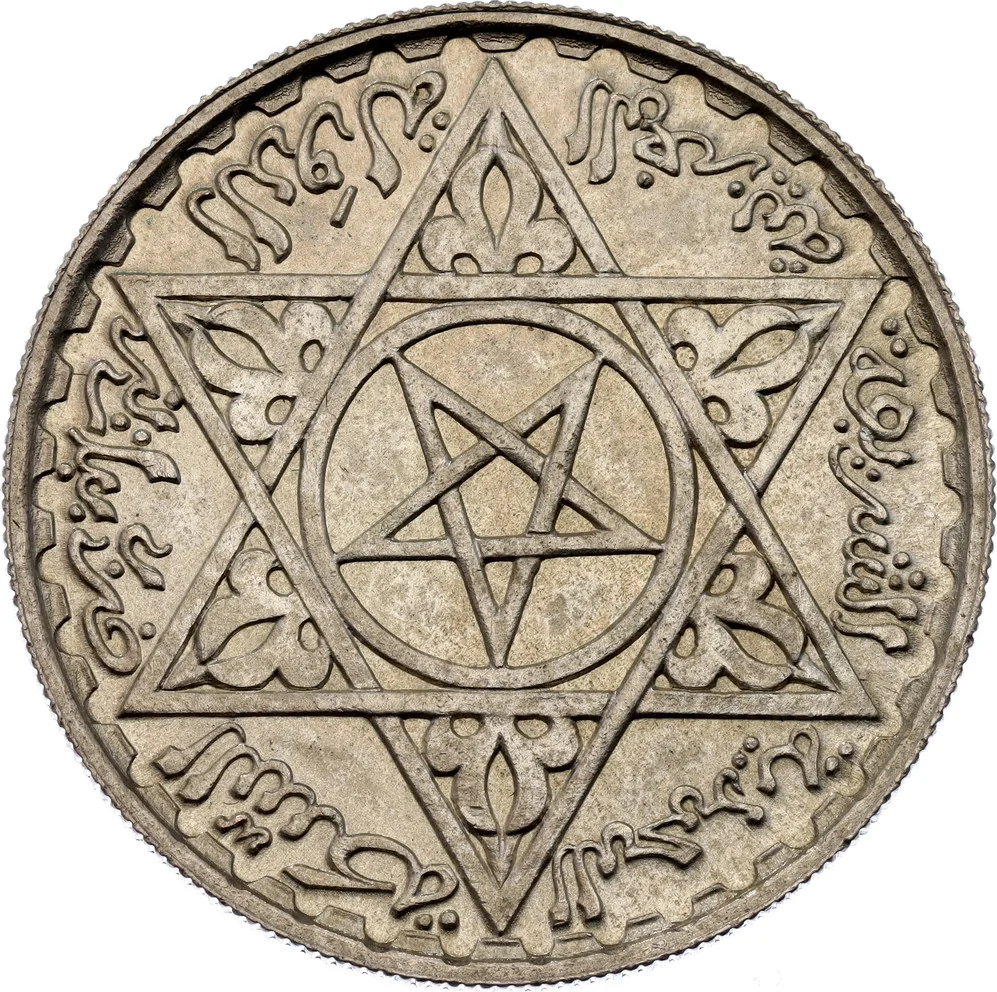
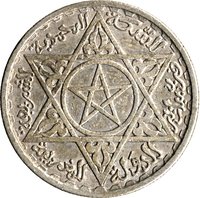
Obverse
Description:
Small star in circle, inside larger decorated star.
Inscription:
الدولة المغربية
ضرب بباريز
السكة المحمدية الشريفة
ضرب بباريز
السكة المحمدية الشريفة
Translation:
The Moroccan State
Struck in Paris
The Honored Muhammadi Coinage
Struck in Paris
The Honored Muhammadi Coinage
Language: Arabic
Engraver: J. Hainaut
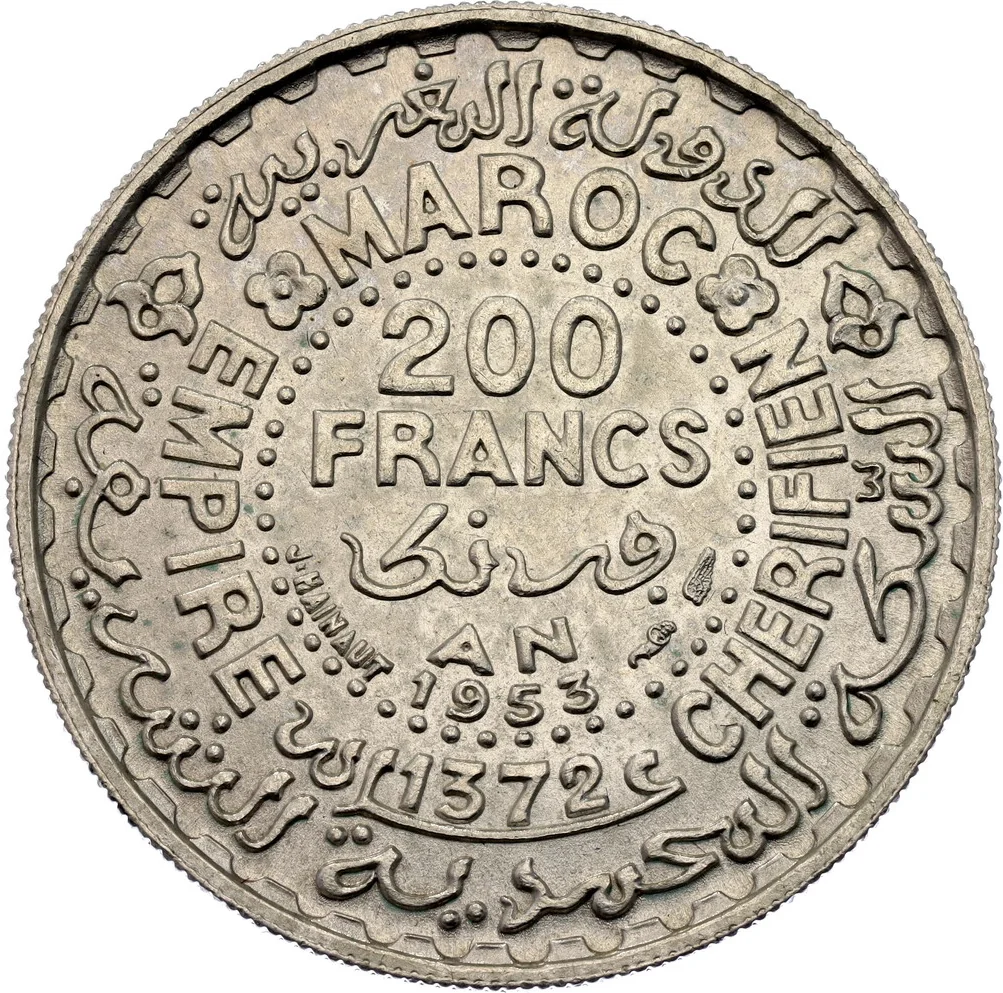
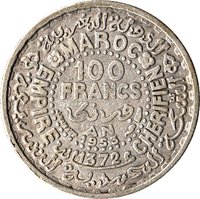
Reverse
Description:
Value and date in center, legend and date encircling.
Inscription:
الدولة المغربية
MAROC
200
FRANCS
فرنك
AN
1953
EMPIRE CHERIFIEN
1372 عام
السكة المحمدية الشريفة
MAROC
200
FRANCS
فرنك
AN
1953
EMPIRE CHERIFIEN
1372 عام
السكة المحمدية الشريفة
Translation:
The Moroccan State
MOROCCO
200
FRANCS
Francs
THE YEAR
1953
THE CHERIFIAN EMPIRE
The Year 1372
The Honorable Mohammadan Mint
MOROCCO
200
FRANCS
Francs
THE YEAR
1953
THE CHERIFIAN EMPIRE
The Year 1372
The Honorable Mohammadan Mint
Engraver: J. Hainaut
Edge
Milled
Mints
| Name | Mark |
|---|---|
| Monnaie de Paris | — |
Mintings
| Year | Mint Mark | Mintage | Quality | Collection |
|---|---|---|---|---|
| 1953 | — | 10,176,080 |
Historical background
In 1953, Morocco's currency situation was intrinsically tied to its political status as a French and Spanish protectorate. The monetary system was dominated by the Moroccan franc, which was not an independent currency but was pegged at par to the French franc and issued by a state-controlled bank, the Banque d'État du Maroc. This arrangement ensured monetary stability and facilitated trade with France, but it also meant that Morocco's money supply and financial policy were ultimately directed from Paris, reflecting the broader economic integration and control of the protectorate administration.
Alongside the Moroccan franc, the Spanish peseta circulated officially in the northern Spanish protectorate zone and the southern Tarfaya region, creating a dual-currency reality. Furthermore, in the international Tangier Zone, a complex mix of currencies, including the Moroccan franc, Spanish peseta, and British pounds, was used. This fragmentation mirrored the country's divided sovereignty and complicated domestic commerce, as exchange rates and convertibility between these zones posed persistent challenges for merchants and the local economy.
The currency landscape existed against a backdrop of rising nationalist fervor and political crisis, culminating in the exile of Sultan Mohammed V in August 1953. Economic grievances, including perceived colonial control over finance, were part of the nationalist movement's broader demands for sovereignty. While the currency system itself functioned without acute crisis that year, its colonial character was a point of contention, foreshadowing the monetary unification and introduction of an independent Moroccan dirham that would follow the country's achievement of independence in 1956.
Alongside the Moroccan franc, the Spanish peseta circulated officially in the northern Spanish protectorate zone and the southern Tarfaya region, creating a dual-currency reality. Furthermore, in the international Tangier Zone, a complex mix of currencies, including the Moroccan franc, Spanish peseta, and British pounds, was used. This fragmentation mirrored the country's divided sovereignty and complicated domestic commerce, as exchange rates and convertibility between these zones posed persistent challenges for merchants and the local economy.
The currency landscape existed against a backdrop of rising nationalist fervor and political crisis, culminating in the exile of Sultan Mohammed V in August 1953. Economic grievances, including perceived colonial control over finance, were part of the nationalist movement's broader demands for sovereignty. While the currency system itself functioned without acute crisis that year, its colonial character was a point of contention, foreshadowing the monetary unification and introduction of an independent Moroccan dirham that would follow the country's achievement of independence in 1956.
🌱 Common