

10 skilling – Danish West Indies
Add to wishlist
United States
Context
Year: 1848
Country: United States
Issuer: Danish West Indies
Ruler: Frederick VII
Currency:
(1740—1849)
Demonetized: Yes
Total mintage: 389,000
Material
References
KM: #
Numista: #40054
Value
Bullion value: $3.90
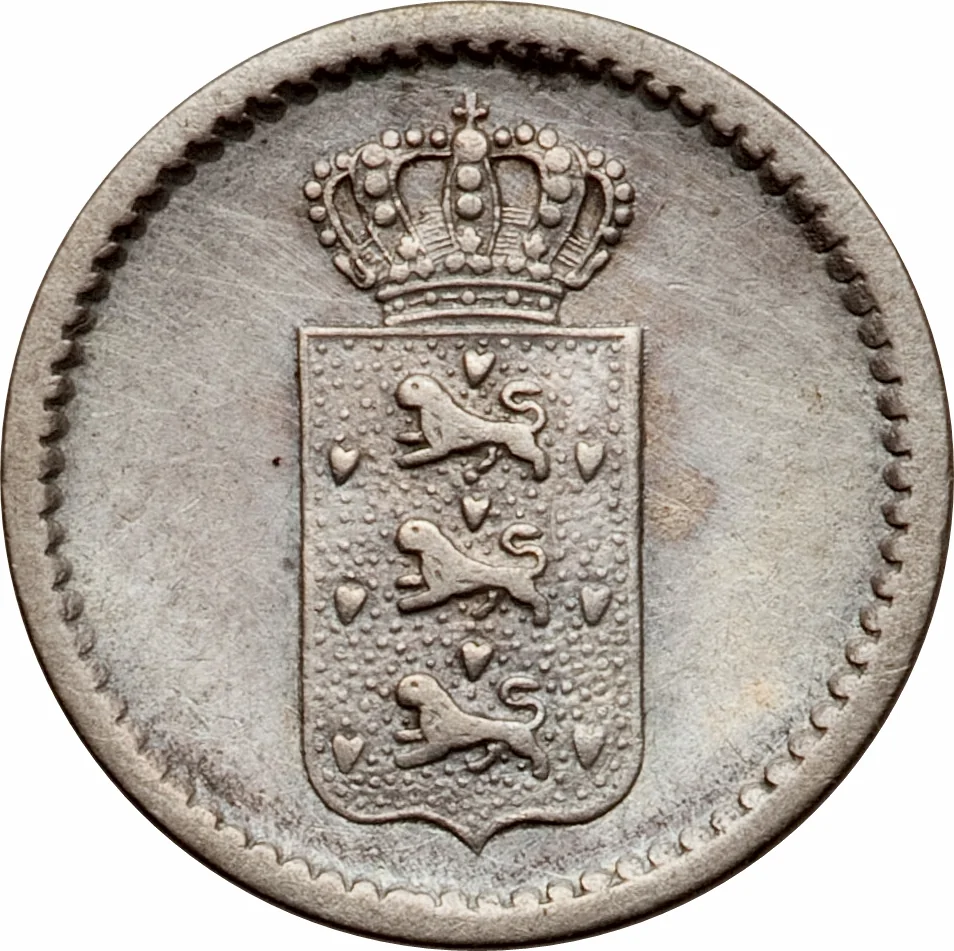
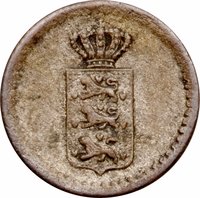
Obverse
Description:
Arms with a crown.
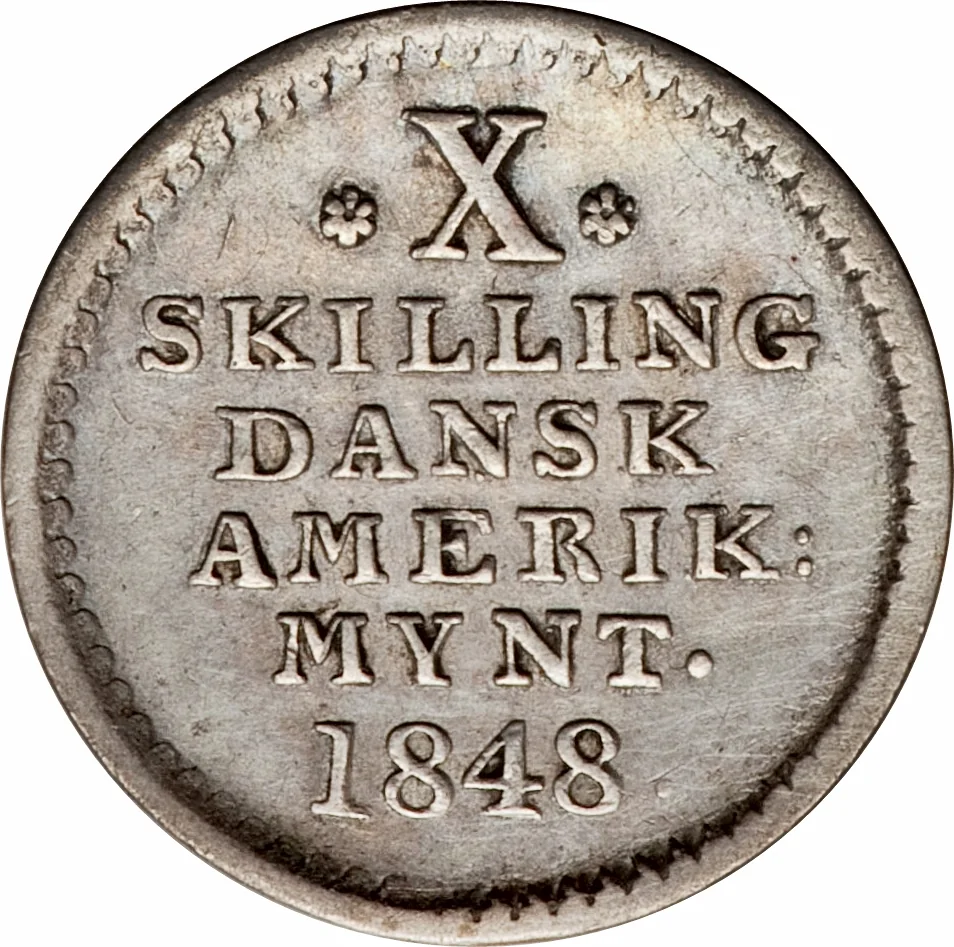
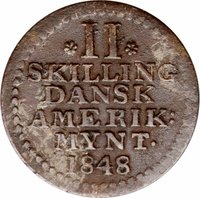
Reverse
Edge
Plain
Mintings
| Year | Mint Mark | Mintage | Quality | Collection |
|---|---|---|---|---|
| 1848 | — | 389,000 | ||
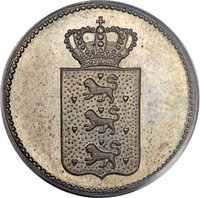
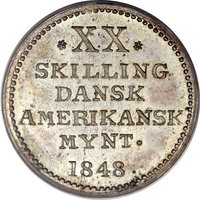
| 1848 | — | — | Proof |
Historical background
In 1848, the currency situation in the Danish West Indies (present-day U.S. Virgin Islands) was a complex and problematic reflection of its colonial economy and international trade. The official currency was the Danish West Indian rigsdaler, fixed to the Danish rigsdaler. However, this system was largely theoretical for daily transactions. The reality was a chaotic circulation of a multitude of foreign coins, primarily Spanish and Mexican silver dollars (pieces of eight) and their fractional parts (bits), alongside British sovereigns, French francs, and Dutch guilders. This proliferation was due to the islands' position as a busy entrepôt in the Caribbean trade network, where merchants and planters conducted business with a wide array of international partners.
This monetary confusion created significant practical difficulties. The value of these foreign coins was not fixed by law but fluctuated based on weight, fineness, and the volatile market, leading to constant uncertainty and disputes in commerce. The problem was acutely felt by the enslaved and newly freed population; following the historic slave rebellion and subsequent emancipation decree in July 1848, there was a pressing need for a stable and uniform currency to facilitate wages for the now-free laborers and everyday market purchases. The existing system was ill-suited for this new social and economic reality, hindering the transition from a plantation-based slave economy.
Recognizing the disorder, Danish authorities attempted to impose order by officially demonetizing all foreign silver coins in 1849, aiming to enforce the use of the Danish rigsdaler. This reform, however, was largely unsuccessful in the short term. The ingrained habit of using familiar "bits" and dollars, combined with a chronic shortage of official Danish coinage on the islands, meant that foreign coins remained in widespread practical use for decades thereafter. Thus, the currency situation in 1848 was a state of disorganized transition, caught between a crumbling old order and an unstable new one.
This monetary confusion created significant practical difficulties. The value of these foreign coins was not fixed by law but fluctuated based on weight, fineness, and the volatile market, leading to constant uncertainty and disputes in commerce. The problem was acutely felt by the enslaved and newly freed population; following the historic slave rebellion and subsequent emancipation decree in July 1848, there was a pressing need for a stable and uniform currency to facilitate wages for the now-free laborers and everyday market purchases. The existing system was ill-suited for this new social and economic reality, hindering the transition from a plantation-based slave economy.
Recognizing the disorder, Danish authorities attempted to impose order by officially demonetizing all foreign silver coins in 1849, aiming to enforce the use of the Danish rigsdaler. This reform, however, was largely unsuccessful in the short term. The ingrained habit of using familiar "bits" and dollars, combined with a chronic shortage of official Danish coinage on the islands, meant that foreign coins remained in widespread practical use for decades thereafter. Thus, the currency situation in 1848 was a state of disorganized transition, caught between a crumbling old order and an unstable new one.
💎 Extremely Rare