

6 pence – United Kingdom
Add to wishlist
United Kingdom
Context
Years: 1947–1948
Issuer: United Kingdom
Ruler: George VI
Currency:
(1158—1970)
Demonetization: 30 June 1980
Total mintage: 118,316,700
Material
Diameter: 19.3 mm
Weight: 2.83 g
Thickness: 1 mm
Shape: Round
Composition: Copper-nickel
Technique: Milled
Alignment: Medal alignment
flip
References
KM: #
Numista: #4003
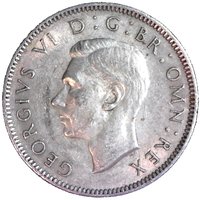
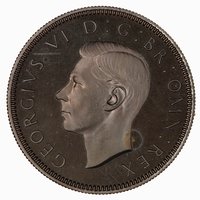
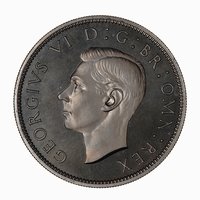
Obverse
Description:
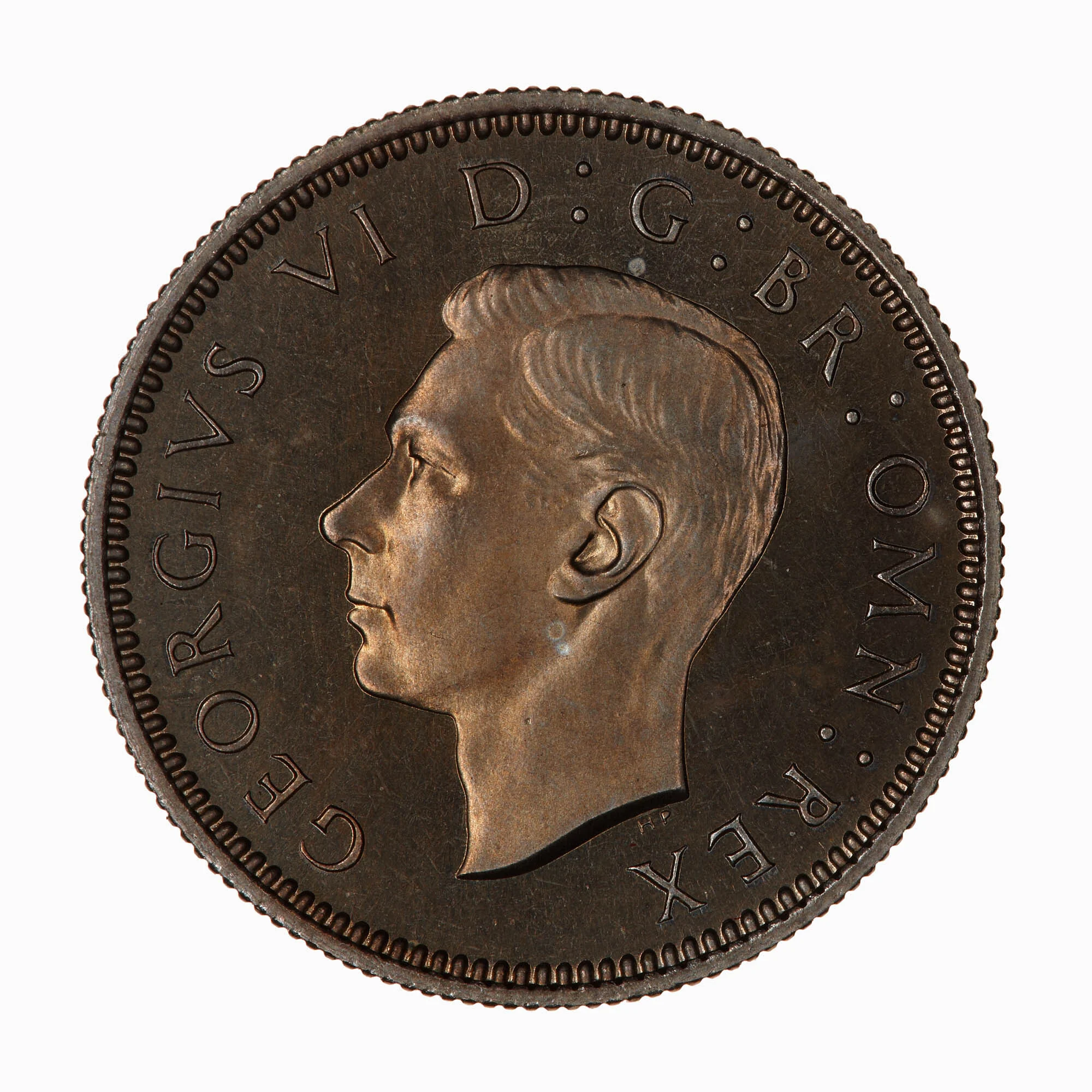
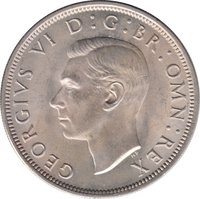
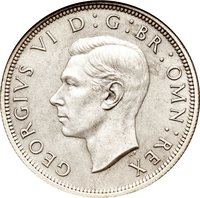
King George VI, uncrowned, left-facing portrait, legend encircling.
Inscription:
GEORGIVS VI D:G:BR:OMN:REX
HP
HP
Translation:
George VI by the Grace of God King of all the Britains
Defender of the Faith Emperor of India
Defender of the Faith Emperor of India
Script: Latin
Language: Latin
Engraver: Thomas Humphrey Paget
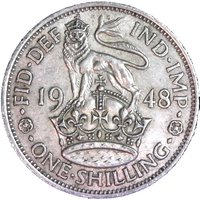
Reverse
Description:
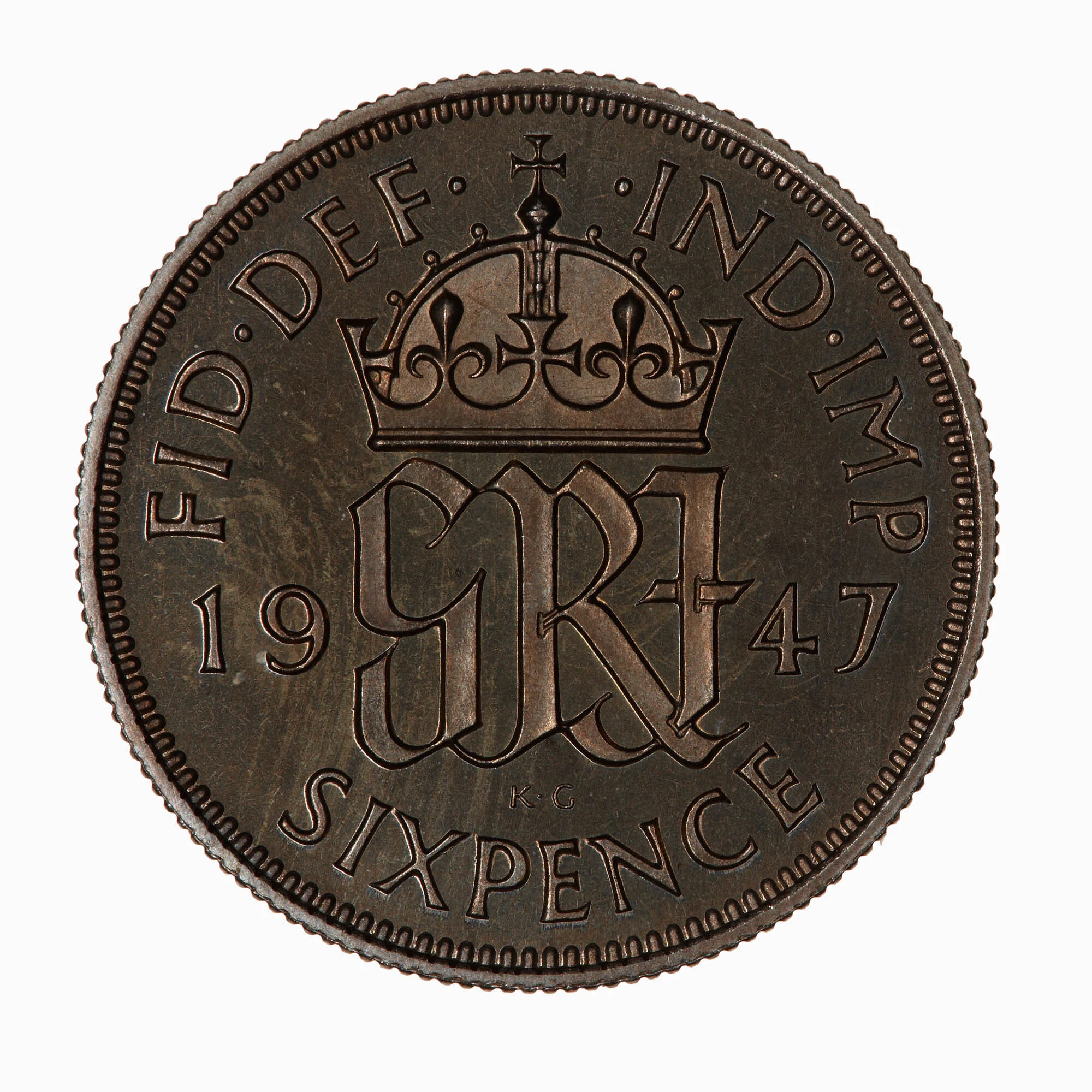
Royal cypher, date, and legend above; denomination below. Note: includes 'IND:IMP'.
Inscription:
FID·DEF· ·IND·IMP
19 GRI 47
K∙G
SIXPENCE
19 GRI 47
K∙G
SIXPENCE
Translation:
Faith Defender · Indian Emperor
19 GRI 47
K·G
SIXPENCE
19 GRI 47
K·G
SIXPENCE
Script: Latin
Engraver: George Kruger Gray
Edge
Reeded
Mints
| Name | Mark |
|---|---|
| Royal Mint (Tower Hill) | — |
Mintings
| Year | Mint Mark | Mintage | Quality | Collection |
|---|---|---|---|---|
| 1947 | — | 29,993,200 | ||
| 1947 | — | — | Proof | |
| 1948 | — | 88,323,500 | ||
| 1948 | — | — | Proof |
Historical background
In 1947, the United Kingdom faced a severe currency crisis rooted in the immense economic strain of the Second World War. The nation was effectively bankrupt, having liquidated vast overseas assets to fund the war effort and accumulated enormous debts, primarily in the form of sterling balances owed to Commonwealth countries and a $3.75 billion loan from the United States and Canada in 1945. The Labour government, focused on ambitious domestic welfare and nationalisation programmes, was attempting to rebuild while maintaining a fixed exchange rate for sterling at $4.03, a level that was widely considered overvalued given the country's weakened economic position.
The crisis was triggered by the premature convertibility of sterling, a condition of the American loan, which came into force on 15 July 1947. This allowed holders of sterling around the world to freely convert pounds into dollars. Faced with a global shortage of dollars and strong pent-up demand for American goods, there was a massive and rapid drain on the UK's dollar reserves as both foreign creditors and British importers rushed to convert pounds. Reserves plummeted, threatening the country's ability to pay for essential food and raw material imports from the dollar zone, upon which the recovery depended.
The situation forced the government into drastic action. Convertibility was suspended just six weeks later, on 20 August, but the damage was done. Chancellor of the Exchequer Hugh Dalton was compelled to introduce a harsh austerity budget, cutting imports and redirecting resources to critical export industries to earn foreign currency. The crisis of 1947 was a defining moment, shattering any illusions of a swift post-war recovery and starkly revealing the UK's new financial dependence on the United States. It marked the beginning of an era of prolonged austerity, rationing, and economic planning that would characterise the late 1940s.
The crisis was triggered by the premature convertibility of sterling, a condition of the American loan, which came into force on 15 July 1947. This allowed holders of sterling around the world to freely convert pounds into dollars. Faced with a global shortage of dollars and strong pent-up demand for American goods, there was a massive and rapid drain on the UK's dollar reserves as both foreign creditors and British importers rushed to convert pounds. Reserves plummeted, threatening the country's ability to pay for essential food and raw material imports from the dollar zone, upon which the recovery depended.
The situation forced the government into drastic action. Convertibility was suspended just six weeks later, on 20 August, but the damage was done. Chancellor of the Exchequer Hugh Dalton was compelled to introduce a harsh austerity budget, cutting imports and redirecting resources to critical export industries to earn foreign currency. The crisis of 1947 was a defining moment, shattering any illusions of a swift post-war recovery and starkly revealing the UK's new financial dependence on the United States. It marked the beginning of an era of prolonged austerity, rationing, and economic planning that would characterise the late 1940s.

🌱 Very Common