

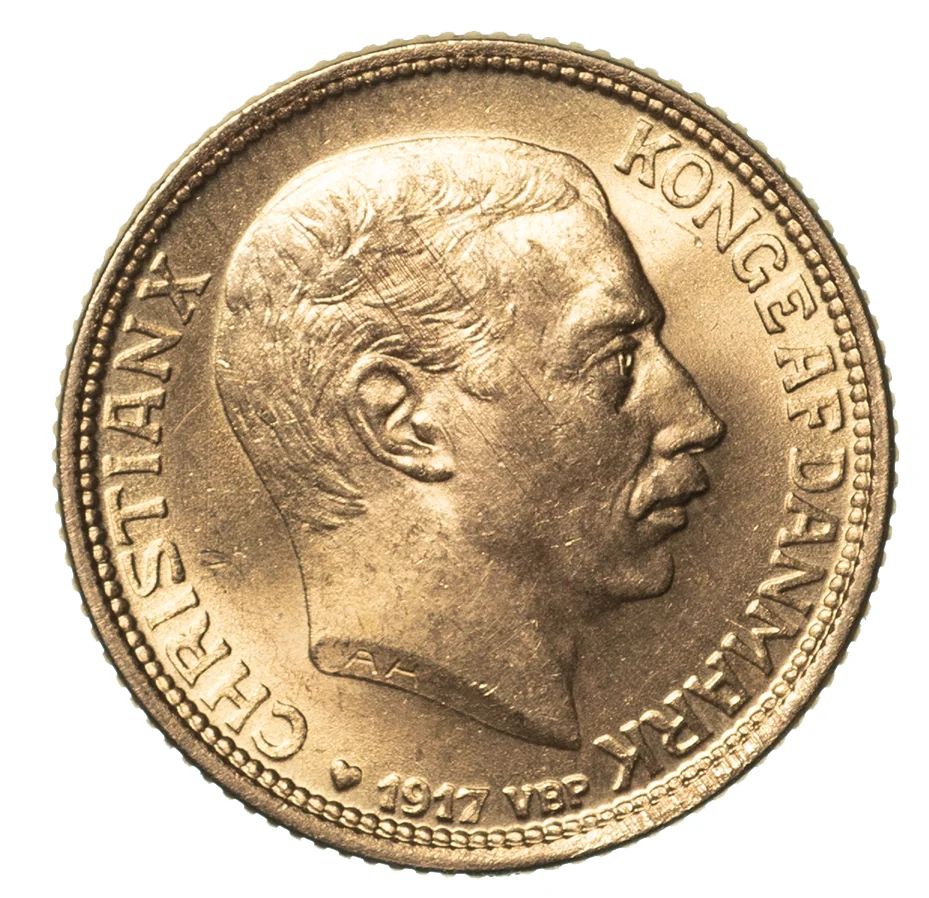
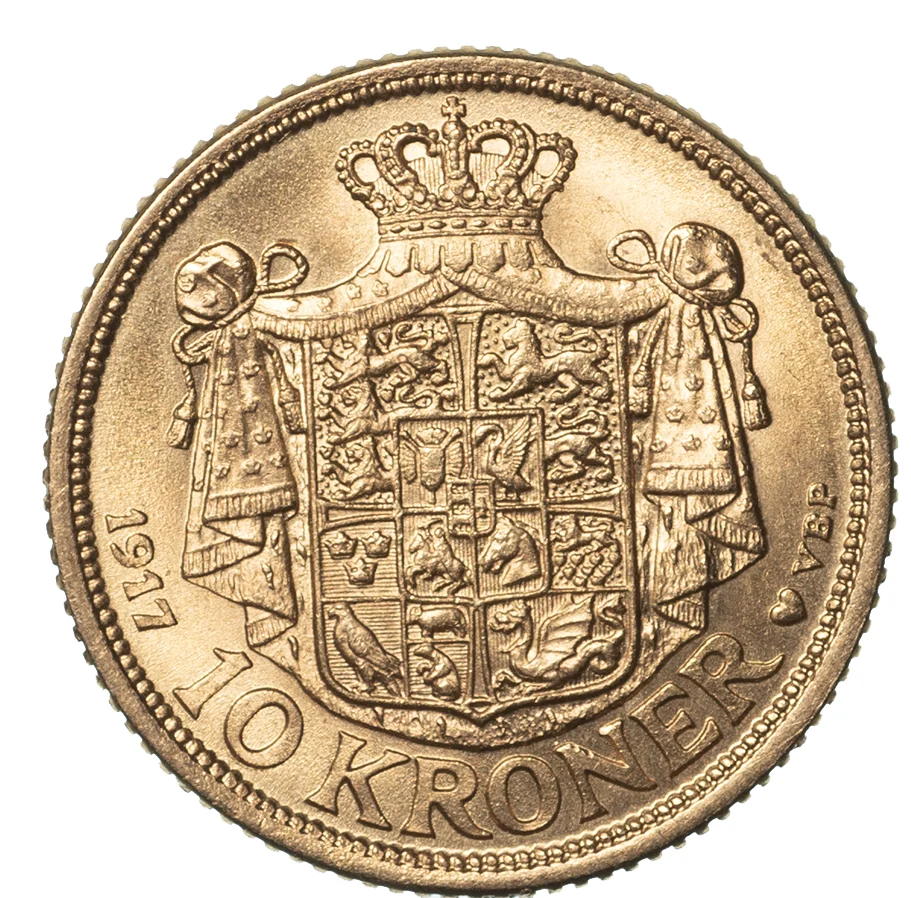
10 kroner – Denmark
Add to wishlist
Denmark
Context
Material
References
KM: #
Numista: #39996
Value
Exchange value: 10 DKK
Bullion value: $617.70
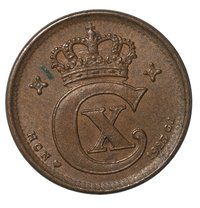
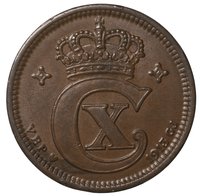
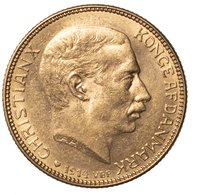
Obverse
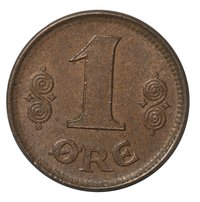
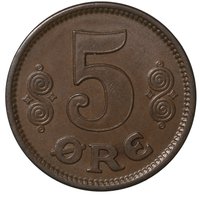
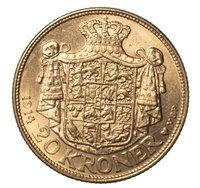
Reverse
Edge
Reeded
Mints
| Name | Mark |
|---|---|
| Royal Danish Mint | — |
Mintings
| Year | Mint Mark | Mintage | Quality | Collection |
|---|---|---|---|---|
| 1913 | VBP | 312,000 | ||
| 1917 | VBP | 132,000 |
Historical background
In 1913, Denmark operated under the classical gold standard, a system it had formally adhered to since 1873. The Danish krone (DKK) was legally defined as a specific weight of gold, and the Nationalbank was obligated to exchange banknotes for gold on demand. This system ensured stable exchange rates with other gold-standard nations, most importantly its major trading partners like Germany and the United Kingdom. The currency's value was thus anchored to a tangible commodity, promoting price stability and facilitating international trade and investment, which were crucial for Denmark's export-oriented agricultural economy.
However, the monetary landscape was not without its tensions. The period leading up to World War I saw growing international political instability, which occasionally triggered capital flows and put pressure on gold reserves. Furthermore, the Danish system was part of the Scandinavian Monetary Union (SMU), established with Sweden in 1873 and joined by Norway in 1875. By 1913, this union was already strained. While the currencies circulated freely within the three nations, the outbreak of war in 1914 would soon expose its fragility, as countries moved to protect their individual gold stocks.
Consequently, while superficially stable, Denmark's currency situation in 1913 existed on the precipice of profound change. The gold standard provided a framework of discipline and predictability, but it was inherently vulnerable to a loss of confidence and the geopolitical shocks that were about to unfold. The Nationalbank's primary concern was maintaining sufficient gold reserves to back the krone, a task that would become impossible within a year, forcing Denmark—like most of the world—to suspend gold convertibility and embark on a new and uncertain monetary path.
However, the monetary landscape was not without its tensions. The period leading up to World War I saw growing international political instability, which occasionally triggered capital flows and put pressure on gold reserves. Furthermore, the Danish system was part of the Scandinavian Monetary Union (SMU), established with Sweden in 1873 and joined by Norway in 1875. By 1913, this union was already strained. While the currencies circulated freely within the three nations, the outbreak of war in 1914 would soon expose its fragility, as countries moved to protect their individual gold stocks.
Consequently, while superficially stable, Denmark's currency situation in 1913 existed on the precipice of profound change. The gold standard provided a framework of discipline and predictability, but it was inherently vulnerable to a loss of confidence and the geopolitical shocks that were about to unfold. The Nationalbank's primary concern was maintaining sufficient gold reserves to back the krone, a task that would become impossible within a year, forcing Denmark—like most of the world—to suspend gold convertibility and embark on a new and uncertain monetary path.
Series: 1913 Denmark circulation coins
🌟 Limited