

10 euro (Antonio Sciortino) – Malta
Add to wishlist
Non-circulating coins
Commemoration: 65th Anniversary of Death of Antonio Sciortino
Series: Europa Star
Malta
Context
Material
References
KM: #
Numista: #39983
Value
Exchange value: 10 EUR
Bullion value: $66.59
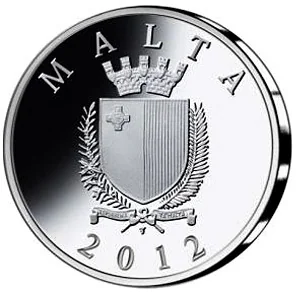
Obverse
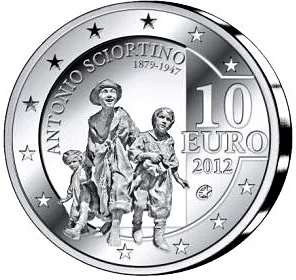
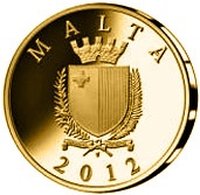
Reverse
Description:
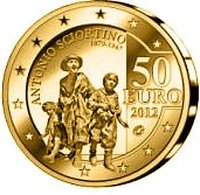
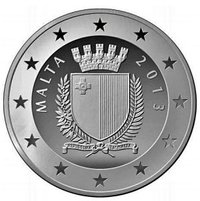
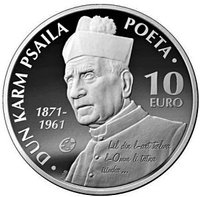
Les Gavroches, from a 1904 Sciortino bronze based on Hugo's "Les Misérables". The coin's edge bears the twelve EU stars, with the European Star logo at bottom right.
Inscription:
ANTONIO SCIORTINO
1879-1947
10
EURO
2012
1879-1947
10
EURO
2012
Script: Latin
Engraver: Noel Galea Bason
Edge
Reeded
Categories
| Symbols> Coat of Arms |
| Art> Literature |
| Person> Artist |
Mints
| Name | Mark |
|---|---|
| Royal Dutch Mint | — |
Mintings
| Year | Mint Mark | Mintage | Quality | Collection |
|---|---|---|---|---|
| 2012 | — | 10,000 | Proof |
Historical background
In 2012, Malta was firmly integrated into the Eurozone, having adopted the euro as its official currency on 1 January 2008. The period was therefore characterised by the ongoing use of the single currency, which had replaced the Maltese lira (pound) at a fixed exchange rate of Lm 0.4293 to €1. This transition was generally considered a success, providing macroeconomic stability, lower transaction costs for trade and tourism, and enhanced investor confidence. As a small, open economy, Malta benefited from the euro's protection against currency volatility, particularly during a time of global economic uncertainty.
The broader context, however, was dominated by the aftershocks of the European sovereign debt crisis. While Malta's banking sector remained relatively stable and its public debt-to-GDP ratio (around 70% in 2012) was below the Eurozone average, the country was not immune to the regional turmoil. Key concerns included the exposure of its large financial sector to European markets and the need to maintain fiscal discipline under the EU's strengthened Stability and Growth Pact. The government, led by Prime Minister Lawrence Gonzi, implemented austerity measures to keep the budget deficit under the 3% EU threshold, a prerequisite for euro membership.
Domestically, the euro's introduction was well-embedded by 2012, with public opinion broadly supportive despite some lingering nostalgia for the lira. The currency situation was stable, but the focus had shifted to navigating the wider European economic challenges. Malta's primary economic objectives were ensuring financial sector resilience, attracting foreign investment, and leveraging EU funding—all within the framework and obligations of its Eurozone membership, which provided a stable monetary foundation amidst a turbulent regional climate.
The broader context, however, was dominated by the aftershocks of the European sovereign debt crisis. While Malta's banking sector remained relatively stable and its public debt-to-GDP ratio (around 70% in 2012) was below the Eurozone average, the country was not immune to the regional turmoil. Key concerns included the exposure of its large financial sector to European markets and the need to maintain fiscal discipline under the EU's strengthened Stability and Growth Pact. The government, led by Prime Minister Lawrence Gonzi, implemented austerity measures to keep the budget deficit under the 3% EU threshold, a prerequisite for euro membership.
Domestically, the euro's introduction was well-embedded by 2012, with public opinion broadly supportive despite some lingering nostalgia for the lira. The currency situation was stable, but the focus had shifted to navigating the wider European economic challenges. Malta's primary economic objectives were ensuring financial sector resilience, attracting foreign investment, and leveraging EU funding—all within the framework and obligations of its Eurozone membership, which provided a stable monetary foundation amidst a turbulent regional climate.
Series: Europa Star

💎 Extremely Rare