

5 Paise – India
India
Context

Material
Weight: 1.6 g
Thickness: 2.2 mm
Shape: Square with rounded corners
Composition: Aluminium
Magnetic: No
Technique: Milled
Alignment: Medal alignment
flip
References
KM: #Click to copy to clipboard18
Numista: #3990
Value
Exchange value: 0.05 INR = $0.00
Inflation-adjusted value: 3.16 INR
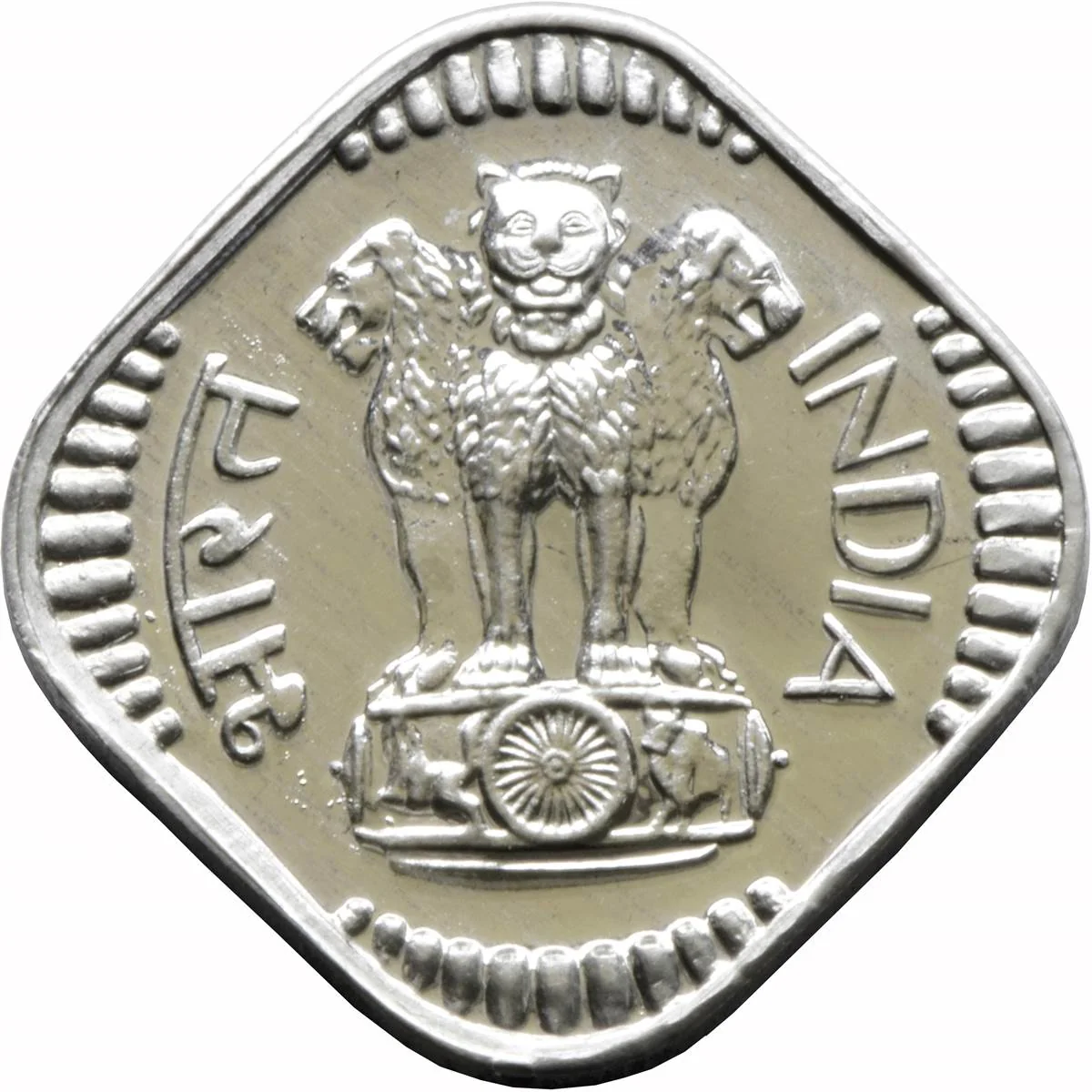
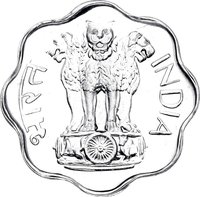
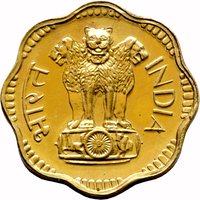
Obverse
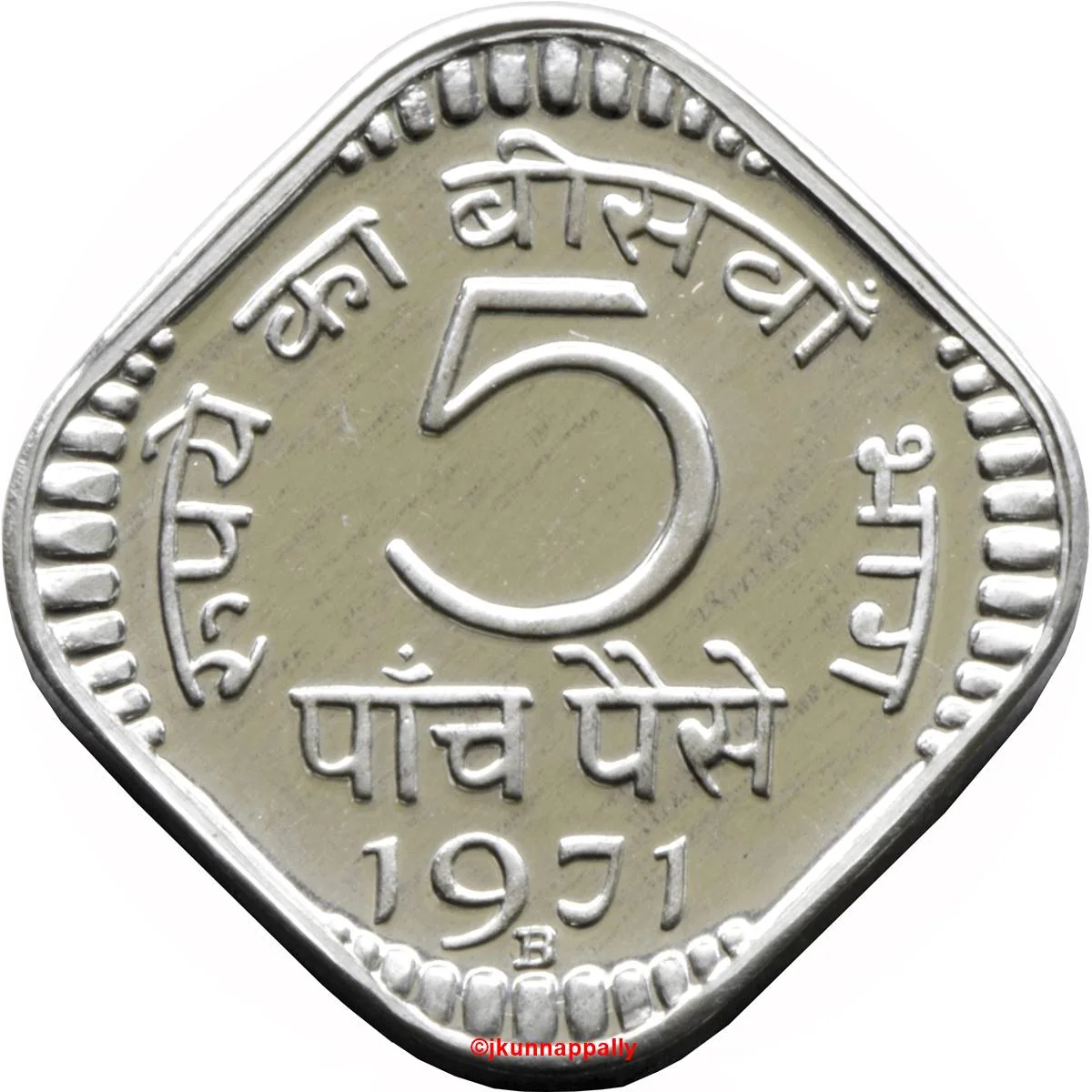
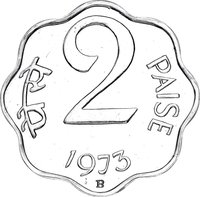
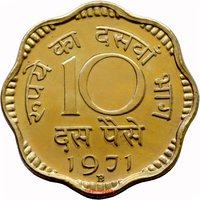
Reverse
Description:
Denomination and date below.
Inscription:
रुपये का बीसवाँ भाग
5
पाँच पैसे
1971
B
5
पाँच पैसे
1971
B
Translation:
The twentieth part of a rupee
5
Five paise
1971
5
Five paise
1971
Language: Hindi
Edge
Plain
Mints
| Name | Mark |
|---|---|
| Kolkata / Calcutta / Murshidabad | — |
| Hyderabad | * |
| Mumbai / Bombay | ♦ |
| Mumbai / Bombay | B |
Mintings
Historical background
In 1967, India's currency situation was fundamentally shaped by the aftermath of the 1966 devaluation of the rupee and the ongoing challenges of a planned, yet fragile, economy. The previous year, under significant pressure from international lenders like the World Bank and the United States, the government had devalued the rupee by 36.5% (from ₹4.76 to ₹7.50 per US dollar). The intended goals were to boost exports, curb imports, and close a severe balance of payments deficit. However, by 1967, the results were deeply disappointing. Exports did not see the anticipated surge, while the cost of essential imports like food and machinery rose sharply, contributing to inflationary pressures and public discontent.
The domestic economic backdrop was particularly difficult, dominated by two successive monsoon failures in 1965 and 1966 that led to a severe drought and famine conditions. This agricultural crisis necessitated massive imports of American wheat under the PL-480 scheme, straining foreign exchange reserves. Consequently, the economy was marked by high inflation, stagnant industrial growth, and persistent foreign exchange scarcity. The rupee's external value was now pegged to the British pound sterling (which itself was devalued in November 1967), but its internal purchasing power was eroding. The period was one of economic austerity, with strict licensing and controls on foreign exchange for both businesses and individuals.
Politically, 1967 was a watershed year as the Congress Party suffered major setbacks in the general elections, losing several states, partly due to the economic hardship linked to devaluation and inflation. This political shift made bold economic reforms difficult. Therefore, the currency situation in 1967 was not one of a new crisis, but of grappling with the painful and unpopular consequences of the 1966 devaluation within a context of agricultural distress and political realignment. The era was defined by a controlled, inconvertible rupee, managed within a complex web of regulations, with the government prioritizing stability and conservation of scarce foreign reserves over any liberalization.
The domestic economic backdrop was particularly difficult, dominated by two successive monsoon failures in 1965 and 1966 that led to a severe drought and famine conditions. This agricultural crisis necessitated massive imports of American wheat under the PL-480 scheme, straining foreign exchange reserves. Consequently, the economy was marked by high inflation, stagnant industrial growth, and persistent foreign exchange scarcity. The rupee's external value was now pegged to the British pound sterling (which itself was devalued in November 1967), but its internal purchasing power was eroding. The period was one of economic austerity, with strict licensing and controls on foreign exchange for both businesses and individuals.
Politically, 1967 was a watershed year as the Congress Party suffered major setbacks in the general elections, losing several states, partly due to the economic hardship linked to devaluation and inflation. This political shift made bold economic reforms difficult. Therefore, the currency situation in 1967 was not one of a new crisis, but of grappling with the painful and unpopular consequences of the 1966 devaluation within a context of agricultural distress and political realignment. The era was defined by a controlled, inconvertible rupee, managed within a complex web of regulations, with the government prioritizing stability and conservation of scarce foreign reserves over any liberalization.
🌱 Very Common