

1 Crown (World War I) – Falkland Islands
Non-circulating coins
Commemoration: Centenary of World War I
Series: Centenary of the First World War
United Kingdom
Context
Year: 2014
Country: United Kingdom 
Issuer: Falkland Islands 
Ruler: Elizabeth II
Currency:
(since 1971)
Material
Diameter: 38.6 mm
Weight: 28.28 g
Shape: Round
Composition: Copper-nickel
Alignment: Medal alignment
flip
References
KM: #Click to copy to clipboard177.1
Numista: #398263
Value
Exchange value: 0.25 FKP
Inflation-adjusted value: 0.37 FKP
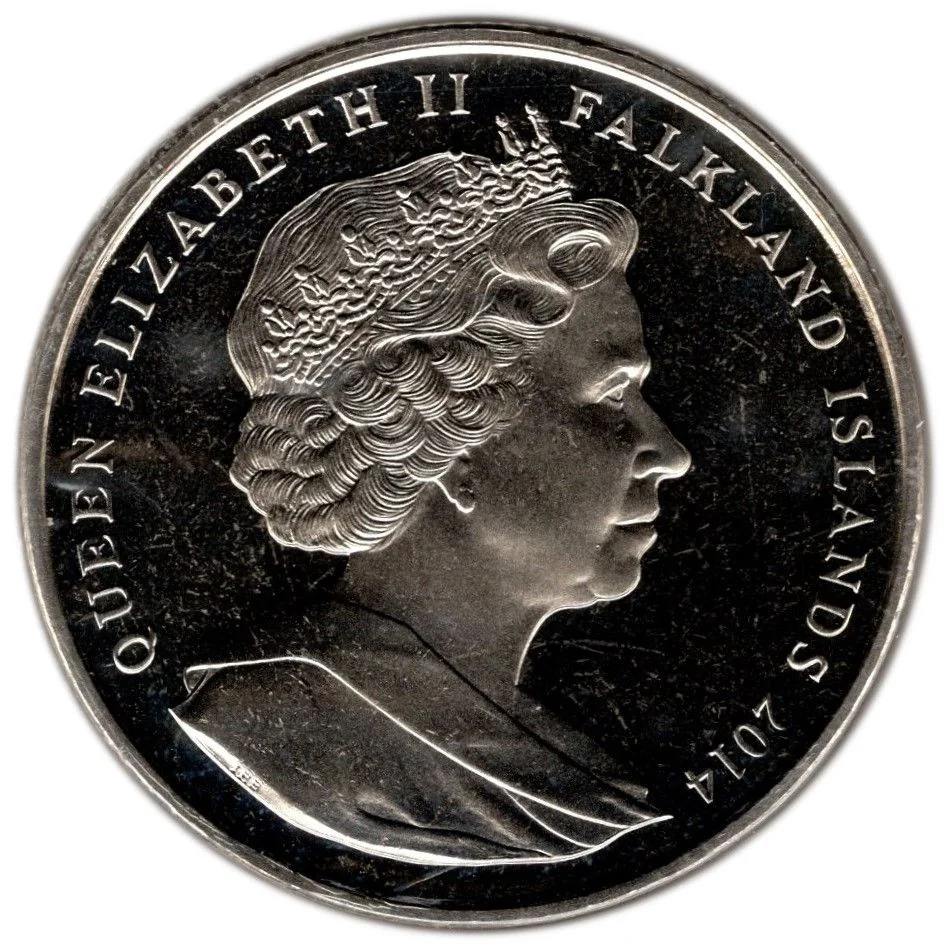
Obverse
Description:
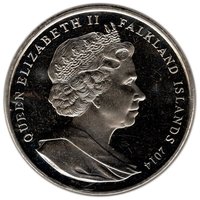
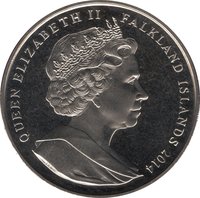
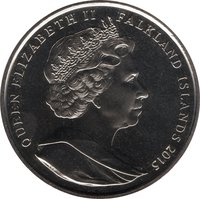
Queen Elizabeth II, the longest-reigning British monarch.
Inscription:
QUEEN ELIZABETH II FALKLAND ISLANDS 2014
Script: Latin
Engraver: Ian Rank-Broadley
Reverse
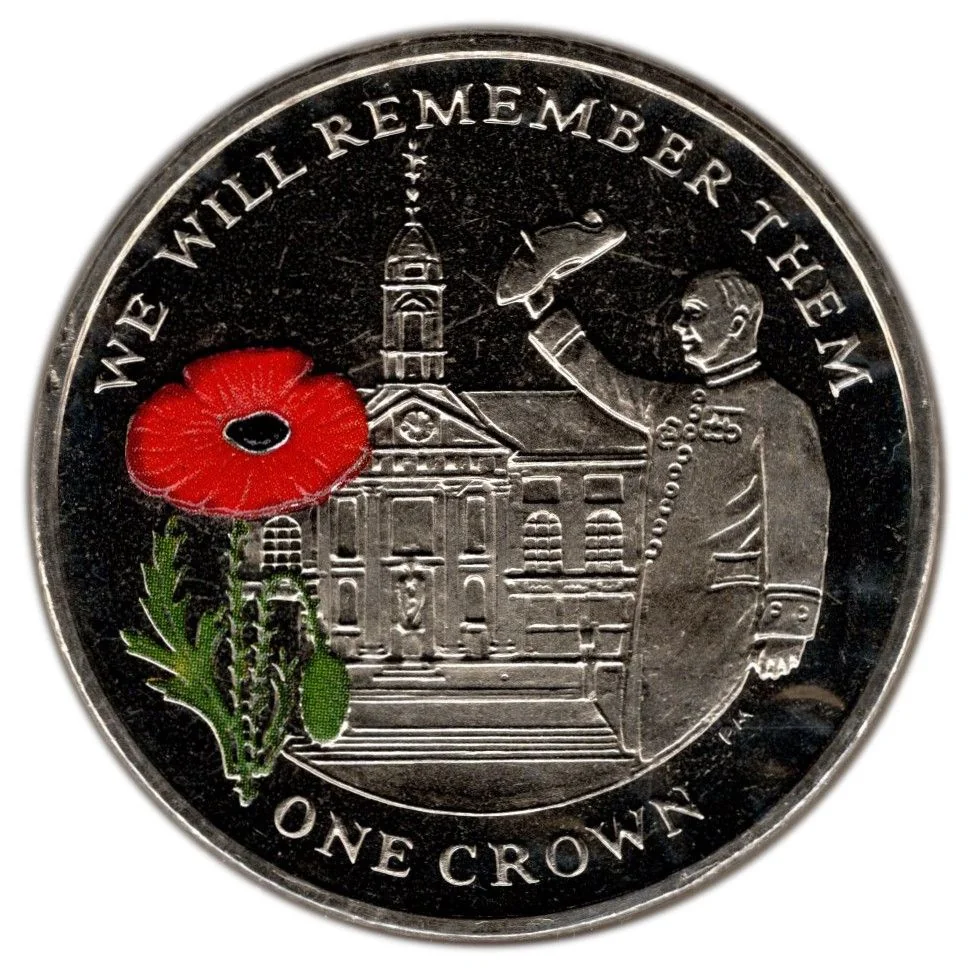
Description:
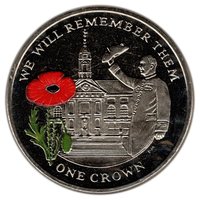
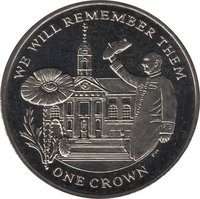
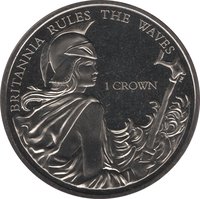
The Royal Chelsea Hospital with a Chelsea Pensioner, a colourised remembrance poppy, and a WWI tradition.
Inscription:
WE WILL REMEMBER THEM
ONE CROWN
PM
ONE CROWN
PM
Script: Latin
Edge
Reeded
Mints
| Name | Mark |
|---|---|
| Pobjoy Mint | (PM) |
Mintings
| Year | Mint Mark | Mintage | Quality | Collection |
|---|---|---|---|---|
| 2014 | PM | — |
Historical background
In 2014, the currency situation in the Falkland Islands remained stable and unique, defined by its dual-currency system. The official currency was (and remains) the Falkland Islands pound (FKP), which is pegged at par with the British pound sterling (GBP). This one-to-one parity, maintained by the Falkland Islands Government, ensured monetary stability and facilitated seamless trade and financial transactions with the United Kingdom, its primary economic partner. Both banknotes and coins bearing distinct Falkland Islands designs were in circulation locally.
Alongside the FKP, the British pound sterling was also legal tender and widely accepted throughout the islands. This practical arrangement reflected the territory's constitutional status as a British Overseas Territory and catered to tourism, the significant military presence at RAF Mount Pleasant, and international commerce, particularly in the vital fishing licensing industry. The economy was heavily reliant on the fisheries sector, tourism, and agriculture, with all major financial transactions underpinned by this sterling-linked system.
There were no significant currency crises or debates about monetary sovereignty in 2014. The system's stability was a deliberate policy, insulating the islands from exchange rate volatility and reinforcing economic links to Britain. This was particularly important given ongoing political tensions with Argentina, which continued to assert its claim to the islands (which it calls the Islas Malvinas) and periodically criticized the monetary arrangement as part of British colonial policy. Consequently, the 2014 currency framework was both a tool of economic management and a symbol of the Falkland Islands' political allegiance.
Alongside the FKP, the British pound sterling was also legal tender and widely accepted throughout the islands. This practical arrangement reflected the territory's constitutional status as a British Overseas Territory and catered to tourism, the significant military presence at RAF Mount Pleasant, and international commerce, particularly in the vital fishing licensing industry. The economy was heavily reliant on the fisheries sector, tourism, and agriculture, with all major financial transactions underpinned by this sterling-linked system.
There were no significant currency crises or debates about monetary sovereignty in 2014. The system's stability was a deliberate policy, insulating the islands from exchange rate volatility and reinforcing economic links to Britain. This was particularly important given ongoing political tensions with Argentina, which continued to assert its claim to the islands (which it calls the Islas Malvinas) and periodically criticized the monetary arrangement as part of British colonial policy. Consequently, the 2014 currency framework was both a tool of economic management and a symbol of the Falkland Islands' political allegiance.
Series: Centenary of the First World War
✨ Legendary