

10 Pounds – United Kingdom
Non-circulating coins
Series: Gold Britannia
United Kingdom
Context
Years: 1987–1989
Issuer: United Kingdom 
Ruler: Elizabeth II
Currency:
(since 1971)
Total mintage: 36,021
Material
References
KM: #Click to copy to clipboard950
Numista: #14362
Value
Exchange value: 10 GBP = $13.55
Bullion value: $522.00
Inflation-adjusted value: 37.44 GBP
Obverse
Description:
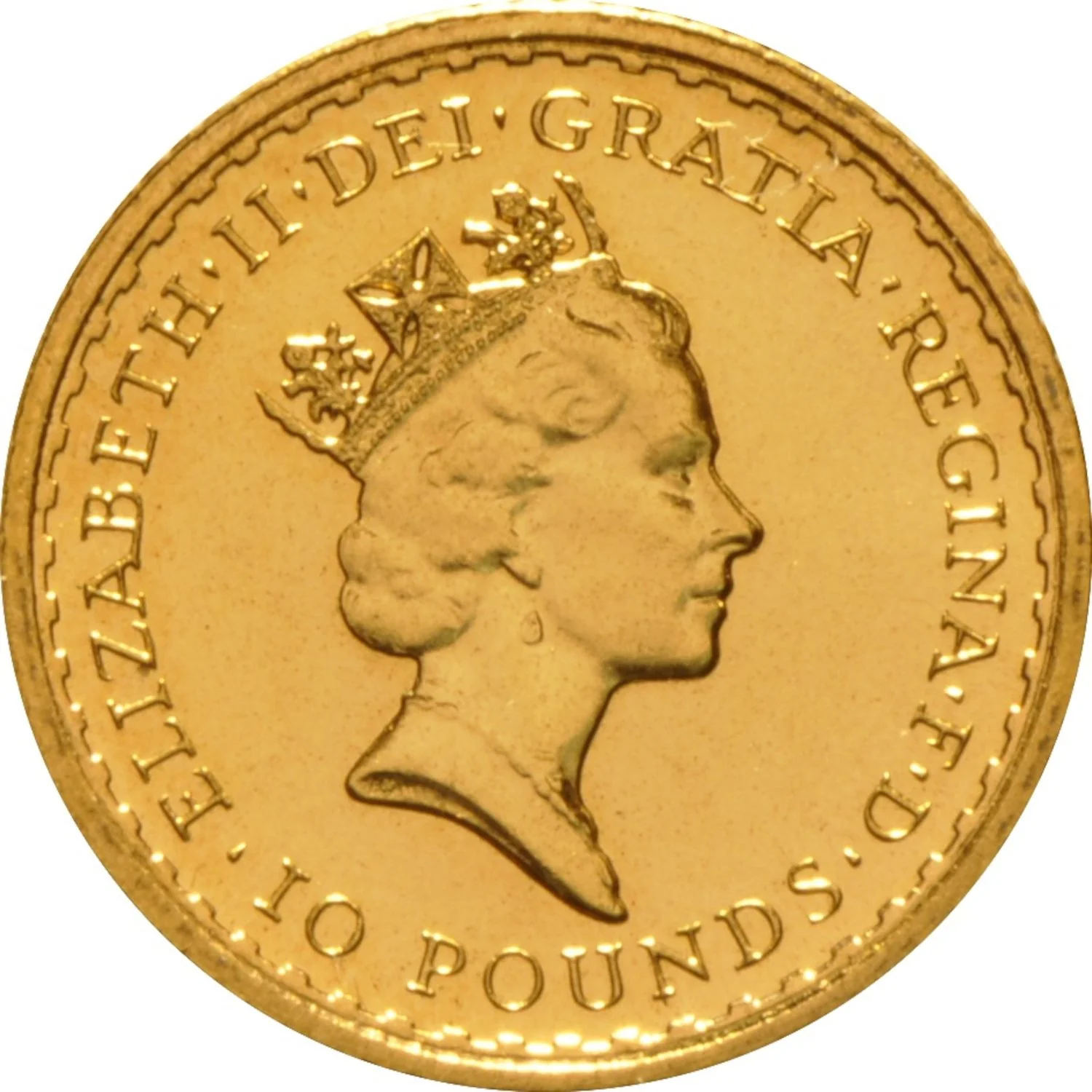
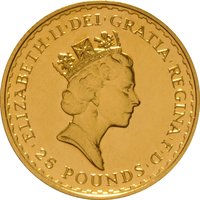
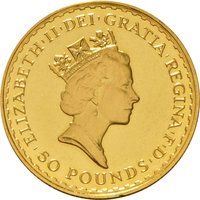
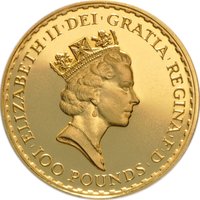
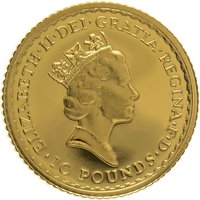
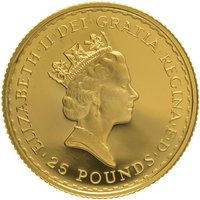
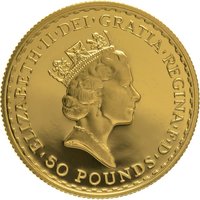
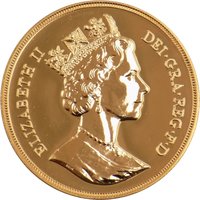
Third crowned portrait of Queen Elizabeth II facing right, wearing the George IV State Diadem.
Inscription:
ELIZABETH'II'DEI'GRATIA'REGINA'F'D
RDM
'10 POUNDS'
RDM
'10 POUNDS'
Translation:
Elizabeth II by the Grace of God Queen Defender of the Faith
10 Pounds
10 Pounds
Script: Latin
Engraver: Raphael David Maklouf
Reverse
Description:
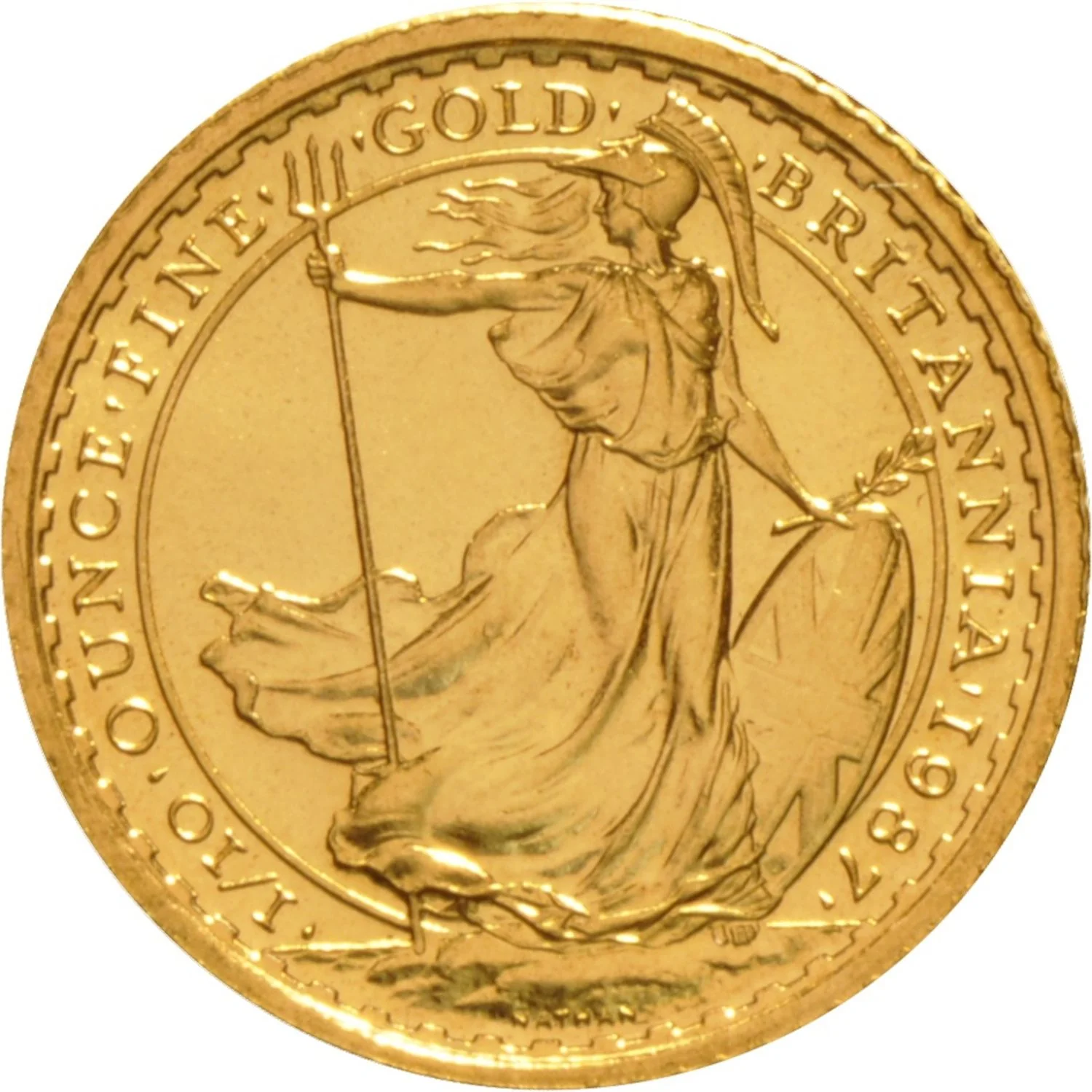
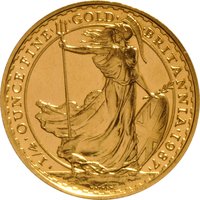
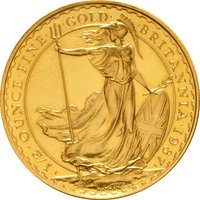
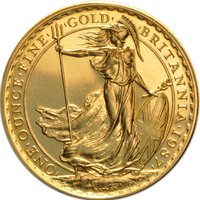
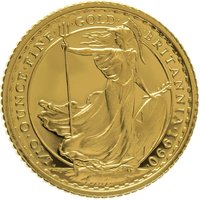
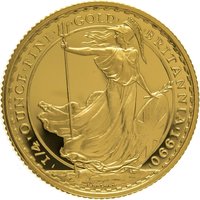
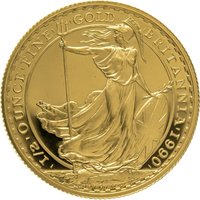
Britannia standing, holding a trident and a shield with the Union flag, surrounded by a legend.
Inscription:
'1/10'OUNCE'FINE' 'GOLD' 'BRITANNIA'1987'
NATHAN
NATHAN
Script: Latin
Engraver: Philip Nathan
Edge
Reeded
Mints
| Name | Mark |
|---|---|
| Royal Mint | — |
Mintings
| Year | Mint Mark | Mintage | Quality | Collection |
|---|---|---|---|---|
| 1987 | — | — | BU | |
| 1987 | — | 24,600 | Proof | |
| 1988 | — | 7,093 | Proof | |
| 1988 | — | — | BU | |
| 1989 | — | — | BU | |
| 1989 | — | 4,328 | Proof |
Historical background
In 1987, the United Kingdom's currency situation was dominated by the aftermath of the Plaza and Louvre Accords, which sought to manage the value of the US dollar. Sterling had experienced a sharp, destabilising depreciation in 1985, falling to near parity with the dollar, which stoked inflationary fears. By early 1987, under Chancellor Nigel Lawson, the government had adopted a policy of "shadowing" the Deutsche Mark, unofficially pegging sterling to the West German currency within a narrow band around DM 3.00. This was an attempt to import the anti-inflation credibility of the Bundesbank and provide stability, but it was pursued without a formal public announcement or agreement.
This policy created significant tensions. To maintain the peg, the Bank of England was forced to engage in heavy intervention, buying sterling and raising interest rates, even as the UK economy showed signs of slowing. The situation became increasingly unsustainable through the summer and autumn of 1987. The policy clashed fundamentally with the government's own economic objectives, as defending the exchange rate required tight monetary policy at a time when domestic considerations, particularly after the global stock market crash in October 1987, arguably called for lower rates to support growth.
The episode culminated in March 1988 when Chancellor Lawson, facing overwhelming market pressure and having spent billions in reserves, abruptly abandoned the shadowing policy. Sterling was allowed to float freely, and interest rates were cut. The failed experiment highlighted the difficulties of managing exchange rates within a system of increasingly mobile global capital. It reinforced the view that sterling could not be sustainably pegged without full commitment to a European exchange rate mechanism, a path the government would later controversially take in 1990.
This policy created significant tensions. To maintain the peg, the Bank of England was forced to engage in heavy intervention, buying sterling and raising interest rates, even as the UK economy showed signs of slowing. The situation became increasingly unsustainable through the summer and autumn of 1987. The policy clashed fundamentally with the government's own economic objectives, as defending the exchange rate required tight monetary policy at a time when domestic considerations, particularly after the global stock market crash in October 1987, arguably called for lower rates to support growth.
The episode culminated in March 1988 when Chancellor Lawson, facing overwhelming market pressure and having spent billions in reserves, abruptly abandoned the shadowing policy. Sterling was allowed to float freely, and interest rates were cut. The failed experiment highlighted the difficulties of managing exchange rates within a system of increasingly mobile global capital. It reinforced the view that sterling could not be sustainably pegged without full commitment to a European exchange rate mechanism, a path the government would later controversially take in 1990.
Series: Gold Britannia
⭐ Rare