

100 Pounds (issue) – United Kingdom
United Kingdom
Context

Material
References
KM: #Click to copy to clipboard985
Numista: #14361
Value
Exchange value: 100 GBP = $135.50
Bullion value: $5214.80
Inflation-adjusted value: 239.88 GBP
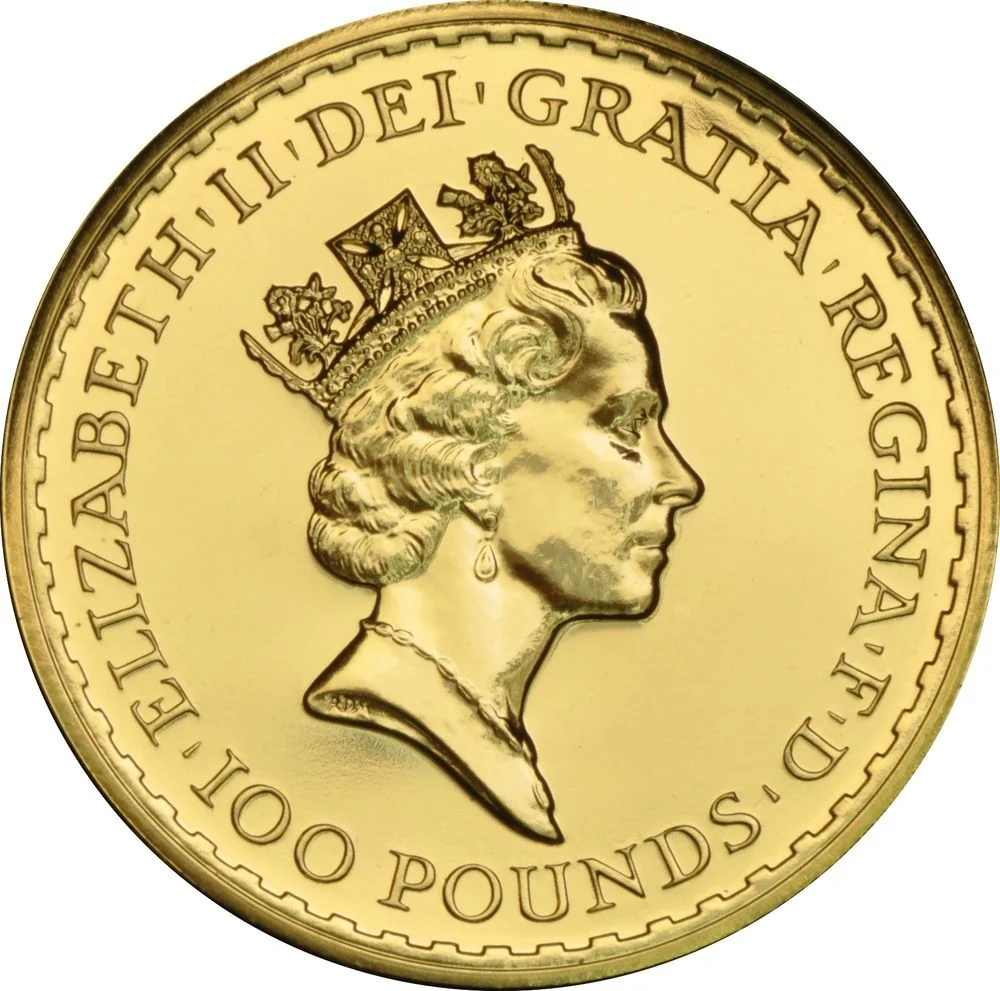
Obverse
Description:
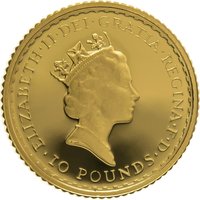
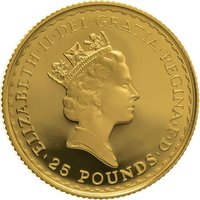
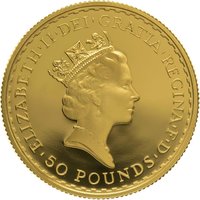
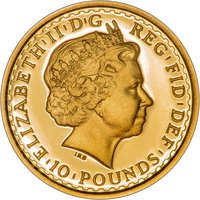
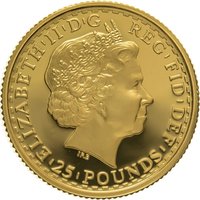
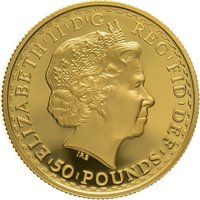
Third crowned portrait of Queen Elizabeth II facing right, wearing the George IV State Diadem.
Inscription:
ELIZABETH|II|DEI|GRATIA|REGINA|F|D
|I00 POUNDS|
RDM
|I00 POUNDS|
RDM
Translation:
By the Grace of God, Queen Elizabeth the Second, Defender of the Faith.
One Hundred Pounds
One Hundred Pounds
Script: Latin
Engraver: Raphael David Maklouf
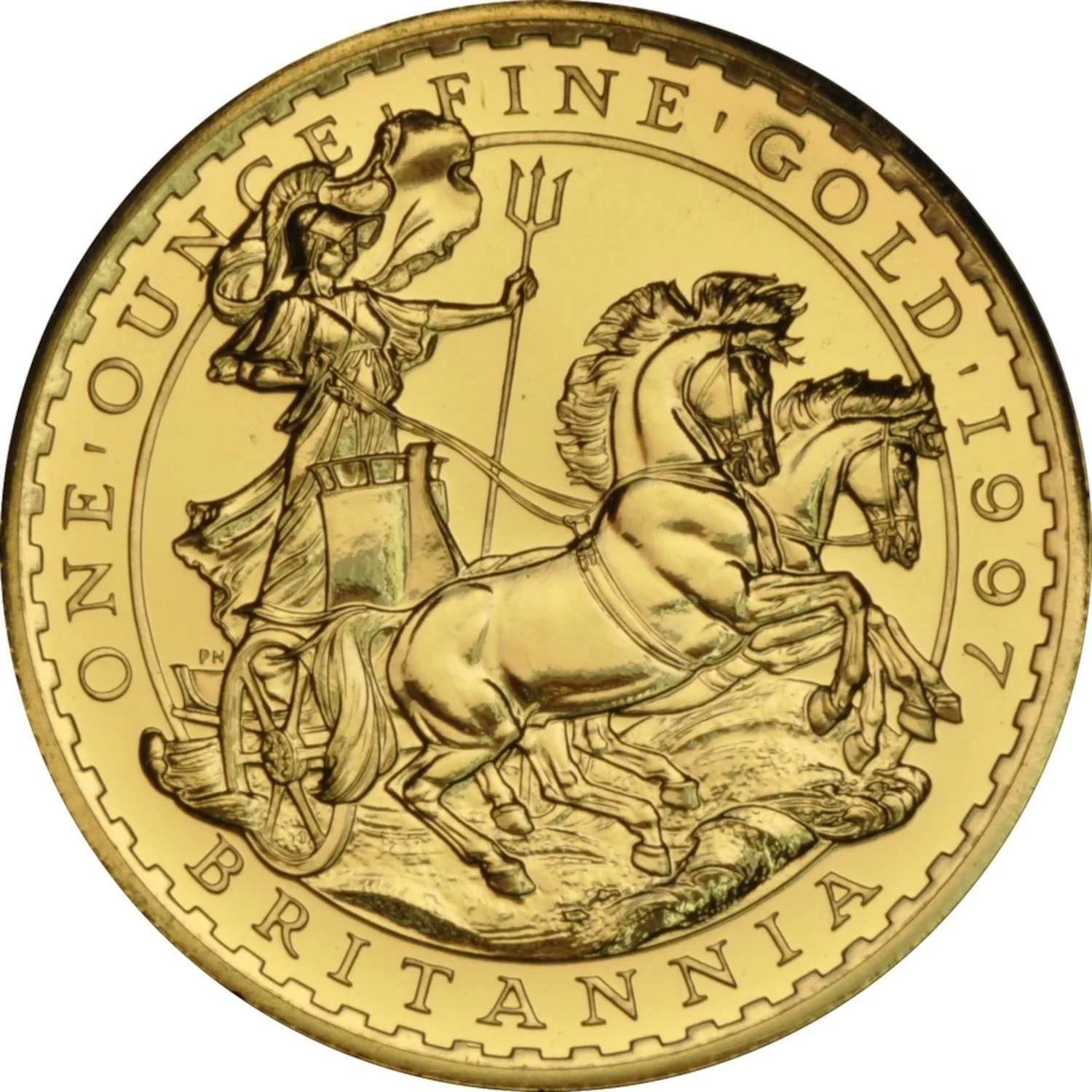
Reverse
Description:
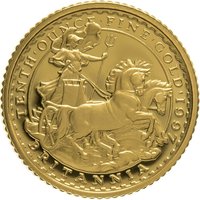
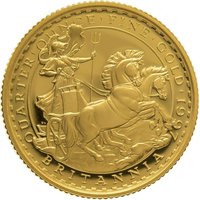
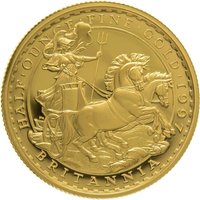
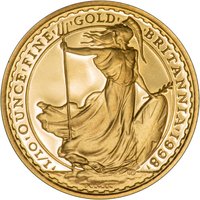
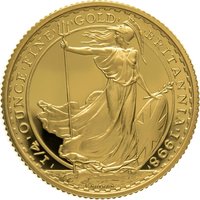
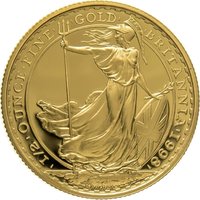
Britannia in chariot, legend encircling.
Inscription:
ONE|OUNCE|FINE|GOLD| 1997
PN
BRITANNIA
PN
BRITANNIA
Script: Latin
Engraver: Philip Nathan
Edge
Reeded
Mints
| Name | Mark |
|---|---|
| Royal Mint | — |
Mintings
| Year | Mint Mark | Mintage | Quality | Collection |
|---|---|---|---|---|
| 1997 | — | — | BU | |
| 1997 | — | 1,056 | Proof |
Historical background
In 1997, the United Kingdom's currency situation was dominated by the legacy of the Exchange Rate Mechanism (ERM) crisis of September 1992, when sterling was forced to withdraw and devalue. This event, known as "Black Wednesday," had a profound psychological impact, fostering a deep political aversion to fixed exchange rates and early membership in the European single currency, the euro. The newly elected Labour government, under Chancellor Gordon Brown, inherited a policy of a "strong pound" rhetoric from the outgoing Conservatives, but the memory of the ERM collapse cast a long shadow over any debate about surrendering monetary sovereignty.
Upon taking office, Chancellor Brown moved swiftly to redefine the framework. In one of his first major acts, he granted operational independence to the Bank of England in May 1997, removing the government's direct control over interest rates. This was a seminal reform designed to depoliticise monetary policy and target inflation explicitly, marking a decisive shift away from exchange rate targeting. The pound, now floating freely, was subject to market forces, and its value became a secondary concern to domestic price stability.
Concurrently, the government faced the looming question of European Economic and Monetary Union (EMU). In October 1997, Brown outlined the famous "five economic tests" that would need to be met before the UK could consider joining the euro. This effectively placed the decision on indefinite hold, creating a durable policy of "prepare and decide" rather than "wait and see." Consequently, 1997 ended with a clear new orthodoxy: an independent Bank of England managing a floating pound, and the prospect of euro membership deferred to a distant and uncertain future.
Upon taking office, Chancellor Brown moved swiftly to redefine the framework. In one of his first major acts, he granted operational independence to the Bank of England in May 1997, removing the government's direct control over interest rates. This was a seminal reform designed to depoliticise monetary policy and target inflation explicitly, marking a decisive shift away from exchange rate targeting. The pound, now floating freely, was subject to market forces, and its value became a secondary concern to domestic price stability.
Concurrently, the government faced the looming question of European Economic and Monetary Union (EMU). In October 1997, Brown outlined the famous "five economic tests" that would need to be met before the UK could consider joining the euro. This effectively placed the decision on indefinite hold, creating a durable policy of "prepare and decide" rather than "wait and see." Consequently, 1997 ended with a clear new orthodoxy: an independent Bank of England managing a floating pound, and the prospect of euro membership deferred to a distant and uncertain future.
Series: Gold Britannia
✨ Legendary