

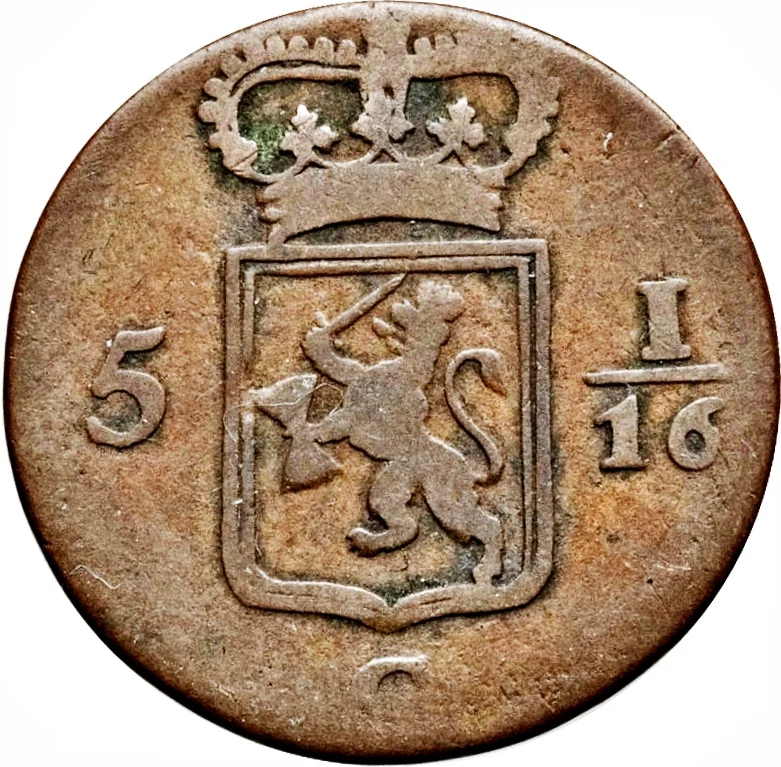
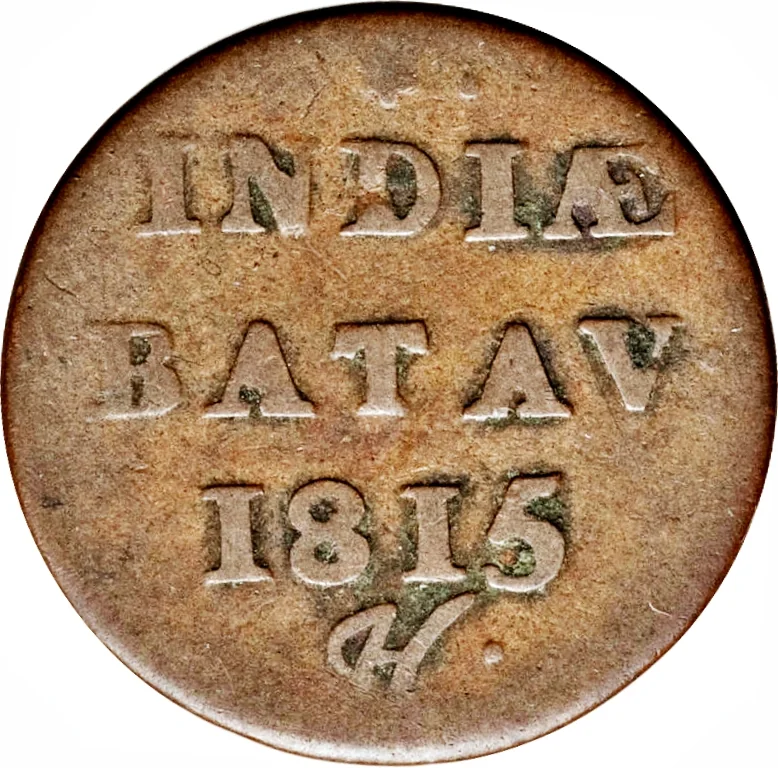
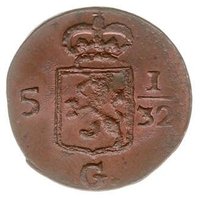
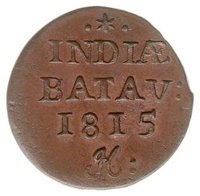
1 duit – Netherlands East Indies
Add to wishlist
Indonesia
Context
Years: 1814–1816
Country: Indonesia
Issuer: Netherlands East Indies
Ruler: William I
Currency:
(1726—1854)
Demonetized: Yes
Material
References
KM: #
Numista: #39612
Obverse
Reverse
Edge
Mints
| Name | Mark |
|---|---|
| Amsterdam | — |
Mintings
| Year | Mint Mark | Mintage | Quality | Collection |
|---|---|---|---|---|
| 1814 | — | — | ||
| 1814 | H | — | ||
| 1815 | H | — | ||
| 1816 | H | — |
Historical background
In 1814, the currency situation in the Netherlands East Indies (present-day Indonesia) was chaotic and transitional, emerging from a period of British interregnum (1811-1816) during the Napoleonic Wars. The British administration under Lieutenant-Governor Thomas Stamford Raffles had attempted to reform the monetary system by introducing a silver standard based on the Java rupee, aiming to replace the diverse and often degraded coinage in circulation. However, this reform was incomplete, and the colony's economy still relied on a confusing mix of Spanish silver dollars (real de a ocho), Dutch guilders, local copper coins (duits), and various credit instruments.
The return of Dutch authority in 1814, following the Anglo-Dutch Treaty of 1814, created further monetary uncertainty. The new Dutch administration, under the Commissioners-General, faced the immediate challenge of which currency system to enforce. They inherited Raffles's silver rupee system but also had to consider reinstating ties to the Dutch monetary system. This period was marked by a lack of sufficient official coinage, leading to widespread use of foreign and often substandard coins, private token money, and barter in many interior regions, which stifled trade and state revenue collection.
Consequently, the primary characteristic of the 1814 currency situation was instability and a vacuum of authoritative legal tender. The Dutch were poised to reassert control, but the practical reality was a fragmented and multi-currency economy. This unresolved crisis would prompt the Dutch authorities to eventually develop and implement a new, unified currency system, culminating in the establishment of the Netherlands Indies Gulden in the years following their full return in 1816.
The return of Dutch authority in 1814, following the Anglo-Dutch Treaty of 1814, created further monetary uncertainty. The new Dutch administration, under the Commissioners-General, faced the immediate challenge of which currency system to enforce. They inherited Raffles's silver rupee system but also had to consider reinstating ties to the Dutch monetary system. This period was marked by a lack of sufficient official coinage, leading to widespread use of foreign and often substandard coins, private token money, and barter in many interior regions, which stifled trade and state revenue collection.
Consequently, the primary characteristic of the 1814 currency situation was instability and a vacuum of authoritative legal tender. The Dutch were poised to reassert control, but the practical reality was a fragmented and multi-currency economy. This unresolved crisis would prompt the Dutch authorities to eventually develop and implement a new, unified currency system, culminating in the establishment of the Netherlands Indies Gulden in the years following their full return in 1816.
⭐ Somewhat Rare