

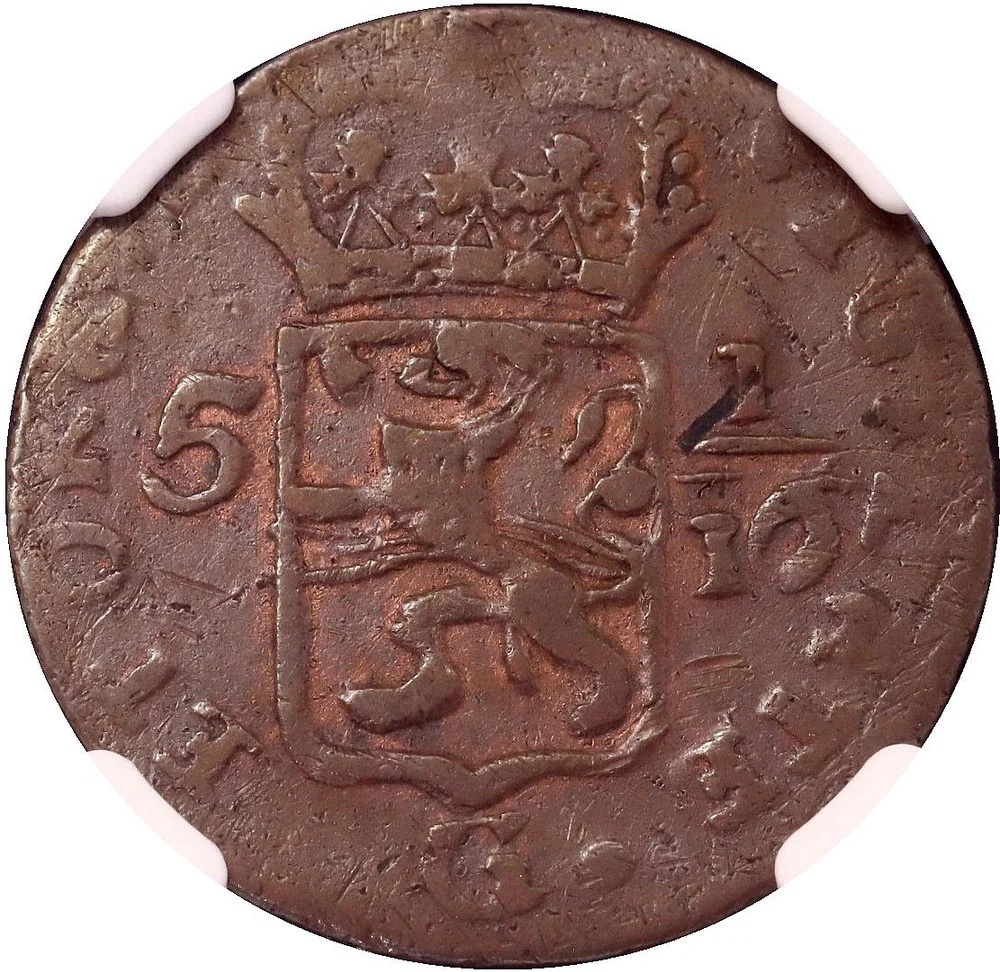
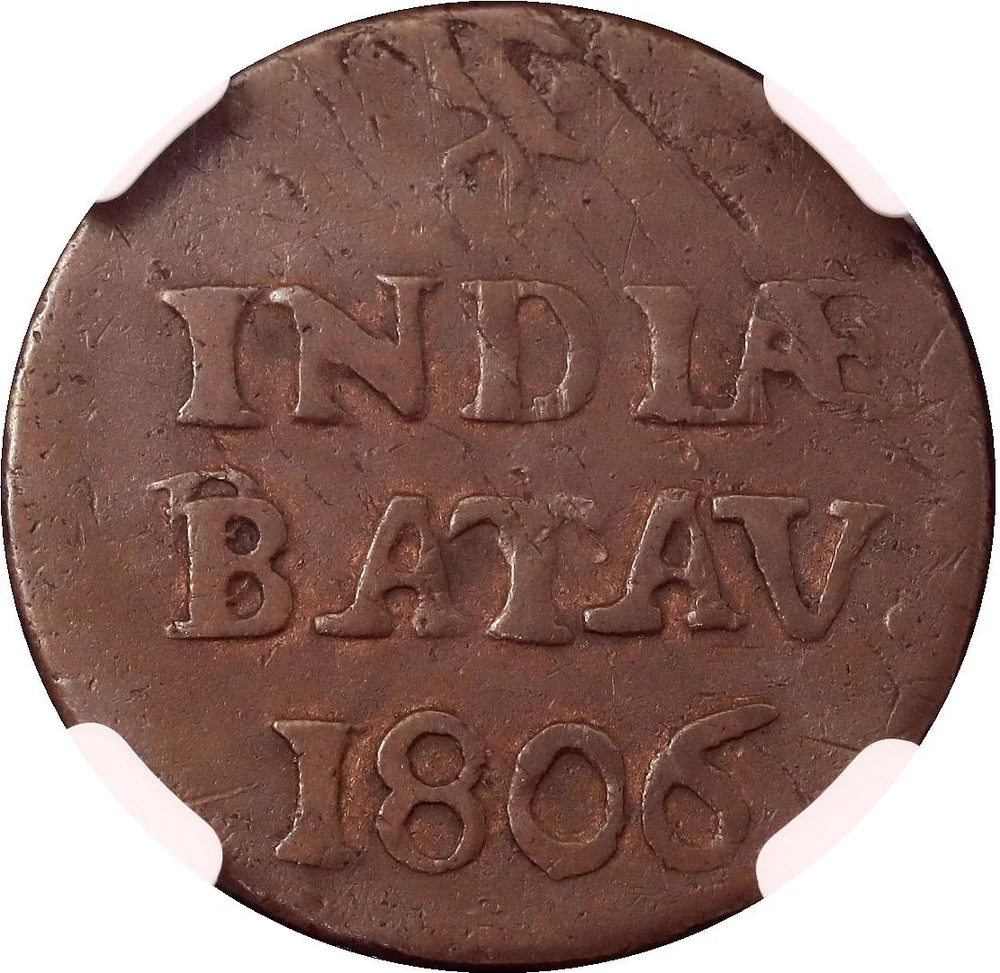
1 duit – Netherlands East Indies
Add to wishlist
Indonesia
Context
Years: 1803–1807
Country: Indonesia
Issuer: Netherlands East Indies
Period:
(1800—1806)
Ruler: Louis Napoléon
Currency:
(1726—1854)
Demonetized: Yes
Material
References
KM: #
Numista: #97873
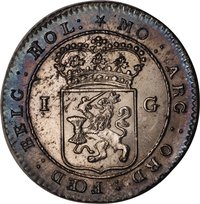
Obverse
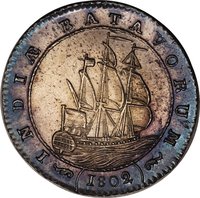
Reverse
Edge
Plain
Mintings
| Year | Mint Mark | Mintage | Quality | Collection |
|---|---|---|---|---|
| 1803 | — | — | ||
| 1804 | — | — | ||
| 1805 | — | — | ||
| 1806 | — | — | ||
| 1807 | — | — |
Historical background
In 1803, the currency situation in the Netherlands East Indies (NEI) was complex and transitional, fundamentally shaped by the bankruptcy of the Dutch East India Company (VOC) in 1799 and the subsequent assumption of its territories by the Dutch state, the Batavian Republic. The VOC's legacy was a chaotic monetary system with a severe shortage of official coinage. This void was filled by a proliferation of foreign coins, primarily Spanish-American silver reales (known as "Mexican dollars" or "pieces of eight"), which served as the de facto standard for large transactions. Alongside these, a vast array of other coins—including Dutch duiten and stuivers, Indian rupees, and Chinese copper cash—circulated, their values fluctuating based on weight, fineness, and local acceptance.
The Batavian Republic administration in Batavia (modern-day Jakarta) struggled to impose order. They officially valued the Spanish dollar, but the chronic coin shortage led to the continued use of private and company-issued credit paper (kassiersbriefjes), which were prone to depreciation and forgery. Furthermore, the Batavian Republic itself, a French client state, was embroiled in the Napoleonic Wars, which severely disrupted trade and the shipment of specie from Europe. This isolation exacerbated the colony's liquidity crisis and made it nearly impossible to implement a unified, sovereign currency system.
Consequently, the monetary landscape in 1803 was one of pragmatic disorder. Transactions relied on a cumbersome system of valuation and conversion between multiple coinages, with the Spanish dollar as the most trusted anchor. The authority of the Batavian government over currency was weak, and the economy functioned on a fragile patchwork of foreign silver, low-value local coinage, and unstable paper. This unstable situation would persist until more decisive reforms were attempted later in the 19th century under restored Dutch rule.
The Batavian Republic administration in Batavia (modern-day Jakarta) struggled to impose order. They officially valued the Spanish dollar, but the chronic coin shortage led to the continued use of private and company-issued credit paper (kassiersbriefjes), which were prone to depreciation and forgery. Furthermore, the Batavian Republic itself, a French client state, was embroiled in the Napoleonic Wars, which severely disrupted trade and the shipment of specie from Europe. This isolation exacerbated the colony's liquidity crisis and made it nearly impossible to implement a unified, sovereign currency system.
Consequently, the monetary landscape in 1803 was one of pragmatic disorder. Transactions relied on a cumbersome system of valuation and conversion between multiple coinages, with the Spanish dollar as the most trusted anchor. The authority of the Batavian government over currency was weak, and the economy functioned on a fragile patchwork of foreign silver, low-value local coinage, and unstable paper. This unstable situation would persist until more decisive reforms were attempted later in the 19th century under restored Dutch rule.
⭐ Rare