

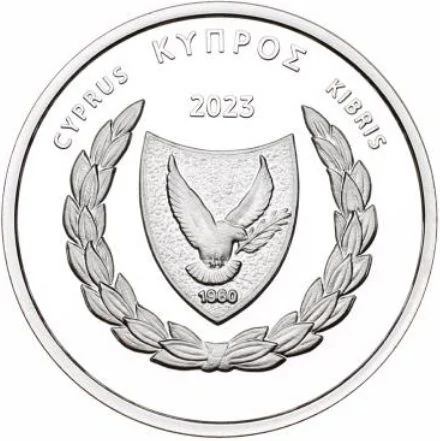
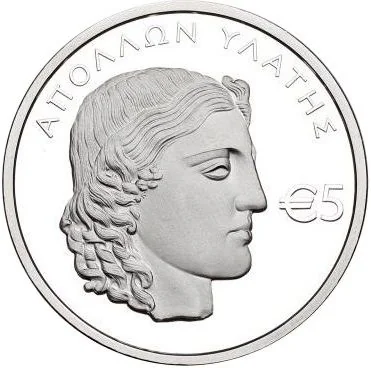
5 euro – Cyprus
Add to wishlist
Non-circulating coins
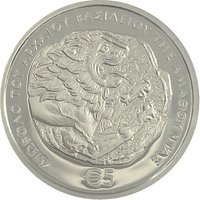
Commemoration: Apollon Hylates
Cyprus
Context
Year: 2023
Issuer: Cyprus
Issuing organization: Central bank of Cyprus
Period:
(since 1960)
Currency:
(since 2008)
Total mintage: 2,000
Material
References
KM: #
Numista: #395614
Value
Exchange value: 5 EUR
Bullion value: $64.17
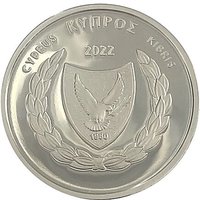
Obverse
Reverse
Edge
Categories
| Person> Religious figure |
| Symbols> Coat of Arms |
Mints
| Name | Mark |
|---|---|
| Staatliche Münze Baden-Württemberg | — |
Mintings
| Year | Mint Mark | Mintage | Quality | Collection |
|---|---|---|---|---|
| 2023 | — | 2,000 | Proof |
Historical background
In 2023, Cyprus's currency situation remained stable and fully integrated within the Eurozone framework, using the euro (€) as its sole legal tender. The country’s financial system had largely recovered from the profound 2012-2013 banking crisis, which had required a controversial international bailout and led to the imposition of capital controls and a unique "bail-in" of uninsured deposits. A decade later, the Central Bank of Cyprus continued to focus on maintaining financial stability, supervising a significantly consolidated banking sector with reduced non-performing loans (NPLs) and stronger capital buffers, though challenges like high private debt levels persisted.
The primary monetary policy decisions affecting Cyprus were set by the European Central Bank (ECB), which throughout 2023 continued its path of interest rate hikes to combat high inflation across the Eurozone. This tightening cycle increased borrowing costs for Cypriot businesses and households, posing a headwind to economic growth. However, the inflation rate in Cyprus, while elevated, was somewhat moderated compared to the Eurozone average, partly due to government subsidies on electricity and other essential goods aimed at cushioning the impact of the energy crisis.
Looking forward, the key currency-related focus for Cyprus in 2023 was less about the currency itself and more about leveraging its euro membership to foster sustainable economic growth. Priorities included enhancing competitiveness, attracting foreign investment, and further strengthening the banking sector's resilience. The stable euro provided a solid foundation for the tourism-driven economy and the growing sectors of professional services and real estate, while the country also continued to benefit from EU recovery and resilience funds aimed at supporting the green and digital transitions.
The primary monetary policy decisions affecting Cyprus were set by the European Central Bank (ECB), which throughout 2023 continued its path of interest rate hikes to combat high inflation across the Eurozone. This tightening cycle increased borrowing costs for Cypriot businesses and households, posing a headwind to economic growth. However, the inflation rate in Cyprus, while elevated, was somewhat moderated compared to the Eurozone average, partly due to government subsidies on electricity and other essential goods aimed at cushioning the impact of the energy crisis.
Looking forward, the key currency-related focus for Cyprus in 2023 was less about the currency itself and more about leveraging its euro membership to foster sustainable economic growth. Priorities included enhancing competitiveness, attracting foreign investment, and further strengthening the banking sector's resilience. The stable euro provided a solid foundation for the tourism-driven economy and the growing sectors of professional services and real estate, while the country also continued to benefit from EU recovery and resilience funds aimed at supporting the green and digital transitions.
✨ Legendary