

5 euro – Cyprus
Add to wishlist
Non-circulating coins
Commemoration: Diovolo of the Ancient Kingdom of Amathous.
Cyprus
Context
Material
References
KM: #
Numista: #350115
Value
Exchange value: 5 EUR
Bullion value: $65.55
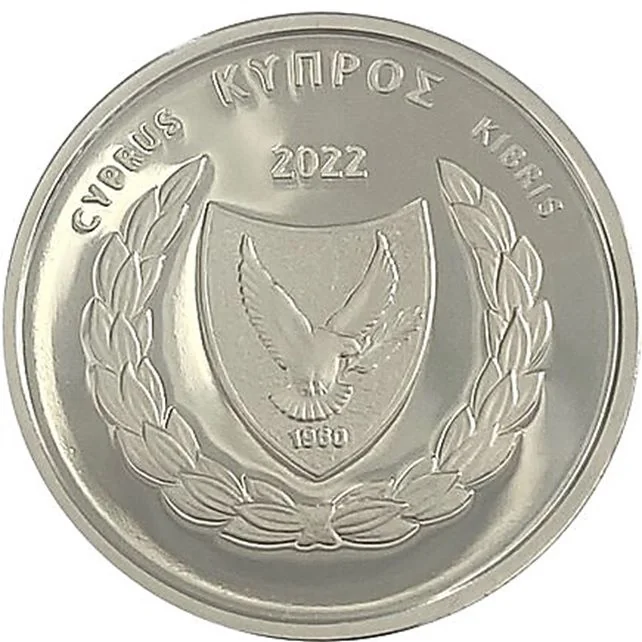
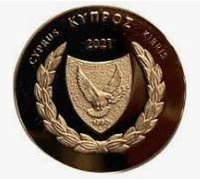
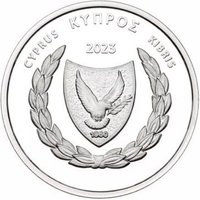
Obverse
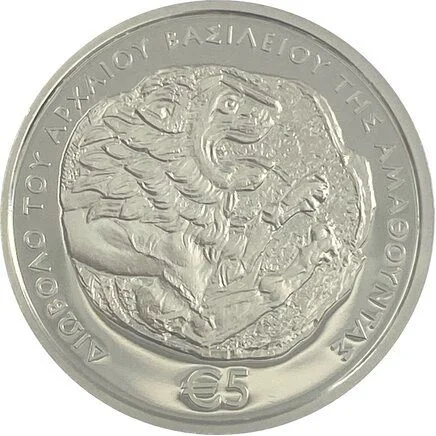
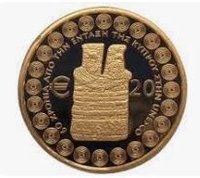
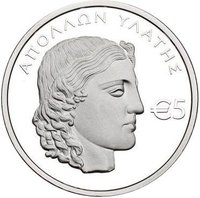
Reverse
Description:
A lion's head composition.
Inscription:
ΔΙΩΒΟΛΟ ΤΟΥ ΑΡΧΑΙΟΥ ΒΑΣΙΛΕΙΟΥ ΤΗΣ ΑΜΑΘΟΥΝΤΑΣ
€5
€5
Translation:
A two-obol coin of the ancient kingdom of Amathus.
Script: Greek
Language: Greek
Designer: Geórgios Stamatópoulos
Edge
Plain.
Categories
| Currency> Coin depiction |
| Symbols> Coat of Arms |
| Animal> Feline |
Mints
| Name | Mark |
|---|---|
| Staatliche Münze Baden-Württemberg | — |
Mintings
| Year | Mint Mark | Mintage | Quality | Collection |
|---|---|---|---|---|
| 2022 | — | 2,000 | Proof |
Historical background
In 2022, the currency situation in Cyprus remained stable and integrated, as the country continued to use the euro as its sole legal tender. Having adopted the euro in 2008, Cyprus is a full member of the Eurozone, and its monetary policy is set by the European Central Bank (ECB). This framework provided macroeconomic stability, with low inflation by historical standards at the start of the year, though it rose significantly throughout 2022 due to the global energy crisis and supply chain disruptions stemming from the war in Ukraine, mirroring trends across the European Union.
The year did not see any domestic currency crises akin to the 2012-2013 banking crisis, which had led to capital controls and a bail-in of depositors in two major banks. By 2022, the Cypriot banking sector was significantly consolidated and stronger, with non-performing loans (NPLs) reduced to below the EU average. The primary financial focus was on managing the broader Eurozone inflation challenge rather than any standalone currency instability. The Cypriot pound, its pre-euro currency, remained a historical footnote with no practical bearing on the economy.
Looking forward, the main currency-related discussions in Cyprus for 2022 centered on the benefits and challenges of Eurozone membership. The shared currency provided stability and facilitated trade and tourism, but also meant Cyprus had no independent monetary policy tools to address local economic conditions, relying instead on national fiscal measures and EU-wide responses to inflation. Consequently, the currency background was one of embedded stability within a larger, complex European monetary union facing a renewed inflationary test.
The year did not see any domestic currency crises akin to the 2012-2013 banking crisis, which had led to capital controls and a bail-in of depositors in two major banks. By 2022, the Cypriot banking sector was significantly consolidated and stronger, with non-performing loans (NPLs) reduced to below the EU average. The primary financial focus was on managing the broader Eurozone inflation challenge rather than any standalone currency instability. The Cypriot pound, its pre-euro currency, remained a historical footnote with no practical bearing on the economy.
Looking forward, the main currency-related discussions in Cyprus for 2022 centered on the benefits and challenges of Eurozone membership. The shared currency provided stability and facilitated trade and tourism, but also meant Cyprus had no independent monetary policy tools to address local economic conditions, relying instead on national fiscal measures and EU-wide responses to inflation. Consequently, the currency background was one of embedded stability within a larger, complex European monetary union facing a renewed inflationary test.
💎 Extremely Rare