

½ skilling – Sweden
Add to wishlist
Sweden
Context
Years: 1802–1809
Issuer: Sweden
Ruler: Gustav IV Adolf
Currency:
(1798—1830)
Demonetized: Yes
Total mintage: 2,545,000
Material
References
KM: #
Numista: #3953
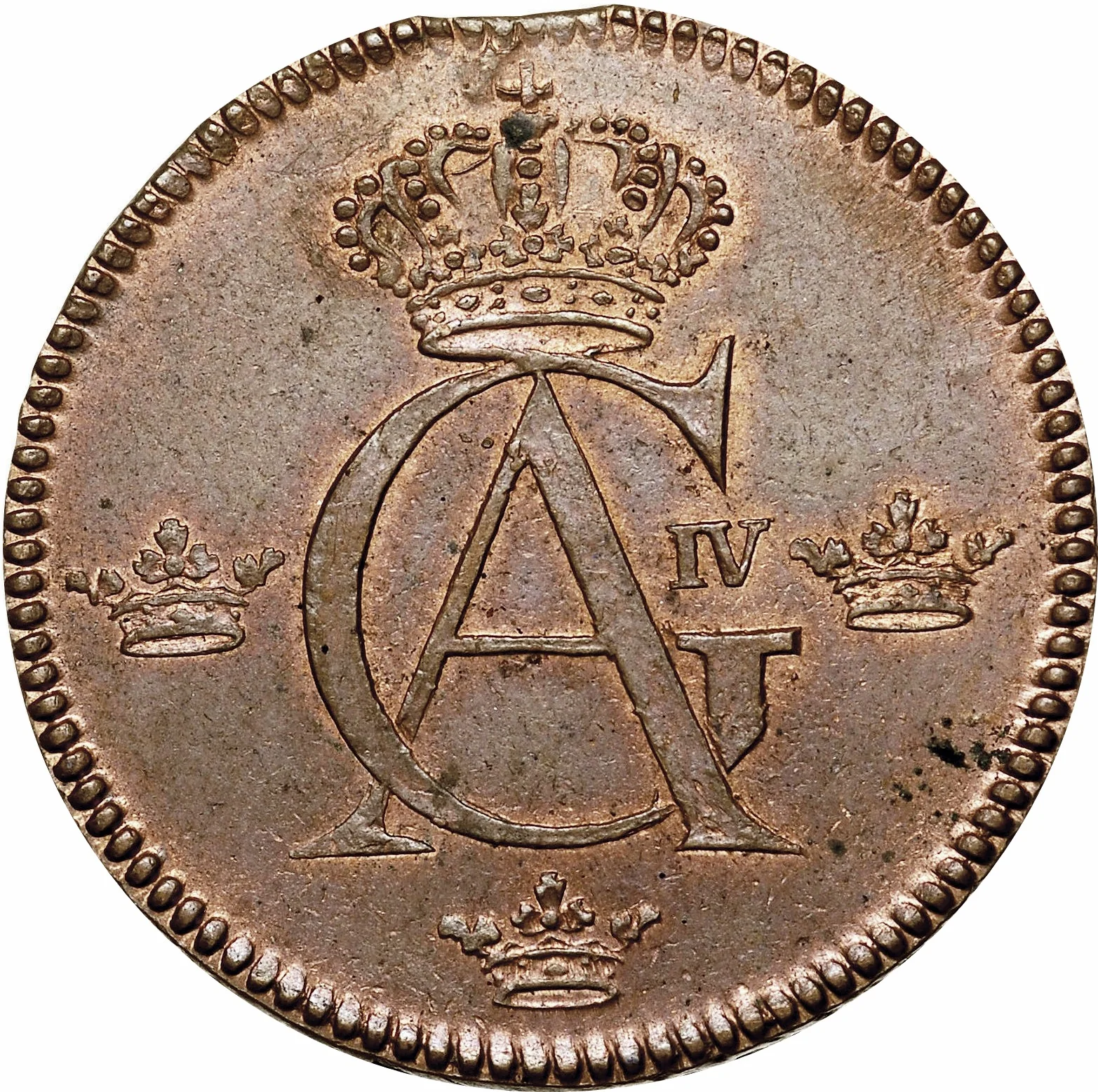
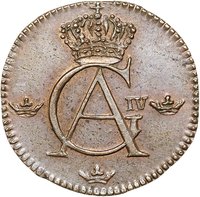
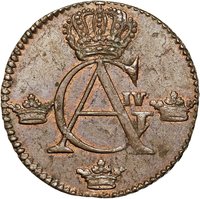
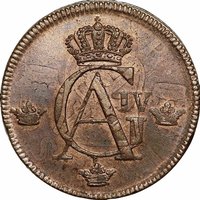
Obverse
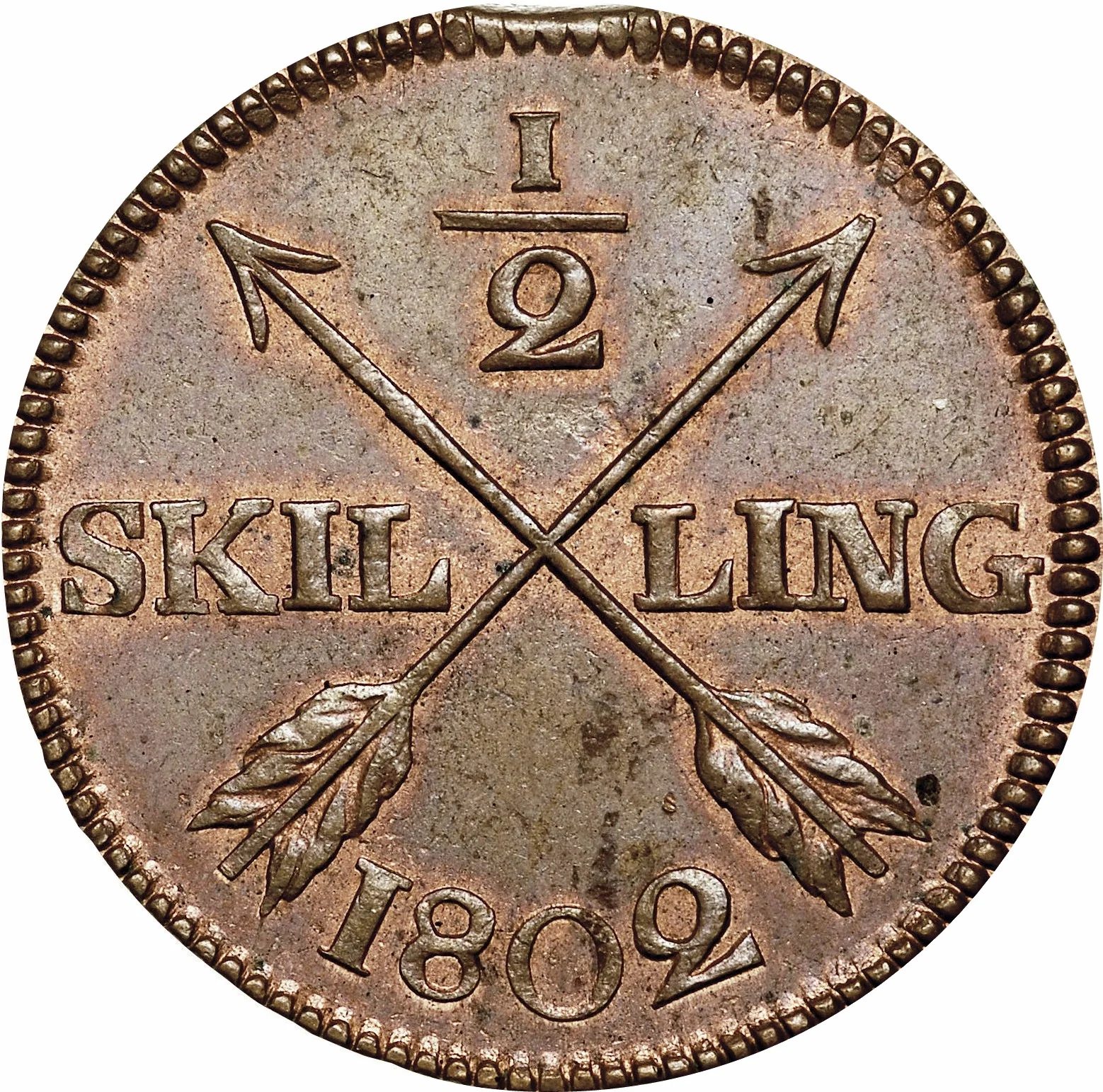
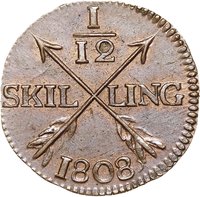
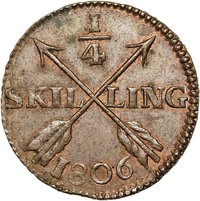
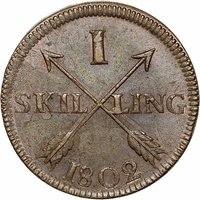
Reverse
Description:
Crossed arrows separate the denomination, face value, and date.
Inscription:
1/2
SKIL LING
1802
SKIL LING
1802
Script: Latin
Edge
Dotted line.
Mintings
| Year | Mint Mark | Mintage | Quality | Collection |
|---|---|---|---|---|
| 1802 | — | — | ||
| 1803 | — | — | ||
| 1804 | — | 595,000 | ||
| 1805 | — | — | ||
| 1807 | — | 1,950,000 | ||
| 1809 | — | — |
Historical background
In 1802, Sweden was navigating a complex and unstable monetary landscape, a direct legacy of the disastrous Russo-Swedish War of 1788–1790. To finance that conflict, the Riksbank had been forced to issue massive amounts of irredeemable paper money known as riksdaler riksgälds. This led to severe inflation and a crippling loss of public confidence, as the paper currency traded at a steep and fluctuating discount against silver coinage. The economy operated on a confusing dual system where real silver riksdaler specie commanded a premium, while everyday transactions were conducted in the depreciating paper notes, creating uncertainty for both commerce and state finances.
Recognizing the crisis, a major monetary reform was enacted in 1802. The cornerstone of this policy was the establishment of the Riksgäldskontoret (the National Debt Office) as an independent entity from the Riksbank. Its primary task was to manage the state's debt and, crucially, to begin the slow and deliberate withdrawal of the excess paper money from circulation. The goal was to restore the value of the riksgälds notes and eventually return to a stable silver standard, a process known as växlingsverket (the exchange operation).
Therefore, the currency situation in 1802 was one of cautious transition. The immediate inflationary spiral had been checked, and a formal institution was now in place to administer a deflationary policy aimed at restoring monetary integrity. However, the success of this long-term project was far from guaranteed. The public's trust remained fragile, the state's finances were still strained, and the entire system remained vulnerable to external shocks—a vulnerability that would soon be tested by the broader European conflicts of the Napoleonic Wars.
Recognizing the crisis, a major monetary reform was enacted in 1802. The cornerstone of this policy was the establishment of the Riksgäldskontoret (the National Debt Office) as an independent entity from the Riksbank. Its primary task was to manage the state's debt and, crucially, to begin the slow and deliberate withdrawal of the excess paper money from circulation. The goal was to restore the value of the riksgälds notes and eventually return to a stable silver standard, a process known as växlingsverket (the exchange operation).
Therefore, the currency situation in 1802 was one of cautious transition. The immediate inflationary spiral had been checked, and a formal institution was now in place to administer a deflationary policy aimed at restoring monetary integrity. However, the success of this long-term project was far from guaranteed. The public's trust remained fragile, the state's finances were still strained, and the entire system remained vulnerable to external shocks—a vulnerability that would soon be tested by the broader European conflicts of the Napoleonic Wars.
Series: 1802 Sweden circulation coins
🌱 Common