

1 penny – New Zealand
Add to wishlist
New Zealand
Context
Years: 1940–1947
Issuer: New Zealand
Ruler: George VI
Currency:
(1840—1967)
Demonetized: Yes
Total mintage: 39,204,005
Material
References
KM: #
Numista: #3918
Obverse
Description:
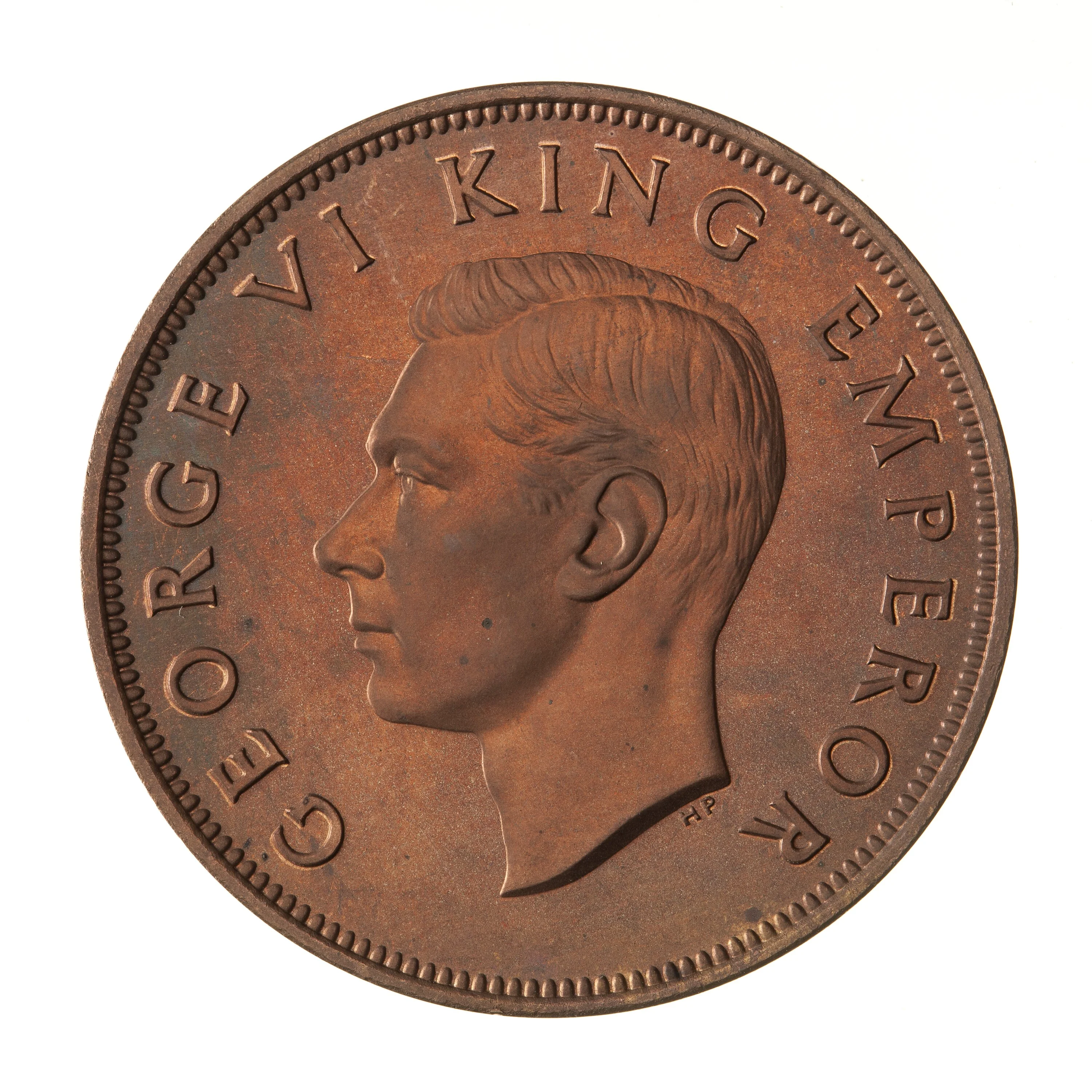
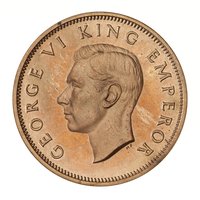
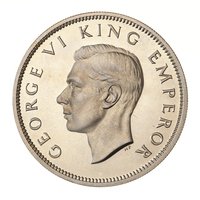
King George VI, uncrowned, left-facing portrait, legend encircling.
Inscription:
GEORGE VI KING EMPEROR
HP
HP
Script: Latin
Engraver: Thomas Humphrey Paget
Reverse
Description:
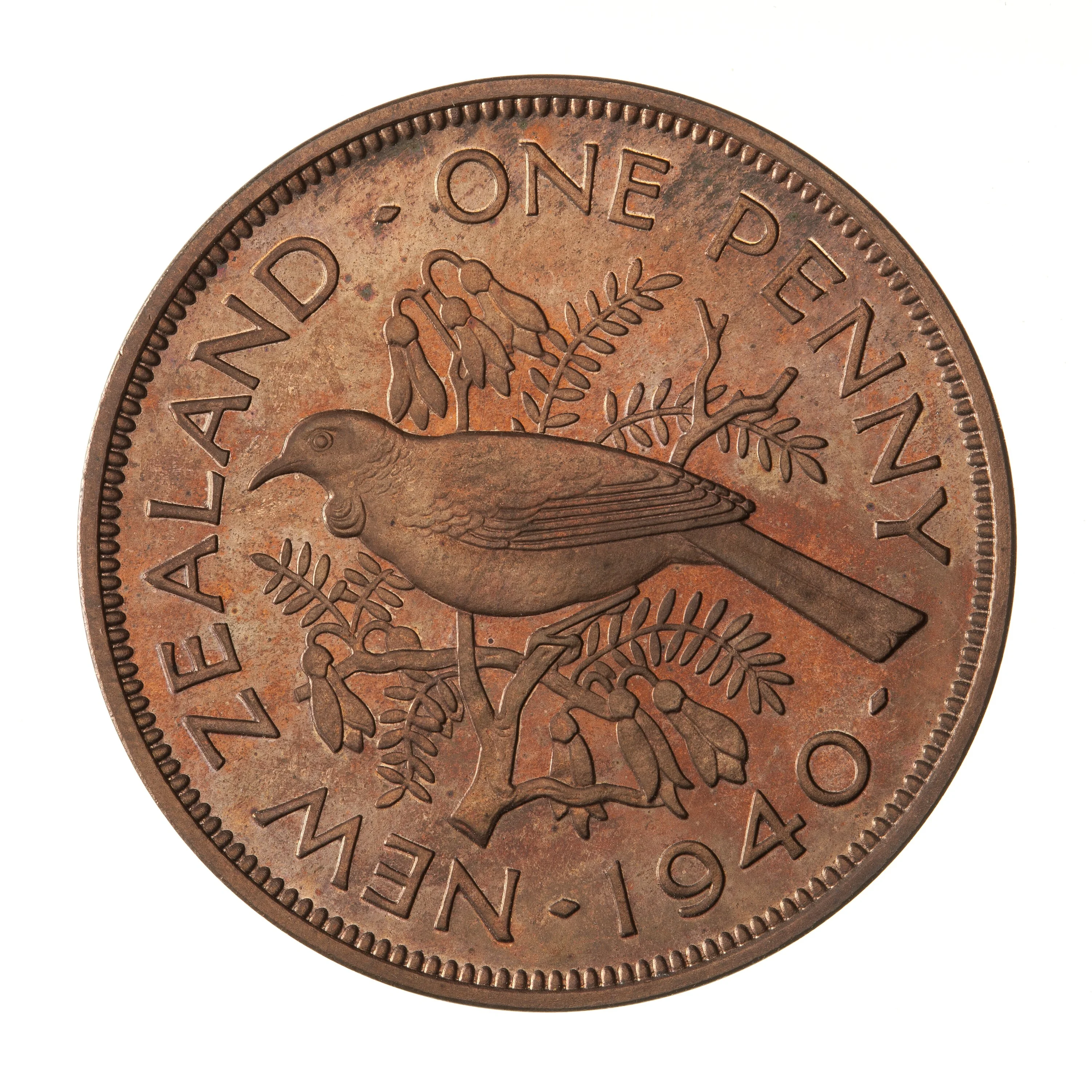
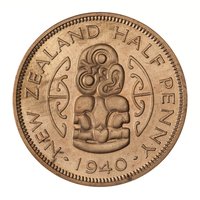
Tūī bird in a kōwhai tree, encircled by legend with date below.
Inscription:
NEW ZEALAND ONE PENNY
·1941·
·1941·
Script: Latin
Engraver: L. C. Mitchell
Edge
Plain
Mints
| Name | Mark |
|---|---|
| Royal Mint (Tower Hill) | — |
Mintings
| Year | Mint Mark | Mintage | Quality | Collection |
|---|---|---|---|---|
| 1940 | — | 5,424,000 | ||
| 1940 | — | 5 | Proof | |
| 1941 | — | 1,200,000 | ||
| 1942 | — | 3,120,000 | ||
| 1942 | — | — | Proof | |
| 1943 | — | 8,400,000 | ||
| 1943 | — | — | Proof | |
| 1944 | — | — | Proof | |
| 1944 | — | 3,696,000 | ||
| 1945 | — | 4,764,000 | ||
| 1945 | — | — | Proof | |
| 1946 | — | 6,720,000 | ||
| 1946 | — | — | Proof | |
| 1947 | — | 5,880,000 | ||
| 1947 | — | — | Proof |
Historical background
In 1940, New Zealand's currency situation was fundamentally defined by its role within the British Empire and the exigencies of the Second World War. The New Zealand pound (NZ£) was pegged at parity with the British pound sterling (GB£), and the country operated under a sterling exchange standard. This meant the local currency was fully backed by sterling reserves held in London, and the money supply was effectively determined by the balance of payments with the United Kingdom, its dominant trading partner. This system provided stability but also meant monetary policy was largely subordinated to British economic interests and conditions.
The outbreak of war in 1939 precipitated immediate and stringent exchange controls. In early 1940, these controls were rigorously enforced to conserve vital sterling reserves for the war effort. The government, through the Reserve Bank of New Zealand (which had been nationalised in 1936), required all foreign exchange earnings to be surrendered and strictly rationed allocations for imports. The primary objective was to prevent capital flight, prioritise essential war-related imports, and ensure all available overseas funds were used to support Britain. This created a highly regulated financial environment where access to foreign currency for non-essential purposes was virtually impossible.
Domestically, wartime pressures began to influence the economy, though significant inflation was still being held somewhat in check in 1940. Price controls were introduced on essential goods to manage cost-of-living increases, and the government's borrowing to finance the war expanded. While the physical notes and coins in circulation remained unchanged, the broader financial landscape was one of increasing state direction. The currency regime of 1940 thus reflected a dual reality: an entrenched colonial-era peg to sterling, now overlaid with a comprehensive web of wartime controls designed to mobilise the entire economy for the conflict.
The outbreak of war in 1939 precipitated immediate and stringent exchange controls. In early 1940, these controls were rigorously enforced to conserve vital sterling reserves for the war effort. The government, through the Reserve Bank of New Zealand (which had been nationalised in 1936), required all foreign exchange earnings to be surrendered and strictly rationed allocations for imports. The primary objective was to prevent capital flight, prioritise essential war-related imports, and ensure all available overseas funds were used to support Britain. This created a highly regulated financial environment where access to foreign currency for non-essential purposes was virtually impossible.
Domestically, wartime pressures began to influence the economy, though significant inflation was still being held somewhat in check in 1940. Price controls were introduced on essential goods to manage cost-of-living increases, and the government's borrowing to finance the war expanded. While the physical notes and coins in circulation remained unchanged, the broader financial landscape was one of increasing state direction. The currency regime of 1940 thus reflected a dual reality: an entrenched colonial-era peg to sterling, now overlaid with a comprehensive web of wartime controls designed to mobilise the entire economy for the conflict.
🌱 Very Common